
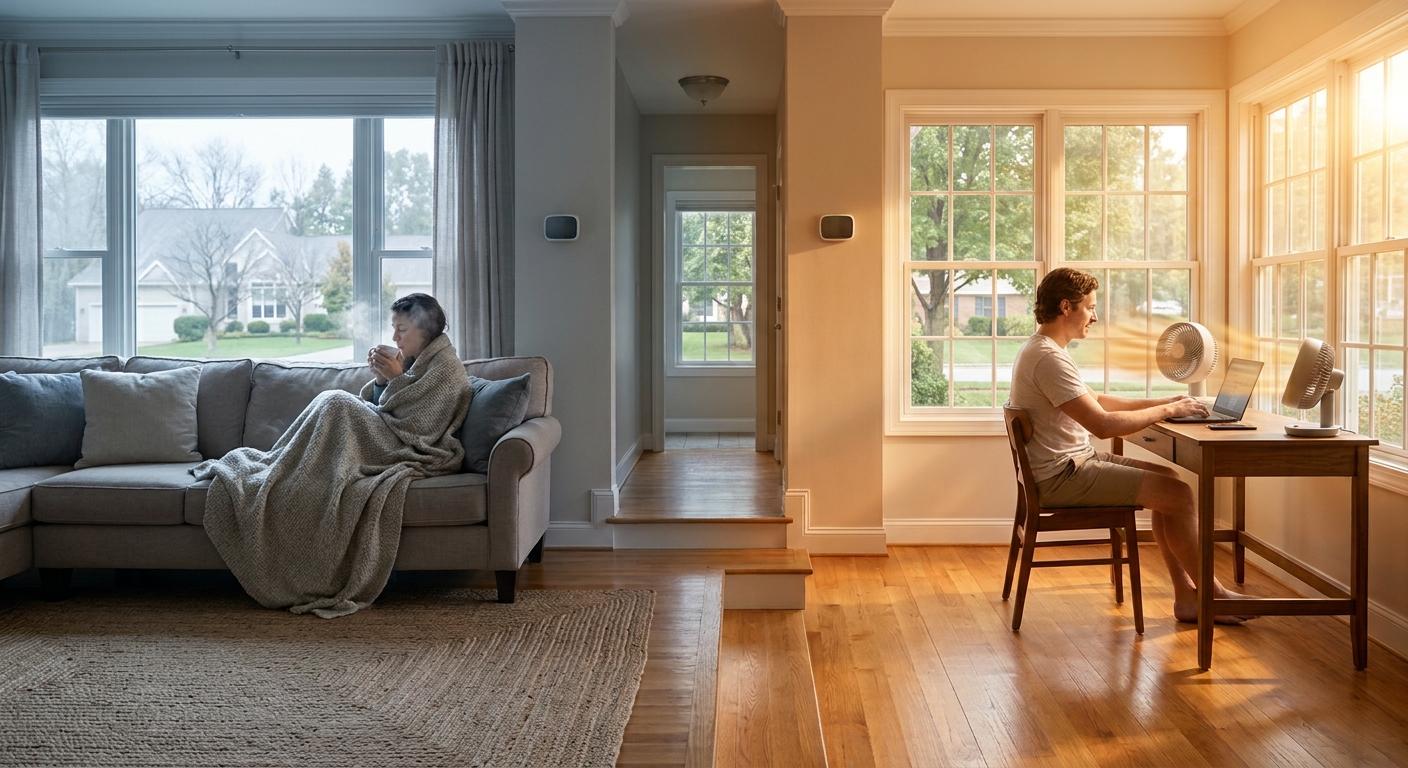
It’s unfortunately too common for homes of all sizes to feel perfectly comfortable in one room and completely stuffy in another.
Maybe your bedroom stays chilly while your living room quickly warms up, or it’s possible your upstairs feels significantly hotter than the main level. These temperatures differences happen in countless properties, and there’s no denying how they can make it harder to relax and lead to unnecessary thermostat adjustments.
There are several causes of cold and hot spots, including insulation gaps and airflow issues. By understanding what creates these indoor temperature fluctuations, you can ultimately find the most practical solution for your HVAC system!
Table of Contents
Check For Restricted & Blocked Airflow
One of the simpler causes of uneven household temperatures is restricted airflow. It’s possible for rugs, furniture, curtains, and all sorts of other stored items to block a system’s supply vents and subsequently prevent cooled or heated air from effectively reaching certain rooms.
Be sure to walk through each room and check that all return grilles and supply vents are clear. This means keeping furniture at least a little distance from vents, and try to avoid closing vents in spaces you don’t use very often. Although closing vents in one room might seem like an easy way to redirect air to other parts of your home, it often interferes with a system’s overall airflow and creates pressure imbalances.
Dirty HVAC filters are also known for restricting a property’s airflow. Be sure to regularly check and replace your filters based on your manufacturer’s recommendations. Homes with children, pets, or frequent dust might require more frequent filter changes.
Look For Insulation Gaps & Drafts
Rooms that feel abnormally colder than others are often losing heat through exterior doors, drafty windows, attic spaces, and poor wall insulation. When the weather is warmer outside, these same spaces often allow heat to enter indoors.
This is one reason why it’s so important for homeowners to regularly check for noticeable drafts around doors and windows. Caulk and weatherstripping can go a long way to seal small gaps, whereas heavy cushions can sometimes reduce cold feelings near windows.
When an upstairs room is consistently colder in the winter and warmer in the summer than the rest of your house, it’s possible that your attic’s ventilation and insulation needs to be evaluated. Home energy assessments from qualified HVAC experts can help identify insulation issues and air leaks that aren’t always so obvious to see during more basic walk-throughs.
Consider Your Home’s Sunlight & Layout
Indoor temperature differences are also a direct reflection of a home’s design.
It’s important to remember how warm air always rises to upper floors, while rooms with big windows are also more likely to warm up quickly with sunlight. Rooms located near the end of long duct runs can also sometimes receive less AC as compared to spaces closer to your HVAC equipment.
The good news is making small adjustments to your system can help improve comfort. This includes using curtains and blinds to limit direct sunlight, keeping interior doors open for better circulation, and using ceiling fans to effectively move air.
If certain parts of your home still feel consistently uncomfortable after making these types of simple changes, it’s a sign you’ll need HVAC professionals to assess your property to better understand if common issues like system sizing, ductwork, and airflow balancing needs to be looked into.
Don’t Neglect Furnace Maintenance As We Head Into Winter
When cold and hot spots become more apparent during the winter heating season, it’s a clear sign that furnace maintenance is needed to troubleshoot a home’s efficiency. We recently interviewed some renowned furnace maintenance specialists based in Denver, Colorado and discovered that common dilemmas like obstructed airflow, dirty filters, or malfunctioning components can cause even heat distribution struggles.
This is why it’s so important for homeowners to arrange for HVAC diagnostic appointments before winter’s arrival. These inspections can ensure that your system is fully operational, and they’re truly invaluable in terms of identifying lingering issues before they affect safety or performance.
If your home’s furnace is making strange sounds, constantly running, or simply failing to keep your home warm on a consistent basis, it’s important to understand how these symptoms usually point to problems that require professional attention!
Find Comfortable Indoor Temperature Settings & Track Your Results
After you’ve checked filters, vents, sunlight and drafts, you’ll want to give your property some time to respond to the adjustments. A common mistake that homeowners make is changing several things at once, because this inadvertently makes it tougher to tell what actually helped.
Be sure to keep your thermostat settings steady and comfortable, and keep track of which rooms start to feel noticeably different. If your temperature differences continue, share these personal observations with your HVAC technician during your evaluation appointment.
Comfortable homes don’t necessarily have to maintain the exact same temperatures in every room, but it’s always annoying when one or two areas are consistently too cold or too hot. By making a few changes and investing in timely maintenance, you’ll be doing your part toward ensuring that your entire house feels more balanced in every season!