
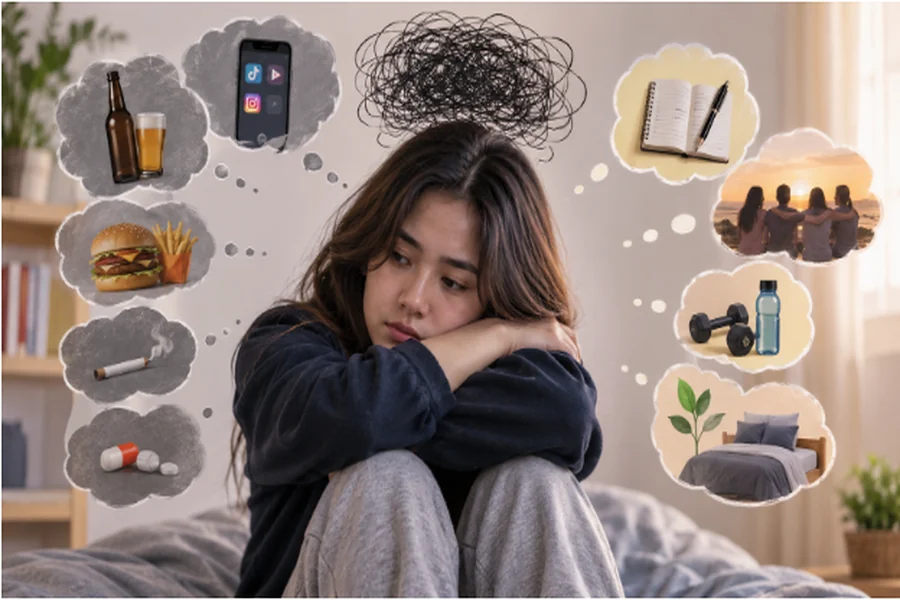
Emotional pain is not always easy to recognize. Sometimes, it appears as sadness, frustration, or anxiety. Other times, it hides behind a busy schedule, constant distractions, unhealthy habits, or behaviors that seem harmless at first. People experience difficult emotions in different ways, and not everyone knows how to express or manage what they are feeling.
When emotional struggles become difficult to handle, some individuals turn to coping mechanisms that offer temporary relief but create additional problems over time. These patterns can develop gradually, making it difficult to recognize when an ordinary response to stress has become something more harmful. Understanding the relationship between emotional pain and unhealthy coping habits is an important step toward developing healthier ways of dealing with life’s challenges.
Table of Contents
- How Emotional Pain Influences Everyday Behavior
- Why Unhealthy Coping Mechanisms Develop
- The Relationship Between Emotional Distress and Substance Use
- Recognizing the Warning Signs of Unhealthy Patterns
- Developing Healthier Ways to Process Emotional Pain
- Why Addressing Mental Health and Substance Use Together Matters
- Moving Forward With Greater Self-Awareness
How Emotional Pain Influences Everyday Behavior
Emotional pain can come from many experiences, including childhood difficulties, relationship problems, grief, financial pressure, loneliness, or major life changes. While some situations are temporary, others leave emotional effects that continue long after the original experience has passed.
People do not always respond to emotional pain directly. Someone dealing with unresolved sadness might withdraw from friends and family. Another person experiencing anxiety may become overly focused on work or other activities to avoid uncomfortable thoughts. Some individuals may struggle with anger, irritability, or difficulty trusting others.
These reactions are not necessarily signs of weakness. They can be ways of protecting oneself from feelings that seem overwhelming. However, when these responses become regular patterns, they may interfere with relationships, responsibilities, and overall well-being.
Recognizing these behavioral changes can help individuals understand that certain habits may be connected to deeper emotional experiences rather than isolated personal choices.
Why Unhealthy Coping Mechanisms Develop
Coping mechanisms are the thoughts and behaviors people use to manage stressful situations. Some are helpful, such as exercising, talking with trusted people, practicing mindfulness, or taking time to rest.
Others provide temporary comfort without addressing the underlying issue.
For example, someone experiencing emotional distress might turn to excessive drinking, substance use, overeating, compulsive shopping, or constant entertainment to escape uncomfortable feelings. These activities may create a brief sense of relief, making them appealing during particularly difficult moments.
The problem develops when temporary relief becomes a person’s primary way of managing emotional discomfort.
Over time, unhealthy coping patterns can become repetitive. A person feels overwhelmed, engages in a particular behavior, experiences temporary relief, and eventually faces the same emotional difficulty again. In some situations, the behavior creates additional stress, guilt, financial problems, or relationship conflicts.
Breaking this cycle often requires understanding what triggers the behavior and finding healthier ways to respond.
The Relationship Between Emotional Distress and Substance Use
One of the more complicated connections between emotional pain and unhealthy coping involves substance use. Some individuals begin using alcohol or other substances because they believe these can help them relax, forget painful experiences, or temporarily escape anxiety and sadness.
At first, the effects may seem comforting. Someone dealing with loneliness might feel more socially confident, while another person struggling with stress may experience temporary relaxation. However, these short-term effects do not resolve the emotional difficulties that contributed to the behavior.
In some cases, repeated substance use can make existing emotional challenges more difficult to manage. It may affect sleep, mood, concentration, decision-making, and personal relationships. It can also contribute to new mental health concerns or make existing symptoms worse.
This is why understanding the relationship between substance use and mental health treatment is important. Emotional well-being and substance-related challenges can influence one another, meaning that focusing on only one aspect may leave other important concerns unaddressed.
A person experiencing both difficulties deserves an approach that considers their complete situation, including emotional history, behavioral patterns, physical health, and personal circumstances.
Recognizing the Warning Signs of Unhealthy Patterns
Unhealthy coping habits do not always develop overnight. In many situations, the changes happen slowly, making them difficult for individuals and their loved ones to notice.
There are several signs that may suggest someone is relying on unhealthy behaviors to manage emotional distress:
- Avoiding difficult emotions: Constantly distracting oneself instead of acknowledging sadness, fear, anger, or disappointment.
- Withdrawing from relationships: Spending less time with family and friends or avoiding conversations about personal struggles.
- Increasing reliance on substances: Depending more frequently on alcohol or other substances to relax, sleep, socialize, or manage stress.
- Difficulty managing everyday responsibilities: Experiencing problems at work, school, or home because of emotional or behavioral difficulties.
- Repeating harmful behaviors: Continuing habits despite recognizing their negative effects on physical health, relationships, or finances.
These signs do not automatically indicate a mental health condition or substance use disorder. However, they can be reasons to pause and examine what is happening beneath the surface.
Rather than responding with criticism or embarrassment, individuals benefit from approaching these concerns with patience, honesty, and understanding.
Developing Healthier Ways to Process Emotional Pain
Changing unhealthy coping patterns takes time. It requires more than simply deciding to stop a particular behavior. People also need practical alternatives that help them manage the emotions that may be driving those habits.
One useful starting point is learning to identify emotional triggers. Keeping a journal, for example, can help individuals recognize situations that lead to stress, sadness, anger, or cravings. Understanding these patterns makes it easier to respond thoughtfully instead of automatically repeating familiar behaviors.
Building a reliable support system is equally important. Talking with trusted friends, family members, or qualified mental health professionals can create opportunities to express difficult emotions without fear of judgment.
Healthy routines can also make a meaningful difference. Regular physical activity, balanced meals, consistent sleep, and relaxing activities support emotional stability. Although these habits cannot solve every underlying problem, they can provide a stronger foundation for managing everyday challenges.
Another important step is learning to accept that uncomfortable emotions are part of being human. Not every difficult feeling needs to be avoided or immediately fixed. Sometimes, allowing yourself to acknowledge disappointment, grief, or frustration is an important part of moving forward.
Why Addressing Mental Health and Substance Use Together Matters
Emotional difficulties and substance-related challenges are sometimes treated as separate concerns, even though they can influence each other in significant ways.
For instance, a person experiencing anxiety may use substances to feel more comfortable in social situations. Meanwhile, repeated substance use may contribute to worsening anxiety or other emotional symptoms. This relationship can make it difficult to determine where one challenge ends and another begins.
A more complete understanding of substance use and mental health treatment recognizes the importance of addressing both emotional well-being and behavioral concerns.
This includes considering underlying experiences, identifying contributing factors, and understanding how different symptoms affect daily life. It also means recognizing that every person’s circumstances are different. What helps one individual may not produce the same results for someone else.
Professional guidance can help individuals better understand their experiences, explore appropriate treatment approaches, and develop healthier strategies for managing difficult emotions.
Most importantly, seeking support should never be viewed as a failure. It is a practical decision that can help people regain a sense of control over their lives.
Moving Forward With Greater Self-Awareness
Emotional pain can influence decisions in ways people do not always recognize. What begins as an attempt to find comfort may eventually become a habit that affects relationships, health, and personal growth.
The first step toward change is understanding that unhealthy behaviors often have underlying reasons. Recognizing those reasons does not excuse harmful actions, but it provides a better starting point for addressing them.
Developing healthier coping strategies takes patience, consistency, and sometimes professional support. There may be difficult days along the way, but progress does not require having everything figured out immediately.
By paying attention to emotional needs, recognizing harmful patterns, and becoming more open to support, individuals can begin building a healthier relationship with themselves and the people around them.
Ultimately, healing is not simply about removing unhealthy habits. It is also about understanding the experiences behind them and learning new ways to respond to life’s challenges. With greater self-awareness and the right support, it becomes possible to move beyond temporary relief and work toward lasting emotional well-being.