
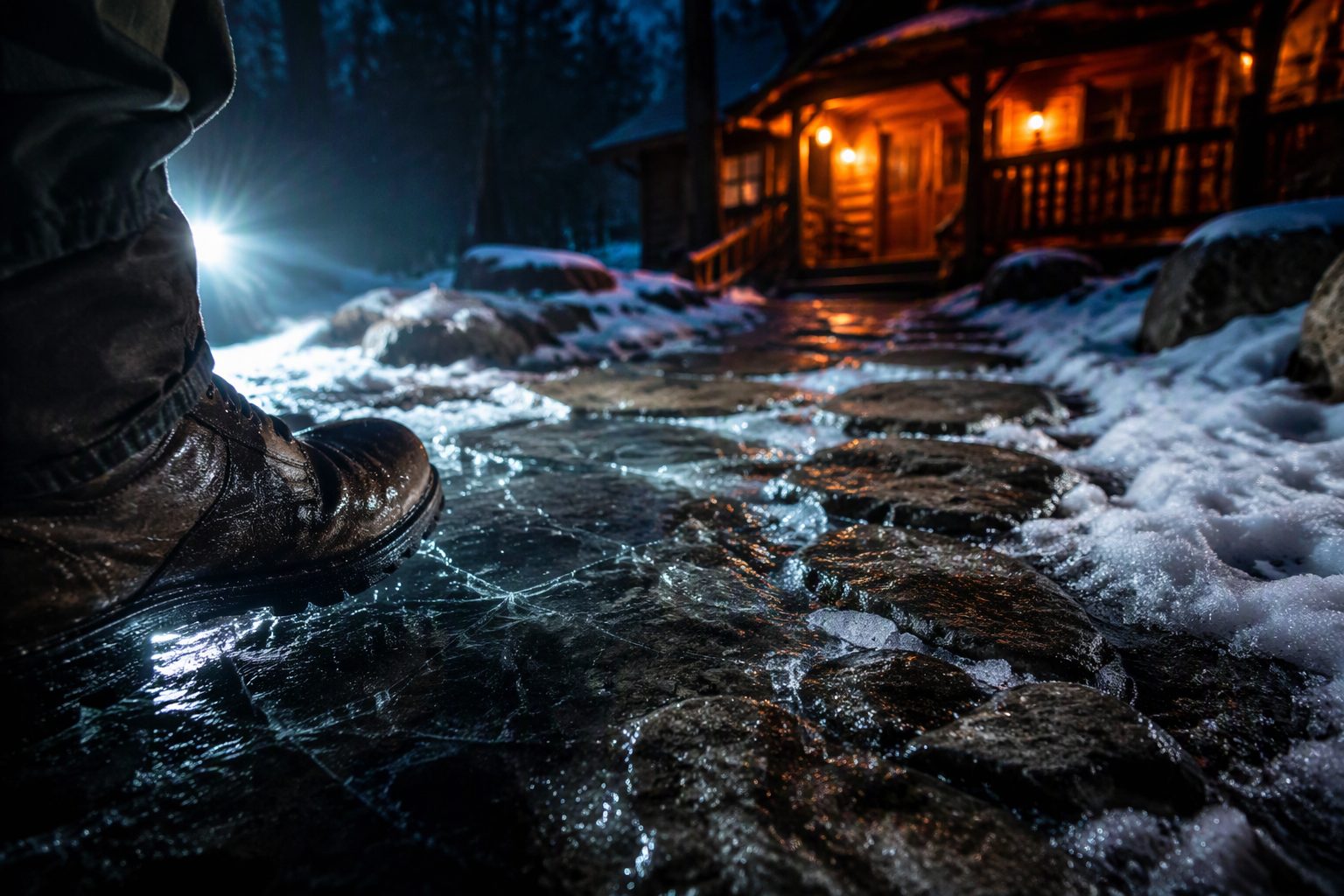
The cabin looks peaceful beyond your windshield, with a porch light glowing against the trees and a short path that seems easy enough to cross after a long drive through the hills. Yet packed snow or transparent ice may lie between your tires and the door.
Pennsylvania courts evaluate snow-and-ice injury claims under Pennsylvania’s Hills and Ridges Doctrine, and the facts of your arrival can matter to any claim later. For now, one thing matters: is there a safe way to the door? Leave the doors shut until you've had a look. Look before you unload; the bags can wait until you have a read on what lies underfoot.
Table of Contents
- Why the Ice Check Starts Before Anyone Leaves the Vehicle
- How to Check a Pennsylvania Cabin for Ice Before Unloading
- What to Do When the Expected Route Is Unsafe
- Troubleshooting Runoff and Recurring Ice After Refreezing
- How to Document Ice Without Taking Another Risk
- Pennsylvania Hills and Ridges Doctrine Questions for Cabin Guests
- The Bags Can Wait Until the Route Is Safe
Why the Ice Check Starts Before Anyone Leaves the Vehicle
The path can look fine and still be frozen
Black ice disappears into shaded concrete, and wood or stone hide it just as effectively. A glossy patch, water lying across the path, compressed snow: each one is a warning. One sign alone proves little; treat doubt as ice. Foot traffic or a thaw can smooth packed snow until the hazard all but disappears.
Stay in the car while you inspect the route.
Pets and luggage make a poor first test
Bags alter balance and hide the ground; a pet can pull toward an untreated edge. Neither gives you a safe read on the route. Leave pets secured and luggage inside until the path has been checked.
How to Check a Pennsylvania Cabin for Ice Before Unloading
Inspect the route in seven safe steps
- Stop where the vehicle is stable. Pick a level spot free of suspect ice and deep packed snow, and keep the road clear as you reposition.
- Scan the whole route from the vehicle. Headlights or a flashlight let you check each turn and rise in the ground without stepping onto the path.
- Check the walking surface. Apply the warning signs above, watching shade especially closely; if in doubt, assume unsafe until the host confirms a usable route.
- Examine stairs and handrails. Look for clear treads and a rail within reach. A rail coated in ice, or one pulling loose from the steps, will not support you.
- Assess exterior lighting. See that every stair edge stands out; if a fixture is dead, aim a flashlight from stable ground.
- Look for runoff sources. Scan roof edges and downspouts from a distance. Note slopes or drains that push water across the route, plus hanging icicles or frozen discharge trails.
- Decide before unloading. Go only with a route that seems stable and well lit; short of that, hold out for treatment or a confirmed safe entrance.
Check every transition point
Give separate attention to the gravel-to-step join and the porch-to-threshold line. At night, height and texture differences vanish, above all where plowed parking runs into untreated snow.
Use light without sacrificing balance
A headlamp works well; so does a handheld flashlight, as long as one hand stays free for a railing. A phone gives off light, sure, but a screen steals attention from the next step.
What to Do When the Expected Route Is Unsafe
Report the condition before attempting the walk
If black ice stands between you and the door, wait in the vehicle and call the host or manager. If needed, dial the reservation’s emergency lodging number. Describe it precisely: “ice across the bottom two steps,” not merely “it’s slippery.” Ask for treatment, or for help reaching a confirmed safe entrance. Don’t try ice removal yourself unless the host supplies proper materials and you have stable ground to work from.
Use another entrance only after checking it
A side door is no bypass for the check. Assess its parking approach and lighting before using it. If no safe route is confirmed, remain in the vehicle or drive to a safe public location while contacting the host or booking platform. Call emergency services if someone is hurt or the weather leaves you stranded.
Troubleshooting Runoff and Recurring Ice After Refreezing
Ice returns after the surface was treated
Daytime warmth or sunlight can melt snow that freezes again once temperatures fall. Treatment doesn’t guarantee traction. Don’t assume salt applied earlier still holds; check the route again after the temperature drops.
A gutter or downspout is feeding the icy area
A frozen trail beneath a downspout may reveal recurring runoff; poor drainage can send water across the path. Report the suspected source without approaching heavy icicles or adjusting hardware.
Pennsylvania law is fact-specific. The ice’s source and the surrounding winter conditions can affect how the doctrine applies, as can what the possessor knew or reasonably should have known. Harmotta v. Bender, 411 Pa. Super. 371, 601 A.2d 837 (1992), distinguishes natural from artificial accumulations. Ice traced to drainage may be analyzed differently, though runoff alone doesn’t establish liability.
Under Rinaldi v. Levine, 406 Pa. 74, 176 A.2d 623 (1962), the doctrine generally addresses natural accumulations during broadly slippery conditions. Where it applies, a claimant ordinarily must establish dangerously obstructive ridges or elevations, actual or constructive notice, and causation.
Packed snow hides an uneven surface
Compacted snow can hide stair edges or holes. Don’t probe it with your feet. Wait for the host to clear enough snow to expose the surface beneath.
The parking area is safe but the stairs are not
A safe parking spot doesn’t make untreated entrance stairs usable. Wait for treatment or request access through a verified alternative entrance.
How to Document Ice Without Taking Another Risk
Photograph the condition from stable ground
Take time-stamped wide photographs showing the entrance and hazard, then use zoom for closer details. Include drainage sources only when they are safely visible. Don’t step onto ice for a better angle.
Preserve a short factual record
Write down the date and time, the approximate temperature, and any recent precipitation. Save the message you sent the host, plus replies about another entrance. Describe what you saw; skip the guessed causes. A good entry reads: “At 7:20 p.m., a frozen strip crossed the walkway below the east-side downspout. I stayed by the vehicle and requested a treated route.”
Pennsylvania Hills and Ridges Doctrine Questions for Cabin Guests
What does the Pennsylvania hills and ridges rule mean in plain language?
It generally limits liability for natural snow or ice during broadly slippery conditions, and the Rinaldi elements above still control. It isn’t a universal rule for every icy patch, and it doesn’t decide if a walkway is safe to cross. Leave uncertain surfaces untouched.
Should you cross black ice to reach a Pennsylvania cabin?
No. Stay in the vehicle and notify the host while awaiting treatment or a verified alternative. If you’re already outside, return only over known stable ground. A short distance or nearby railing doesn’t guarantee a safe crossing. National Weather Service winter guidance says the same: avoid unnecessary exposure and walk carefully on snow and ice.
Can a downspout create a recurring cabin ice hazard?
Yes. The hazard can recur because upstream melting supplies fresh water even after the path was treated. That is why the ice’s source can matter in a fact-specific analysis, as Harmotta suggests above. Leave drainage adjustments to the host and stay clear of the discharge area.
The Bags Can Wait Until the Route Is Safe
The cabin door may be only a few yards away, but you don’t have to turn arrival into a test of balance. Leave luggage in the vehicle and keep pets secured until you have checked the entire route. A reservation and a long drive don’t make uncertain footing worth attempting. That deliberate pause gives the host time to address the hazard, and it lets you choose a safer arrival than carrying the first bag onto a path you haven’t assessed.