
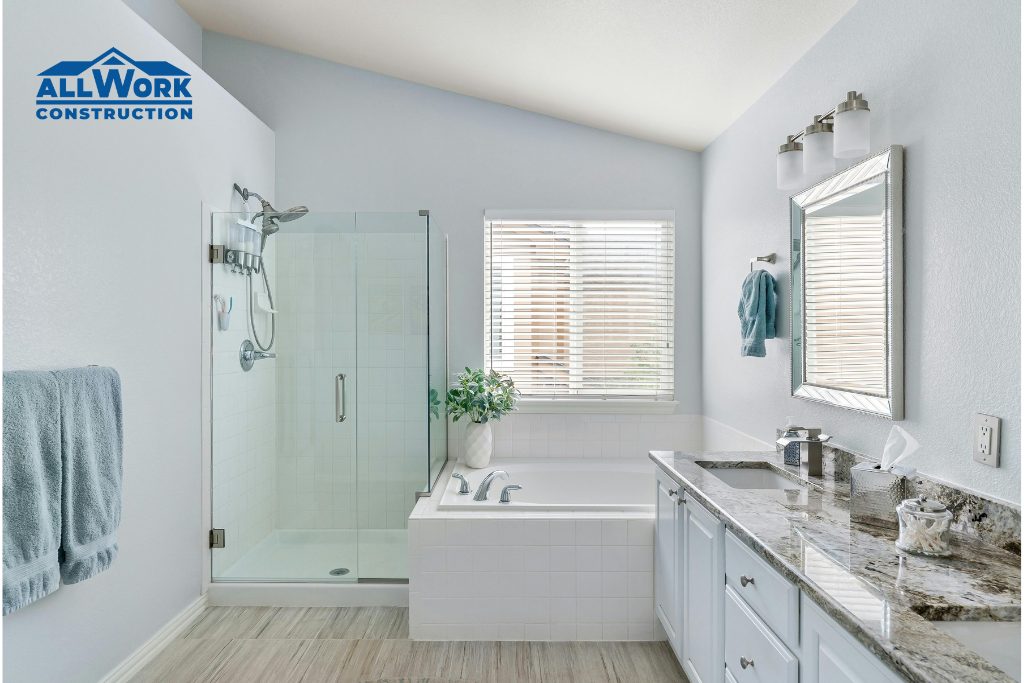
A bathroom rarely decides the outcome of a home sale by itself, but it can influence a buyer’s opinion much faster than many homeowners expect.
During a showing, buyers do not spend twenty minutes studying every detail of the room. They usually step inside, look around, open a cabinet or two, check the shower, and form an impression almost immediately. That impression may be positive, neutral, or quietly concerning.
A bathroom that feels bright, clean, practical, and well maintained suggests that the home has received careful attention. A room with peeling paint, tired caulking, poor lighting, or an awkward layout can create the opposite reaction. Buyers may begin wondering what else needs work, even when the rest of the property is in good condition.
This is why bathroom remodeling should not be planned only around personal taste or the latest design trend. Homeowners who expect to sell within the next several years should also consider which improvements create broad appeal and which choices may make the room harder for future buyers to imagine as their own.
For anyone considering bathroom remodeling in Newbury, MA, the strongest renovation usually combines everyday comfort with the kind of practical, polished appearance that makes a good first impression during a showing.
Table of Contents
- Buyers Read the Condition of the Bathroom as a Sign of the Home’s Overall Care
- Lighting Shapes the First Impression Before Buyers Notice the Tile
- Buyers Quickly Notice Whether Storage Is Practical
- The Shower Often Becomes the Feature Buyers Remember
- Workmanship Is Visible Even When Buyers Cannot Explain It
- A Vanity Should Provide Storage Without Dominating the Room
- Buyers Notice Moisture Problems Even When the Room Has Been Updated
- Low-Maintenance Materials Create Broader Appeal
- An Awkward Layout Becomes Obvious Almost Immediately
- Neutral Design Works Best When It Still Has Character
- Buyers Notice When a Remodel Feels Finished
- The Best Resale Features Are Usually the Ones Homeowners Already Appreciate
- Final Thoughts
Buyers Read the Condition of the Bathroom as a Sign of the Home’s Overall Care
Most buyers are not construction experts, but they are very good at noticing when a room feels neglected.
They may not know why the grout has darkened or why the vanity doors no longer sit evenly, yet those details still affect their confidence. Worn caulking, peeling ceiling paint, swollen trim, loose fixtures, and stained surfaces can make buyers assume that maintenance has been postponed elsewhere in the house.
A recently remodeled bathroom sends a different message when the work feels complete and consistent. Clean transitions, fresh finishes, properly installed fixtures, and a room that smells dry and neutral all suggest that the renovation was done carefully rather than rushed for resale.
That distinction matters because buyers often calculate future work mentally as they tour a home. A bathroom that appears ready to use reduces the number of projects they believe they will need to address after moving in.
Lighting Shapes the First Impression Before Buyers Notice the Tile
Lighting affects the way buyers experience every other feature in the bathroom.
A dark room can make new finishes appear dull, while harsh overhead lighting may create shadows that make the space feel less inviting. Even a well-remodeled bathroom can lose some of its appeal when the vanity area is poorly illuminated or the shower remains noticeably darker than the rest of the room.
A balanced lighting plan usually performs better than one decorative fixture placed in the center of the ceiling. General lighting should make the room feel bright and safe, while lighting near the mirror should support daily grooming without casting heavy shadows across the face.
Natural light also helps when the bathroom has a properly sized and well-positioned window. Buyers generally respond well to rooms that feel open and fresh, provided privacy has been handled thoughtfully.
Lighting is not always the most expensive part of a remodel, but it often delivers one of the strongest visual improvements during a home showing.
Buyers Quickly Notice Whether Storage Is Practical
A bathroom may look attractive in listing photographs while still raising questions once a buyer sees it in person.
One of those questions is usually where everything will go.
A tiny vanity with limited drawer space may suit a staged room, but buyers often imagine their own skincare products, towels, medications, cleaning supplies, hair tools, and everyday toiletries filling the space. If the current homeowner has added freestanding shelves or several countertop organizers, buyers may assume that built-in storage is inadequate.
Practical storage creates a more convincing result. Deep drawers, a recessed medicine cabinet, a linen closet, or a well-designed vanity can provide enough capacity without making the room feel crowded.
The goal is not to fill every wall with cabinetry. Buyers generally respond better to storage that feels integrated into the room and keeps surfaces clear without reducing circulation.
A bathroom that appears easy to organize also appears easier to live with.
The Shower Often Becomes the Feature Buyers Remember
In many modern bathroom renovations, the shower becomes the visual and functional centerpiece of the room.
Buyers notice whether it feels spacious, whether the entrance is comfortable, whether storage has been included, and whether the glass and tile work appear easy to maintain. A worn acrylic surround or a damaged tub-shower enclosure can make the room feel significantly older, even when other features have been updated.
A well-proportioned walk-in shower often creates strong appeal because it feels contemporary and practical. However, larger is not always better. A shower that takes over too much of the floor plan may reduce storage or make the rest of the room feel cramped.
Homeowners should also think carefully before removing the only bathtub in the house. Some buyers, especially families with young children, still consider at least one tub an important feature. In a home with multiple bathrooms, converting one underused tub into a walk-in shower may make sense. In a one-bathroom property, the decision deserves more consideration.
The best shower improvement supports both the room and the likely needs of future occupants.
Workmanship Is Visible Even When Buyers Cannot Explain It
Many buyers cannot identify the exact reason one remodeled bathroom feels more expensive than another.
Often, the difference comes down to workmanship.
Straight tile lines, consistent grout joints, clean edges, properly aligned fixtures, neat caulking, and balanced transitions between materials all contribute to a polished result. When those details are handled poorly, even premium products can feel disappointing.
Buyers may notice an uneven tile cut around a niche, a crooked mirror, or a vanity that does not align properly with the lighting above it. These details can make them question whether shortcuts were taken elsewhere in the project.
Professional installation creates confidence because the room feels intentional from one end to the other. That impression is difficult to achieve through materials alone.
Homeowners preparing for a future sale should therefore place as much emphasis on installation quality as they do on product selection.
A Vanity Should Provide Storage Without Dominating the Room
The vanity usually affects more parts of the bathroom than any other individual feature.
It influences countertop space, storage, mirror size, lighting placement, and circulation. Buyers notice whether the vanity feels appropriate for the room or whether it has been forced into a space that cannot comfortably support it.
An oversized vanity may offer additional drawers, but it can also narrow the walkway, interfere with the door, or make the toilet and shower feel crowded. A vanity that is too small may leave buyers concerned about storage and everyday usability.
The strongest choice balances practical capacity with comfortable movement. Durable cabinetry, a low-maintenance countertop, sensible drawer organization, and enough surface area for daily routines generally create broader appeal than a highly stylized vanity with limited function.
A double vanity can be valuable in a shared primary bathroom when the room is large enough. In a compact bathroom, one well-planned sink area may work better than squeezing in two smaller stations.
Buyers Notice Moisture Problems Even When the Room Has Been Updated
A fresh coat of paint cannot hide an ongoing humidity problem for very long.
Buyers may notice musty odors, peeling paint, fogged windows, stained caulking, or trim that has begun to swell. These signs can raise concerns about ventilation, previous leaks, or hidden moisture damage.
An effective exhaust system helps protect the bathroom while improving the way the room feels during a showing. The air should not seem damp, and finishes should not show premature wear caused by repeated condensation.
Ventilation is rarely a feature buyers praise directly, yet its absence can undermine the entire renovation. A beautiful bathroom that still feels humid suggests that the visible work may not have addressed the underlying problem.
Homeowners planning a remodel should treat ventilation as part of the room’s construction rather than a minor accessory selected at the end.
Low-Maintenance Materials Create Broader Appeal
Most buyers do not want to move into a home and immediately inherit a complicated cleaning routine.
Materials that look difficult to maintain can reduce enthusiasm, especially in a room that already receives daily exposure to water, soap, humidity, and cleaning products. Highly textured surfaces, excessive grout lines, elaborate decorative details, and difficult-to-reach corners may look attractive in a staged photograph while suggesting more work in daily life.
Large-format porcelain tile, quartz countertops, durable cabinetry, and straightforward shower designs often appeal to a wider range of buyers because they look refined without appearing demanding.
This does not mean every bathroom should feel plain. Personality can still come through in paint, mirrors, lighting, hardware, and accessories. The larger, more permanent surfaces usually benefit from materials that remain practical and adaptable.
A room that appears easy to clean also feels easier to own.
An Awkward Layout Becomes Obvious Almost Immediately
Buyers do not need a tape measure to recognize a layout problem.
They can feel when the door strikes the vanity, when the shower entrance is too tight, or when the toilet occupies the most prominent sightline in the room. These issues become apparent within seconds because they affect movement and comfort.
A successful layout allows someone to enter, approach the vanity, access storage, and use the shower without navigating around unnecessary obstacles. Fixtures should feel proportionate to the room, and the main walkway should remain clear.
Homeowners sometimes invest heavily in tile and fixtures while leaving an outdated layout unchanged. The room looks newer, but it does not necessarily feel better.
When resale is part of the long-term plan, layout improvements often provide more value than decorative upgrades because buyers can immediately imagine using the room comfortably.
Neutral Design Works Best When It Still Has Character
Highly personalized design choices may be perfect for the current homeowner and less appealing to a future buyer.
A bathroom covered in bold patterned tile or built around one very specific color may make it harder for buyers to imagine their own belongings in the room. This does not mean every remodel should use the same white and gray palette.
Warm neutrals, subtle stone patterns, natural wood tones, and restrained color can create a comfortable, distinctive bathroom without locking the room into one trend. More expressive choices can appear in paint, mirrors, towels, artwork, and hardware because those elements are easier to change later.
The permanent surfaces should provide a flexible foundation rather than demand that every future owner share the same taste.
A balanced bathroom often feels more expensive precisely because the design does not compete for attention.
Buyers Notice When a Remodel Feels Finished
A bathroom can include attractive materials and still feel incomplete.
Missing trim, poorly touched-up paint, temporary hardware, uneven caulking, or mismatched fixtures may suggest that the renovation was rushed or never fully completed. These details can create doubt about the quality of the work behind the visible surfaces.
A finished bathroom should feel consistent from the doorway through the smallest accessory. Towel bars should sit where they are useful, mirrors and lights should align properly, and transitions between flooring, walls, and cabinetry should appear clean.
At All Work Construction, bathroom remodeling is approached as a complete project rather than a collection of separate product installations. The purpose is to create a room that works comfortably for the current homeowner while also maintaining the polished, durable appearance that future buyers appreciate.
Homeowners who would like to review completed renovations and learn more about the process can explore the All Work Construction website for additional examples and project information.
The Best Resale Features Are Usually the Ones Homeowners Already Appreciate
Homeowners do not need to design their bathroom entirely around hypothetical future buyers.
In most cases, the improvements that make daily life better also create stronger resale appeal. Practical storage, balanced lighting, a comfortable shower, reliable ventilation, durable materials, and quality workmanship benefit nearly every household.
A bathroom remodeled only for resale can feel generic or overly cautious. A room designed entirely around one homeowner’s unusual preferences may appeal to a much narrower audience.
The strongest middle ground is a bathroom that feels personal enough to be enjoyable and flexible enough to suit someone else later.
That approach allows homeowners to receive value from the renovation now without limiting the home’s appeal when it eventually reaches the market.
Final Thoughts
Buyers form opinions about bathrooms quickly because these rooms reveal both the condition of the home and the quality of previous improvements.
They notice whether the room feels bright, clean, organized, easy to maintain, and comfortable to use. They also respond to visible workmanship, practical storage, shower design, ventilation, and the way each fixture fits into the available space.
For homeowners considering bathroom remodeling in Newbury, MA, focusing on those fundamentals can improve everyday life while helping the home present more confidently during future showings.
The most memorable bathroom features are not always the most expensive or dramatic. Buyers usually respond most strongly to the decisions that make the room feel complete, dependable, and ready to use without another renovation.