
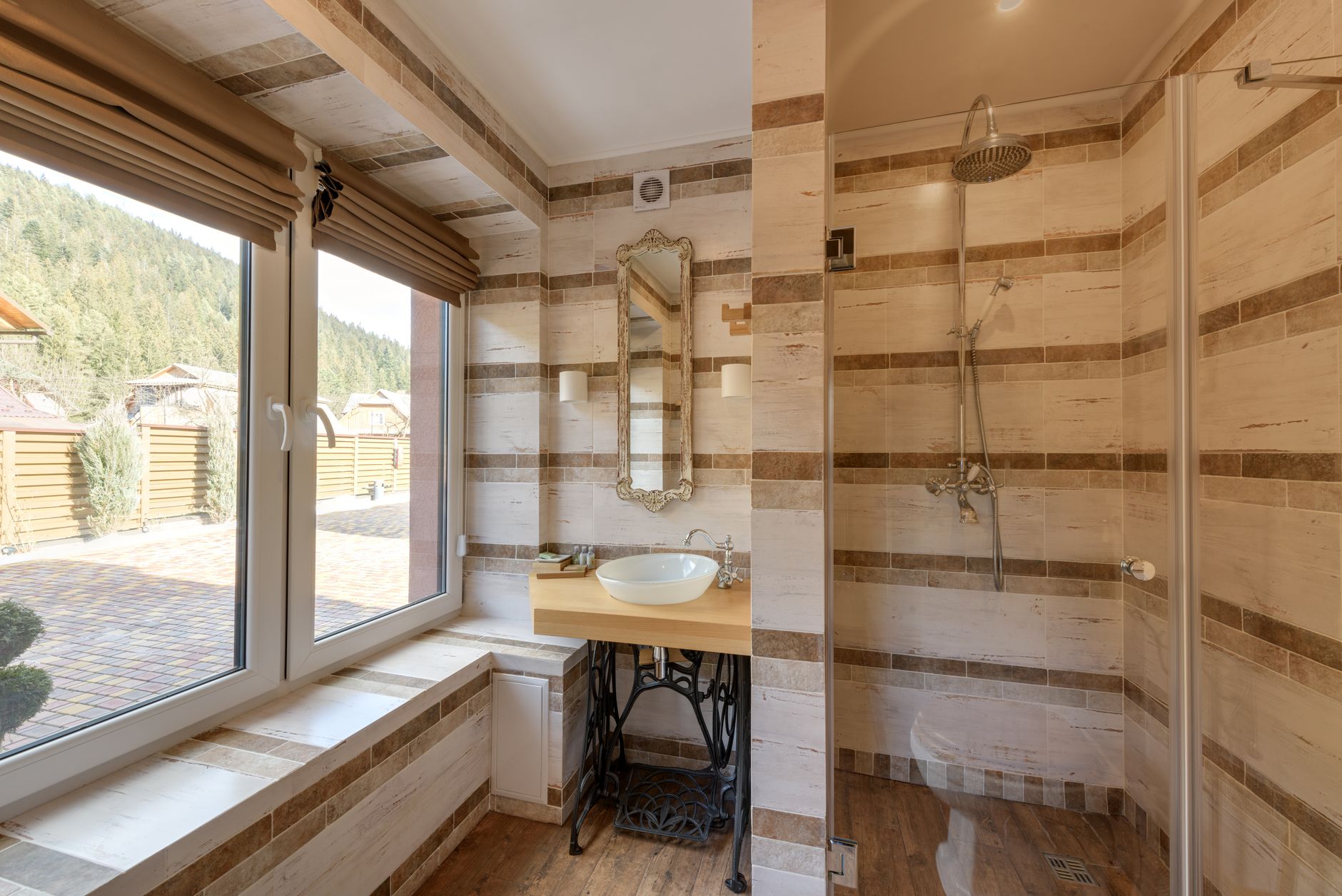
The bathroom is the one room where almost everyone wants daylight and nobody wants an audience. Most homeowners solve the problem once, usually with whatever is cheapest, and then live with the compromise for years. A permanently frosted pane blocks the view you might actually enjoy, while a blind that stays shut turns a bright room into a dim one. The better question is not "how do I cover this window?" but "when do I need privacy, and when do I want the glass clear?"
Key Takeaways
- Bathroom privacy is a timing problem, not just a coverage problem: most people need it for minutes at a time, not all day.
- Static solutions (frosted film, obscure glass) are simple and low cost, but they cannot change once installed.
- Flexible solutions (blinds, shades, switchable film) cost more or need more upkeep, but they let you choose between light, view, and privacy.
- Moisture, wiring access, and glass type decide which option is realistic for your window.
Why It Matters
Bathrooms combine three conditions that punish poor window choices: steam, small footprints, and frequent use at the exact hours when lights are on and outside is dark. After sunset, a lit bathroom behaves like a display case for anyone on the street or in a neighboring home. Fabric coverings also fight humidity, which is why many bathroom blinds warp, stain, or grow mildew over time.
That is why more owners are looking atelectronic window tint that lets you switch bathroom glass from clear to frosted instead of choosing between a permanent frost and a covering that needs constant adjustment. Switchable film is not the right answer for every window, but it changes the framing of the decision. Instead of picking one fixed compromise, you choose how much control you want.
Before comparing options, it helps to know what you are actually solving for. Three questions shape almost every good decision.
Start With Three Questions About Your Window
The right bathroom privacy solution depends on who can see in, when they can see in, and how often you want the glass clear. Answer those honestly and half the options eliminate themselves.
Who Can See In?
A window facing a fenced backyard needs far less than one facing a neighbor's second-floor bedroom or a public sidewalk. Height matters too. A small high window over a tub is rarely exposed, while a large window beside a vanity at street level almost always is.
When Do You Need Privacy?
Morning and evening are the peak exposure times, because interior lights make the room visible from outside after dark. If you only worry about privacy at night, a daytime-clear approach with a nighttime cover can work well. If you need privacy whenever the room is occupied, you want something you can activate on demand.
How Much Do You Care About the View?
Some bathrooms look onto trees, a garden, or open sky, and a permanent frost throws that away. Others face a brick wall, where a permanent frost costs you nothing. Be honest about whether the view has real value before paying for flexibility.
Pro Tip: Stand outside at night with the bathroom light on and have someone check what is visible from the street and from neighboring windows. Ten minutes of testing tells you more than any product page.
Six Bathroom Privacy Options Compared
No single option wins on every measure; each one trades cost, flexibility, and maintenance differently. The table below summarizes the general pattern.
|
Option |
Privacy control |
Daylight |
Moisture tolerance |
Typical tradeoff |
|
Adhesive frosted film |
Fixed, always on |
Good, diffused |
High |
Cannot be turned off |
|
Obscure or textured glass |
Fixed, always on |
Good, diffused |
High |
Requires glass replacement |
|
Fabric blinds or curtains |
Adjustable |
Reduced when closed |
Low to moderate |
Humidity wear |
|
Moisture-rated shades (vinyl, faux wood) |
Adjustable |
Reduced when closed |
Moderate to high |
Bulkier, covers the view |
|
Cafe-style partial covering |
Partial |
Good above the line |
Moderate |
Leaves the top exposed |
|
Switchable smart film |
On demand |
Clear or frosted, by choice |
Depends on product and installation |
Needs power and professional planning |
Frosted Film and Obscure Glass
Static frosted film is the classic budget fix. It diffuses light, hides detail, and tolerates steam well. The downside is permanence: the window stays frosted at noon on a sunny day, whether or not anyone is inside. Obscure or textured glass behaves the same way, but replacing a pane is a bigger project than applying film.
Blinds, Shades, and Cafe Coverings
Adjustable coverings give you control, which is their main strength. Their weakness is the bathroom environment itself. Fabric absorbs moisture, so moisture-rated vinyl or faux wood shades usually last longer. Cafe-style coverings protect the lower half of a window while keeping the top clear for light, which suits ground-floor rooms with a trimmed sightline.
Switchable Smart Film
Switchable privacy film changes glass from clear to frosted when power is applied or removed, depending on the product. It works as an alternative to traditional blinds and curtains, and control options typically include a wall switch, remote, or smart-device integration. It requires electrical integration, so planning wire routing and a power source matters, and compatibility depends on the glass and the installation conditions. A professional assessment before purchase avoids surprises.
A Simple Way to Choose
Match the solution to the exposure, not to the room's size. A decision flow helps keep it practical.
- Rate your exposure. Low (high window, private yard), medium (shared lot lines), or high (street-facing or close neighbors).
- Decide if the view matters. If it does not, a static frost may be all you need.
- Check your wiring situation. Is there power near the window, or can it be added without major wall work?
- Set a maintenance tolerance. If you do not want to replace or clean coverings regularly, favor options that tolerate steam.
- Weigh upfront cost against daily use. A window you use twice a day for ten years justifies a different budget than one in a guest bath.
Where Smart Film Fits Best
Switchable film tends to make the most sense in bathrooms with real daylight and real exposure: a window beside a tub, a glass panel in a walk-in shower enclosure, or a transom above a vanity facing a neighbor. In those spots, a fixed frost wastes daylight and a blind collects moisture. In a small, high, rarely exposed window, the added complexity is usually not worth it.
Where Simpler Options Win
For a secondary bath, a rental, or a window nobody sees, adhesive frosted film or a moisture-rated shade is often the sensible choice. Cost, speed, and low maintenance matter more than flexibility there. Choosing the simpler path is a good decision when the exposure is low.
Mini Case Study: The Corner Tub Window
Consider a typical renovation: a primary bathroom with a freestanding tub tucked into a corner, with a large window overlooking a side yard that sits about fifteen feet from the neighbor's upstairs bedroom. The owners start with a roller shade. It works, but it stays down most evenings, and the room feels like a cave in winter when daylight is scarce.
They then price a frosted film. It solves the neighbor problem but also erases the one thing they like, a view of a maple tree that frames the tub in autumn. Neither option feels right.
The design conversation shifts once they list their actual use pattern. They want a clear window in the morning, privacy during baths and after dark, and no fabric to mildew. That points toward switchable film on the existing glass, with a wall switch beside the vanity and wiring planned during the renovation while walls are open. They confirm glass compatibility and installation details with a professional before committing.
The point is not that smart film wins every time. It is that the decision became easy once the question changed from "what covers this window?" to "what does this window need to do at different times of day?"
Key Insight: If you are renovating, settle your privacy plan before walls close. Adding wiring later is possible but usually more disruptive and more expensive.
Moisture, Safety, and Installation Details That Matter
Bathrooms are wet environments, so every product choice should be checked against humidity and electrical safety. Adhesive films should be applied to clean, dry glass and sealed properly at the edges. Fabric coverings should be moisture-rated or accepted as a replaceable item.
For any electrical product, wiring should follow local code and be handled by qualified installers, especially near water. Ask how the system is powered, where the transformer or driver sits, and how the film edges are protected from moisture. Also ask about warranty terms for both the product and the installation, and read them closely rather than assuming coverage.
A few other points are worth checking:
- Glass type: Not every pane suits every film, so confirm compatibility before purchase.
- Window orientation: South- and west-facing glass gets more heat and sun exposure, which can affect product selection.
- Ventilation: Good airflow protects every covering, film, and finish in the room.
Actionable Takeaways
- Test your window from the outside at night to see what is actually visible.
- Write down when you need privacy and when you want clear glass.
- Rate exposure as low, medium, or high before spending money.
- Use static frost for low-exposure, low-view windows, and flexible options where daylight and views matter.
- If you are considering switchable film, plan wiring early and confirm glass compatibility with an installer.
- Choose moisture-rated materials for anything that is not glass or film.
Conclusion
Bathroom window privacy does not have to be a trade between a bright room and a private one. The best choice comes from knowing how exposed the window is, how often you use the room, and whether the view is worth keeping. Start with those answers, and the right product usually becomes obvious.
FAQ
What is the cheapest way to add privacy to a bathroom window?
Adhesive frosted film is usually the lowest-cost permanent option. It diffuses light and hides detail, though it stays frosted all the time and cannot be switched off.
Do bathroom blinds hold up against steam?
Moisture-rated blinds made from vinyl or faux wood generally hold up better than fabric. Fabric can absorb humidity, stain, and develop mildew over time without good ventilation.
Can smart privacy film be used in a bathroom?
Switchable privacy film is used in bathrooms, but suitability depends on the specific product, the glass, and how the installation handles moisture and wiring. A professional assessment before purchase is the safest way to confirm fit.
Will frosted bathroom glass still let in natural light?
Yes, frosted glass and film diffuse light rather than block it. The room stays bright, though the view outside is no longer visible.
Is it better to add privacy during a renovation or afterward?
Planning during a renovation is easier, particularly for options that need electrical wiring. Retrofits are still possible, but they can involve more disruption depending on the window and wall access.
How do I know how visible my bathroom window is at night?
Turn on the bathroom light, then check the window from the street and from neighboring windows after dark. Interior lighting makes rooms far more visible from outside than they appear during the day.