
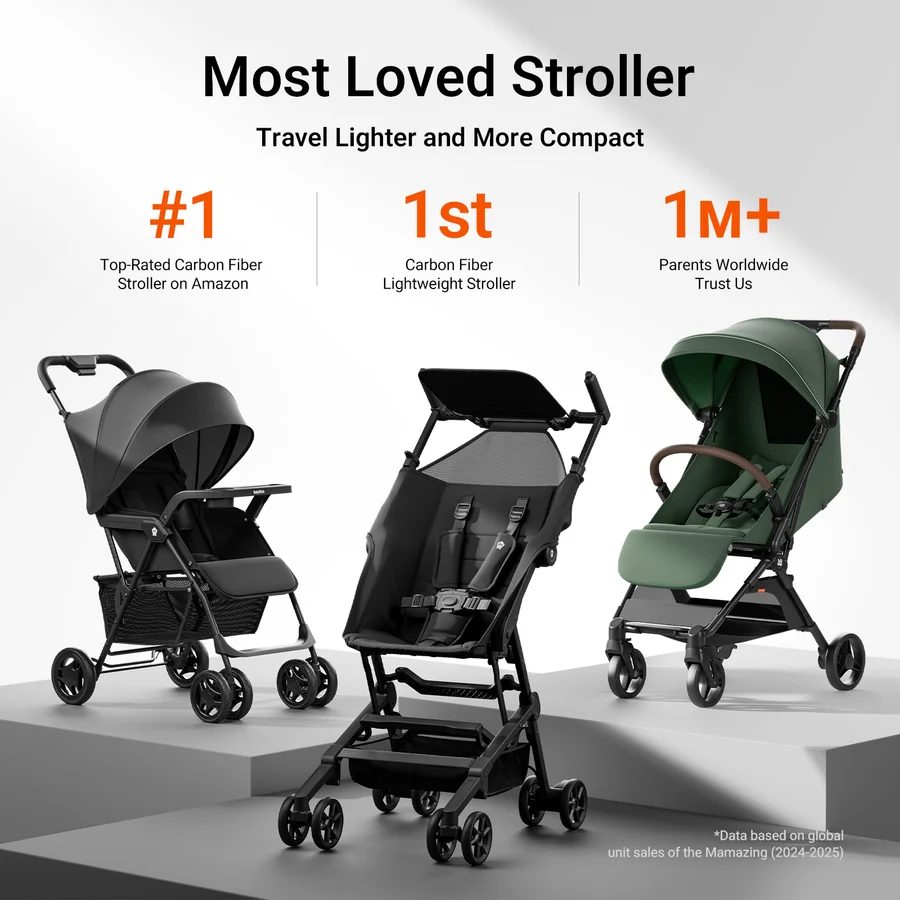
A stroller can make family life easier, but its usefulness depends on how well it fits into the small decisions parents make every day. There are mornings when getting outside quickly matters more than anything else, afternoons when errands take longer than expected, and weekends when a family wants to explore somewhere unfamiliar. Equipment that feels convenient during one kind of outing may become less practical when routines change.
Carbon fiber has become an interesting option in stroller design because it can help reduce frame weight while maintaining the strength needed for regular use. Still, choosing a stroller should involve more than comparing material names or looking for the lowest number on a product label. Parents need to consider how the frame, seat, wheels, storage, and overall design work together. Acarbon fiber travel stroller may offer useful advantages, but the real question is whether those advantages match the demands of everyday family life.
A Lighter Frame Can Change the Rhythm of a Busy Day
The difference between a lightweight stroller and a heavier model often becomes apparent during transitions. Parents may lift a stroller into a vehicle, carry it through a doorway, or move it aside while organizing groceries. Each action seems minor, but repeating these tasks several times a day can affect how convenient the stroller feels over the long term.
A lighter frame can reduce the effort involved in these moments. However, the weight listed by a manufacturer may not include every accessory, cushion, or organizer. Parents should compare the complete setup they intend to use rather than relying on the frame material alone. It is also worth checking where the stroller can be held comfortably when folded, since balance and grip influence how easy it is to carry.
The Difference Between a Lightweight Frame and a Lightweight Experience
Carbon fiber is valued for its strength-to-weight characteristics, which makes it useful in products where reducing mass is important. In a stroller, the frame is only one part of the overall design. The seat, wheels, canopy, handle, basket, and folding mechanism all affect the final weight and how the product behaves during use.
A stroller can have a lightweight frame yet feel awkward if its weight is poorly balanced or its folded shape is difficult to manage. Conversely, a well-designed model may feel easier to handle because its components work together smoothly. Parents should look beyond material descriptions and consider the full stroller as a complete piece of equipment.
This distinction also matters when evaluating durability. A lightweight product is not necessarily fragile, and a heavier one is not automatically more durable. Construction quality, joints, locking points, wheel attachments, and appropriate maintenance all contribute to a stroller's working life. The most useful comparison is between complete designs that meet the family's needs, rather than between material names alone.
Daily Habits Reveal Which Features Matter Most
Think About the Tasks That Happen Before the Walk
Getting a child ready to leave home often involves more than placing them in a seat. Parents may need to gather a diaper bag, carry snacks, collect keys, check the weather, and make sure the front door is clear. A stroller that is simple to prepare and move can help these routines feel less rushed.
Consider the way the stroller will be handled at home. Is there enough room to open it without moving furniture? Can it be stored near the entrance without blocking the walkway? Will the caregiver usually have both hands free, or will one hand be occupied with another task? These practical questions can reveal whether a particular design is suitable before its more technical features even become relevant.
Consider Who Will Handle It Most Often
A stroller may be used by parents, grandparents, babysitters, or other family members. Their heights, strength, and familiarity with the folding mechanism can differ. A design that works well for one caregiver may be less convenient for another, especially if opening, closing, or carrying it requires an awkward movement.
When possible, let the adults who will regularly use the stroller try it before purchasing. Ask each person to adjust the handle if applicable, operate the brake, fold the frame, and lift it using a comfortable grip. This practical test can reveal issues that are difficult to judge from photographs or specifications alone.
Comparing Compact Designs Without Focusing on Weight Alone
The phrasebest compact stroller can be a useful starting point when researching products, but compactness means different things to different families. One household may need a stroller that fits beside a coat rack, while another may need one that leaves enough room for groceries in a car. Some parents prioritize a simple folding process, whereas others place greater importance on the seating arrangement or the space available for daily essentials.
It helps to compare several practical measurements together. Unfolded dimensions indicate how much room the stroller occupies while in use, while folded dimensions help determine whether it fits the intended storage area. Total weight tells parents how much they may need to lift, and basket capacity helps establish how much can be carried without exceeding the manufacturer's limit. Each measurement answers a different question, so none should be treated as a complete measure of convenience.
Families should also consider the child's age and needs. A stroller suitable for an older infant may not be appropriate for a newborn unless it supports an approved newborn arrangement. Seat adjustment, harness design, canopy coverage, and the manufacturer's age and weight guidance deserve attention alongside portability. A compact design is useful only when it is suitable for the child who will use it.
A Pocket-Style Option for Families With Limited Space
The MAMAZING ZipFold Pocket Stroller is another option parents can investigate when compact storage is an important part of their decision. Its pocket-stroller positioning makes it relevant to families comparing smaller stroller designs for everyday routines. Rather than assuming that every compact stroller has the same frame material or capabilities, parents should review the product's own specifications to confirm its weight, folded dimensions, age suitability, storage limits, and included features. These details help determine whether the model matches the family's requirements at home and while away.
How the Surrounding Environment Affects Everyday Use
A stroller rarely stays in one type of environment. During the same week, a family might use it on smooth indoor flooring, pavement, park paths, and uneven sidewalks. The frame material matters, but wheel design, suspension where provided, and the stroller's intended use influence how it handles these different surfaces.
Parents should think about the places they visit most often instead of judging a stroller by an occasional trip. A household that mostly walks on smooth paths may have different priorities from one that regularly encounters cracked pavement or sloping sidewalks. Checking the manufacturer's guidance can help establish where the stroller is designed to be used. No lightweight frame can compensate for wheels or a structure that are unsuitable for the terrain.
Weather is another consideration. Rain, dust, and grit can affect moving parts and fabric over time. After an outing in wet or dirty conditions, follow the manufacturer's cleaning and drying instructions. Inspect the wheels and folding joints periodically, and avoid storing the stroller while it is still damp. These basic habits help keep the equipment ready for the next trip.
Accessories Should Solve Problems, Not Create More Work
Organizers, cup holders, cushions, and additional storage can make a stroller more useful, but every extra item adds something to manage. Accessories may change the overall weight, affect how the stroller folds, or take up space when the product is stored. Before adding anything, parents should ask whether it addresses a regular need or simply seems convenient in theory.
A small organizer may be worthwhile for essentials that need to remain within reach. A larger bag, however, might be better carried separately if it makes the stroller harder to handle. Parents should also check whether accessories are approved for their particular model and whether they interfere with folding, steering, or safety features. Hanging heavy bags from the handle can affect stability, so loads should be carried only in the places and amounts permitted by the manufacturer.
The same principle applies to the storage basket. Its capacity should be treated as a limit rather than a target, and items should be distributed sensibly. Keeping everyday supplies organized can make outings easier without turning the stroller into a heavily loaded cart.
Maintaining Value Over the Years of Family Use
A stroller's value is not determined by its purchase price or weight alone. A more useful assessment considers how often it will be used, whether it suits the child's current stage, how easy it is to maintain, and whether its features remain relevant as family routines evolve. Parents who buy with a clear picture of their needs may be less likely to replace a stroller because an important requirement was overlooked.
Before purchasing, review the cleaning instructions, product support information, warranty terms, and availability of compatible replacement parts where relevant. It is also sensible to inspect the stroller regularly for unusual movement, loose components, damaged fabric, or problems with the brake and locking mechanism. If something appears wrong, stop using the stroller until the issue has been checked according to the manufacturer's guidance.
A lightweight frame can make everyday handling more convenient, but long-term satisfaction depends on the entire product. Comfort for the child, manageable storage, appropriate capacity, and straightforward maintenance all contribute to how well a stroller serves the household.
Making a Practical Choice for Everyday Life
Carbon fiber can be a useful material for reducing stroller weight, especially for parents who frequently lift and move their equipment. Yet a stroller should be judged by more than its frame. Its dimensions, balance, folding design, seating arrangement, storage, and suitability for the child's age all affect how useful it will be in real situations.
The best approach is to begin with daily routines and work backward toward the features that matter. Think about where the stroller will be kept, who will handle it, what the child needs, and which environments it will encounter most often. Compare manufacturer specifications carefully and, if possible, try the stroller before making a final decision.
A well-chosen stroller should support family life without making ordinary tasks more complicated. By balancing low weight with practical design and ongoing care, parents can choose an option that feels useful not just on the first outing, but throughout the many small journeys that follow.