
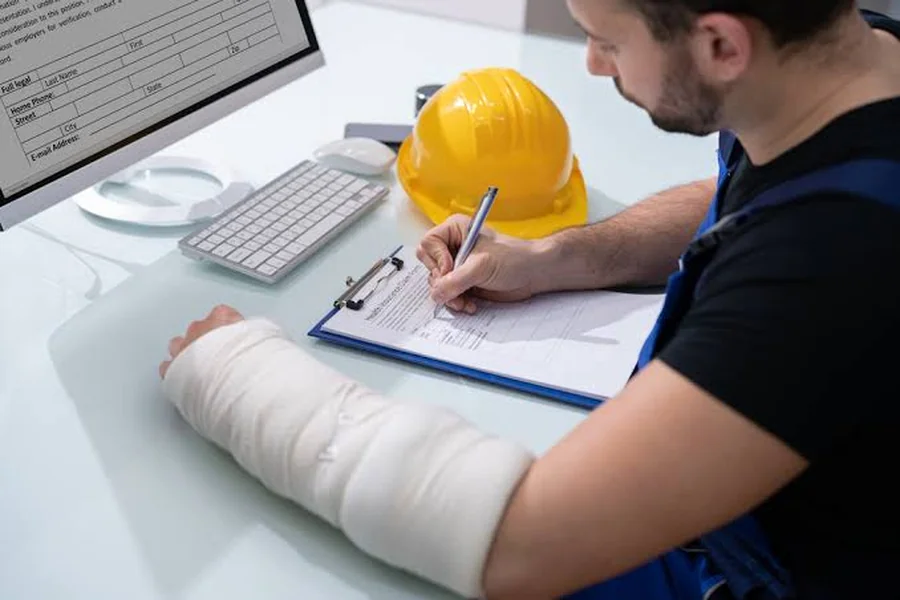
Workplace training is often treated as separate from an employee’s ordinary job duties, but an injury sustained during required training may still fall within Washington’s workers’ compensation system. The key issue is generally whether the injury occurred in the course of employment and arose from the work-related activity.
Understanding how these claims work can help injured workers protect their rights while medical treatment and employment decisions are still unfolding.
Table of Contents
When Does Training Count as Work-Related?
Employer-provided training can take many forms. An employee might be learning to operate equipment, attending a safety class, completing physical instruction, or participating in a hands-on exercise away from their usual workstation.
Training is more likely to be considered work-related when the employer requires attendance, controls the activity, or provides the instruction as part of the employee’s job. For example, an employee who strains a shoulder while completing mandatory lifting training may have a workers’ compensation claim even though the injury did not happen while performing the employee’s regular duties.
The circumstances matter, however. Voluntary activities, optional social events, or training that has little connection to employment can raise different questions.
How a Washington Workers’ Compensation Claim Begins
Washington workers’ compensation claims are generally administered through the Department of Labor & Industries (L&I) or, for some workers, through a self-insured employer.
After an injury, the employee should report what happened to the employer and seek appropriate medical attention. Telling a supervisor about the injury is important, but workers should also explain to the healthcare provider that the injury occurred during employer-related training.
Medical documentation can become particularly important when the injury initially appears minor but symptoms develop or worsen later. Records should accurately describe the activity being performed, the symptoms that followed, and any restrictions recommended by the treating provider.
What Benefits May Be Available?
Depending on the circumstances and the severity of the injury, an accepted workers’ compensation claim may provide benefits related to medical treatment and, when eligibility requirements are met, partial wage replacement for time away from work.
Some injured workers may be able to continue working with temporary restrictions. In those situations, the employer and medical provider may need to coordinate appropriate duties. A training injury does not automatically mean an employee must stop working completely.
Disputes can arise when there is disagreement about whether the injury is work-related, what treatment is necessary, or whether the employee can safely return to certain duties.
Common Challenges With Training-Related Injuries
The Injury Happened During a Practical Exercise
Hands-on training can involve physical movements that resemble ordinary job tasks. If an employee is injured while practicing those movements, the distinction between “training” and “work” does not necessarily determine eligibility. The broader employment context should be considered.
The Injury Developed Gradually
Not every workplace injury results from one obvious accident. Repetitive movements during training may aggravate an existing condition or contribute to a new problem. Medical evidence may become especially significant when the connection between the training and the condition is less apparent.
The Employer Disputes the Claim
An employer may question whether an activity was mandatory, whether the injury occurred as described, or whether another cause was responsible. When the circumstances are disputed, employees may benefit from understanding the claims process and their available options. Resources from Emery | Reddy can also help Washington workers understand issues involving L&I claims and workplace injuries.
What Should an Injured Worker Do?
Prompt action can make a practical difference. Report the injury, obtain appropriate medical care, keep copies of relevant paperwork, and document the training session while the details are still fresh. If coworkers witnessed the incident, their names and contact information may also be useful.
Employees should pay attention to claim correspondence and respond to requests within applicable deadlines. If a claim is denied or a dispute develops over treatment, benefits, or work restrictions, obtaining legal guidance can help clarify the next steps.
Questions Workers Often Have
Does required training count as work?
It can. The fact that an employee was training rather than performing normal duties does not automatically exclude an injury from workers’ compensation coverage.
What if the training occurred off-site?
An off-site location does not necessarily prevent coverage. The nature of the training and its relationship to employment remain important.
What if the employee had a previous injury?
A prior condition does not automatically eliminate workers’ compensation coverage. The medical question may involve whether the work activity caused a new injury or aggravated an existing condition.
Employer-provided training is part of many Washington workers’ working lives. When an injury occurs during that training, the details surrounding the activity, medical evidence, and employment relationship can all affect how the claim proceeds.