
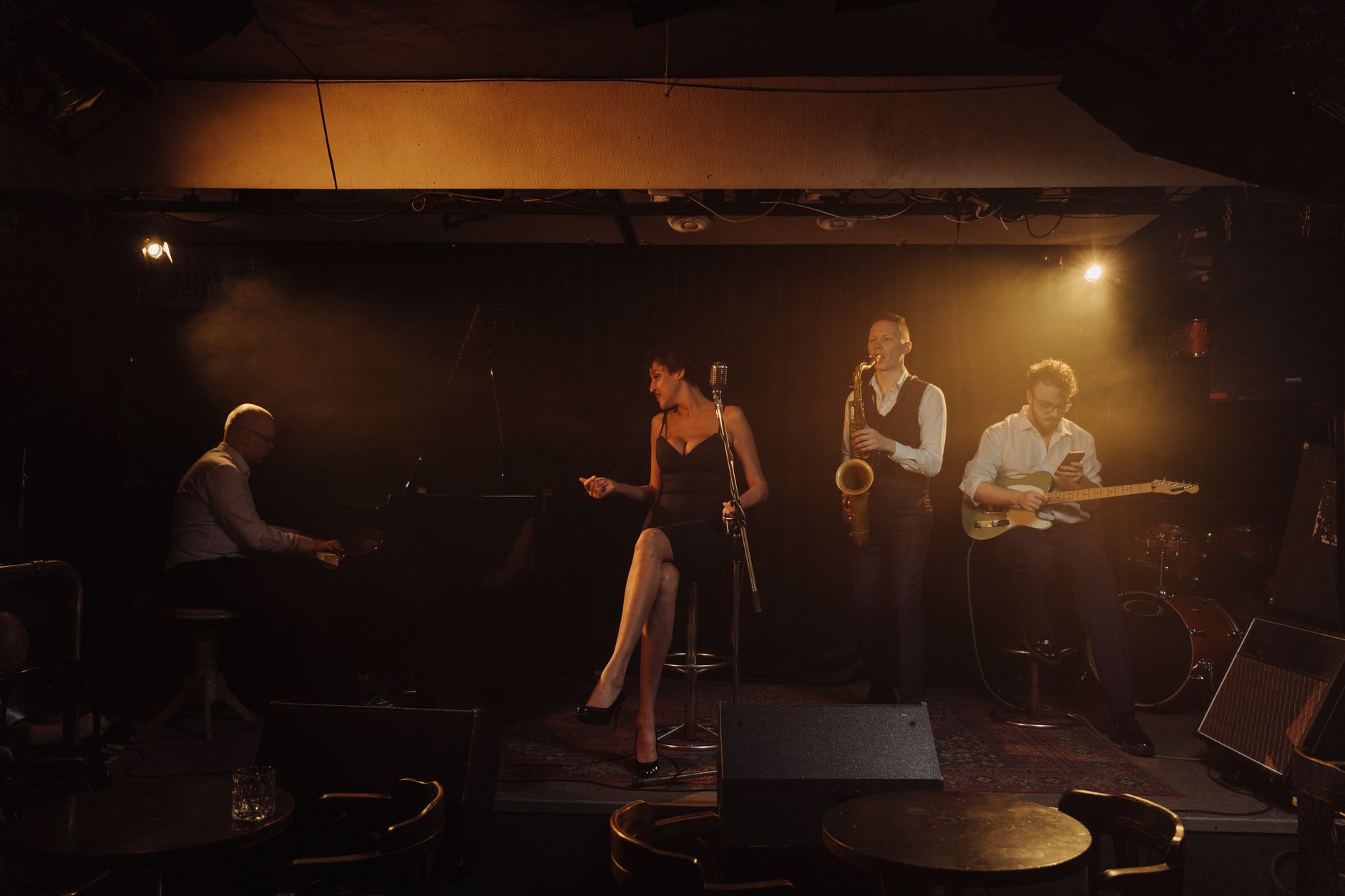
A jazz bar needs more than attractive furniture. Every chair, table, banquette, and service counter affects how guests hear the music, see the performers, order drinks, and move through the room. A beautiful chair becomes a poor choice when customers feel uncomfortable halfway through a ninety-minute set. A dramatic communal table loses its appeal when servers cannot pass behind it. Furniture must support the performance, the service model, and the financial plan at the same time.
The strongest jazz venues rarely depend on one furniture style. They combine several seating types according to how each area works. Tables near the stage serve serious listeners. Banquettes increase capacity along the walls. Bar stools support faster drink-led visits. A few lounge seats create a place for conversation before or after a show. The room feels coherent because materials, colors, scale, and lighting connect those pieces.
Famous clubs offer useful lessons, but a new venue should not copy them literally. Preservation Hall in New Orleans uses simple bench seating because history, musical closeness, and a stripped-back experience define the venue. Blue Note New York combines table seating with dinner and bar service. Ronnie Scott’s in London presents jazz through the atmosphere of a refined supper club. Each model works because the furniture matches the club’s identity and operating style.
Table of Contents
- 1. Start With the Type of Jazz Bar You Want to Create
- 2. Choose Seating for Comfort, Capacity, and Clear Views
- 3. Select Tables and Bar Furniture That Support Quiet Service
- 4. Add Stage, Storage, and Acoustic Furniture Without Cluttering the Room
- 5. Build a Practical Furniture Plan for a 60-Seat Jazz Bar
1. Start With the Type of Jazz Bar You Want to Create
A clear operating concept should guide every furniture decision. “Jazz bar” can describe a listening room, a cocktail lounge, a restaurant with live music, an informal jam-session venue, or a premium supper club. These businesses host similar music but require different seating plans. A listening room prioritizes sightlines and acoustic focus. A restaurant needs comfortable dining positions and reliable service routes. A cocktail bar benefits from a mix of stools, small tables, and social seating.
A traditional listening room works best with compact, upright furniture. Guests face the stage, tables hold only drinks or small plates, and decorative pieces stay away from circulation paths. Chairs should provide enough comfort for a full set without encouraging people to recline or turn away from the musicians. Small round tables suit couples and can sit close together without creating a rigid grid. Dark wood, stained beech, leather, and textured upholstery support a familiar club atmosphere without demanding an expensive historical interior.
A supper-club model requires more dining comfort. Guests may remain seated for two or three hours while eating, drinking, and watching a performance. The chair needs a supportive back, a stable frame, and sufficient seat width. Tables must accommodate plates, glasses, candles, menus, and service items without placing objects in the audience’s visual field. Banquettes become especially valuable because they provide comfort and let the operator use the perimeter efficiently.
Preservation Hall demonstrates the power of a focused concept. Its simple benches do not offer the comfort of a dining chair, yet they suit a historic room centered almost entirely on traditional New Orleans jazz. The furniture does not compete with the performers or disguise the building’s character. A new bar can borrow the principle rather than the bench itself: remove anything that weakens the main experience.
Blue Note New York demonstrates a different model. Its table seating supports a full bar and dinner menu, which connects the performance to food-and-beverage revenue. Closely placed tables create intimacy and increase capacity, but they also require disciplined service. A new venue following this model needs compact furniture, trained staff, and a menu designed for quiet delivery during a show.
Ronnie Scott’s offers another useful reference. Its main room combines live music and dining in a more polished setting. The lesson lies in consistency. Upholstered seating, small tables, dark tones, and controlled lighting support the same adult evening experience. A new operator does not need the same budget, but every furniture category should speak the same visual language.
2. Choose Seating for Comfort, Capacity, and Clear Views
Commercial dining chairs form the best foundation for most jazz bars. They use less floor space than lounge chairs, work with standard table heights, and give customers enough back support for a complete performance. Suitable models often have solid timber or welded metal frames, upholstered seats, and moderately upright backs. A chair that measures roughly 45 to 50 centimeters across can offer comfort without consuming excessive space, although local accessibility rules and the specific table layout must guide final dimensions.
Upholstered seats deserve preference over bare metal in the main listening area. Fabric or padded vinyl reduces small impact noises and feels more comfortable during long sets. Upholstery also absorbs a limited amount of high-frequency sound, especially when repeated across a room. It cannot replace acoustic treatment, but it avoids the hard, reflective character created by rows of metal and plastic chairs.
Bentwood chairs suit a classic café-style jazz bar. Their curved backs, light visual profile, and European associations work well with round tables, brass details, and timber flooring. Commercial versions can be durable and easy to move. The operator should test the exact model, since some bentwood chairs have narrow seats or hard edges that become noticeable during a long performance. A removable upholstered seat pad can improve comfort without changing the chair’s recognizable shape.
Banquettes provide the highest-value seating along walls. A continuous upholstered bench eliminates unused gaps between separate chairs and can accommodate couples or groups. It also creates a visually calm perimeter, especially when the backrest follows one consistent line. Channel stitching, deep green fabric, oxblood leather, or tobacco-colored vinyl can give a jazz bar warmth without overwhelming the room.
Banquette design needs careful dimensional planning. A seat that is too deep pushes shorter guests forward, while a low back gives little support. Very high backs can improve separation between zones, but they may block sightlines or trap sound in unwanted ways. The table base must allow people to slide in without hitting their knees. Removable seat panels help staff reach electrical points, inspect the structure, or replace damaged upholstery.
Bar stools should serve a distinct zone rather than replace proper seating throughout the venue. They work at the main counter, a rear drink rail, or a raised area with distant stage views. The best models have a backrest, a well-positioned foot rail, and a seat that does not force the customer to balance. Backless stools save space, but they become tiring during a full show and encourage constant shifting.
Lounge chairs should appear in small numbers. They suit a waiting area, a quieter side room, or a premium corner where guests order cocktails before the show. Deep armchairs near the stage waste space and place guests too low for clear views. Large sofas create similar problems: groups spread out, capacity becomes unpredictable, and strangers may resist sharing the seat. Compact club chairs provide a better compromise.
Ronnie Scott’s shows how upholstered seating can support an extended evening rather than a short bar visit. Blue Note shows how compact table chairs can place many listeners close to the performers while supporting dinner service. Preservation Hall shows the opposite extreme, where simple shared benches reinforce a music-first, historically grounded experience. These venues do not reveal one universally superior chair. They show that the best chair is the one that serves the club’s central promise.
Accessibility must shape the seating mix from the start. A venue needs step-free routes where required, appropriate turning space, and tables that can accommodate wheelchair users without isolating them. Removable chairs at selected tables allow a guest using a wheelchair to sit with companions. Staff should not need to dismantle a large section of the room or place the guest in an exposed aisle. Local building, fire, and accessibility codes take priority over any generic spacing recommendation.
Every shortlisted seat should pass a live test before purchase. Invite people of different heights and body types to sit for at least forty-five minutes. Place the chair at the intended table, add coats and bags, and check whether guests can stand without striking the person behind them. Listen for frame squeaks, loose joints, and scraping feet. A ten-minute showroom trial rarely reveals the problems that appear during an evening performance.
3. Select Tables and Bar Furniture That Support Quiet Service
Small round tables are often the best choice for the listening area. A diameter of about 60 to 70 centimeters works for drinks and light food for two people, depending on the service concept. Round edges help circulation in a tight room and make it easier to adjust chairs toward the stage. The shape also feels social without creating a strong “head” position.
Table bases matter as much as tops. A central pedestal gives guests more freedom than four legs, particularly on small tables. Heavy cast-iron bases resist tipping but can burden staff during room changes. Broad disc bases collect dirt around the edge and may interfere with shoes. Compact cross bases often balance stability, cleaning access, and legroom. Whatever the design, the base should remain stable when a guest leans on the table edge.
Table surfaces should resist moisture, heat, stains, and repeated cleaning. Solid timber brings warmth and can be refinished, though it requires proper sealing. High-pressure laminate offers excellent durability and a wide range of finishes. Veneer can look refined but may suffer when exposed edges meet spilled drinks. Stone provides visual weight but increases cost, reflects sound, and can cause noticeable glass noise.
Noise should influence the surface specification. Bare glass tops create sharp contact sounds whenever staff set down a bottle or customer moves a glass. Thin metal has a similar problem and can resonate. Sealed timber, laminate over a dense core, or properly finished wood table tops offer a quieter and more forgiving surface. Felt pads beneath candleholders, menu stands, and table lamps reduce small noises during soft passages.
The bar counter should function as equipment, not only decoration. Bartenders need clear stations for glassware, ice, preparation, waste, payment, and collection. Guests need a durable edge, sufficient knee space where stools are provided, and hooks or rails for bags. A padded armrest can suit a traditional interior, but it reduces usable depth and complicates cleaning. The front can carry more visual character through fluted timber, leather panels, tile, brass, or ribbed glass.
Bar placement also affects the performance. A counter directly opposite the stage creates movement and glass noise in the musicians’ line of sight. Positioning it along a side or behind the main audience can reduce distraction. Acoustic screens, shelving, curtains, and upholstered surfaces can soften the service zone without cutting it off. Ice machines, dishwashers, refrigerators, and coffee equipment require separate noise consideration; furniture cannot conceal a loud compressor during a ballad.
The Village Vanguard offers a lesson in intensity rather than luxury. Its small underground room places the audience close to the stage, and compact tables support that connection. A new club can borrow the close relationship between guest and musician, but it must meet current accessibility, fire, and operational standards rather than reproduce an old room’s constraints.
Blue Note demonstrates how tables can connect ticketed performance with food and beverage sales. Guests attend the show while seated at tables, and the room operates as both club and restaurant. This model can raise revenue per seat, but it requires more tabletop space, disciplined seat assignment, and servers who understand when to approach a table. Furniture density should never force staff to interrupt the audience repeatedly.
4. Add Stage, Storage, and Acoustic Furniture Without Cluttering the Room
The stage should be treated as part of the furniture plan. A modular platform allows the venue to host a solo pianist, trio, quartet, vocal group, or larger ensemble. Commercial stage decks offer predictable load ratings and secure connections, while custom timber platforms can fit unusual rooms. Every stage needs stable steps, safe edges, cable routes, and enough depth for music stands and instruments.
Stage height should respond to the room rather than follow a dramatic ideal. A low platform can feel intimate in a small venue, but performers disappear behind front-row heads when the floor is flat. A high stage improves views from the back but weakens the conversational closeness associated with jazz. Sightline tests using actual chairs, tables, and seated people provide better answers than an empty architectural drawing.
Instrument planning needs special attention. An acoustic piano occupies significant space and demands a reliable position away from direct heat, moisture, and heavy traffic. Moving it for every show creates tuning and damage risks. Drums require storage for house hardware, cymbal stands, and screens if the venue uses them. Bass players need a safe route wide enough for a double bass. A narrow decorative doorway can become an operational problem on the first booking night.
Storage furniture protects the public areas from clutter. Built-in cabinets can hold microphones, cables, music stands, table lamps, menus, and small replacement parts. A secure instrument cupboard or equipment room keeps valuable items away from guests. The host stand can include ticketing equipment, charging points, wristbands, and reservation materials rather than becoming a decorative podium with no useful capacity.
Furniture can support acoustic design, but it cannot repair a badly planned sound system. Upholstered banquettes, fabric-covered panels, curtains, bookshelves, and soft seating reduce some reflections. Their effect varies by frequency and construction. A qualified acoustic consultant should assess reverberation, isolation from neighbors, mechanical noise, and sound transfer through the building. Decorative foam applied after opening rarely solves those problems.
Smalls Jazz Club in New York illustrates the appeal of a concentrated, music-led room. The audience sits close to a modest stage, and the limited visual separation supports direct engagement with the players. A new venue can reproduce that sense of proximity through careful dimensions, even in a more accessible and operationally generous space.
5. Build a Practical Furniture Plan for a 60-Seat Jazz Bar
A 60-seat venue benefits from a varied but controlled seating mix. One workable starting point includes 28 dining chairs at fourteen two-person tables, 16 banquette places along the side and rear walls, 8 backed bar stools, 4 counter-height seats at a rear rail, and 4 compact lounge seats near the entrance. The exact count will change after code review, sightline testing, and service planning, but the mix supports several customer behaviors without fragmenting the room.
The front zone should prioritize listeners. Place small tables and upright chairs near the stage, with every chair angled toward the performers. Avoid high backs, tall lamps, and oversized centerpieces. Leave enough space between the first row and stage for instruments, monitor speakers, cables, and safe performer access. Premium pricing may apply to these seats, so their comfort and view should justify it.
The side walls should carry banquettes. Two-person tables positioned along the continuous seat can combine for groups while keeping the room orderly. Loose chairs opposite the banquette allow staff to adjust capacity. The table spacing should prevent one party from occupying part of another party’s area, and the upholstery should withstand abrasion from coats, bags, and repeated sliding.
The rear zone can accept taller seating. Backed stools at a drink rail give late arrivals or solo guests a place to watch without using a full table. A slightly raised rear platform may improve views, but it adds accessibility, railing, and construction requirements. Operators should compare the additional seats and ticket value against those costs before committing to multiple floor levels.
The entrance needs only a small amount of furniture. A compact host stand, one short bench, and a narrow shelf may be sufficient. Large sofas consume valuable space and encourage queues to spread. The entrance should move guests quickly toward assigned places while providing an accessible waiting position for anyone who needs it.
The first budget priority should be commercial-grade seating. Chairs experience constant lateral movement, spilled drinks, dragged legs, and repeated cleaning. Residential furniture may look appealing and cost less, but its joints, upholstery, foam, and finishes often cannot handle nightly use. Ask suppliers for weight ratings, abrasion-test information, warranty terms, replacement parts, and lead times.
The bar counter deserves investment because it shapes both revenue and identity. Customers touch it, staff work behind it for hours, and photographs often include it. Spend on a strong structure, serviceable surfaces, proper lighting, and an efficient internal layout. Decorative spending should follow those practical requirements.
Savings can come from controlled use of vintage pieces. A restored cabinet, a pair of lounge chairs, or an old host stand can bring character without exposing the entire operation to inconsistent dimensions and fragile construction. Secondhand dining chairs can work if they receive professional inspection and refurbishment, but buying sixty unrelated chairs usually creates maintenance and storage problems.
Color should connect different furniture types. A club might combine walnut-stained timber, deep green upholstery, blackened steel, and aged brass. Another might use natural oak, burgundy fabric, matte black metal, and cream walls. Limiting the palette allows chairs, banquettes, stools, and tables to vary without making the room feel accidental.
Lighting should be tested with the furniture before final approval. Dark upholstery can become nearly invisible under red stage lighting, while polished tables may reflect spotlights into guests’ eyes. Small shaded table lamps create intimacy but occupy surface space and require charging or wiring. Candles may conflict with fire rules, drip wax, or produce too little light for menus. Rechargeable commercial lamps often offer the cleanest solution.
The final layout should undergo a full rehearsal. Set every table, chair, stool, lamp, menu, and service station in place. Ask musicians to load in, complete a soundcheck, and leave the stage. Run a mock service with trays, food, and drinks. Seat people throughout the room and record which views fail. Test emergency routes and accessible spaces with qualified professionals.
Staff feedback should influence the last adjustments. Servers quickly identify narrow turns, unreachable tables, unstable surfaces, and places where chairs drift into aisles. Musicians notice stage furniture that squeaks or blocks cables. Guests notice discomfort and obstructed views. Addressing those points before opening costs less than replacing furniture after public reviews appear.
The best furniture plan supports a specific kind of night. Guests should enter, find their seats, order comfortably, and direct their attention toward the stage. Staff should move quietly without squeezing between chair backs. Musicians should feel close to the audience without losing the space needed to perform. When those conditions work together, the furniture becomes part of the rhythm of the club rather than a collection of objects placed around it.