
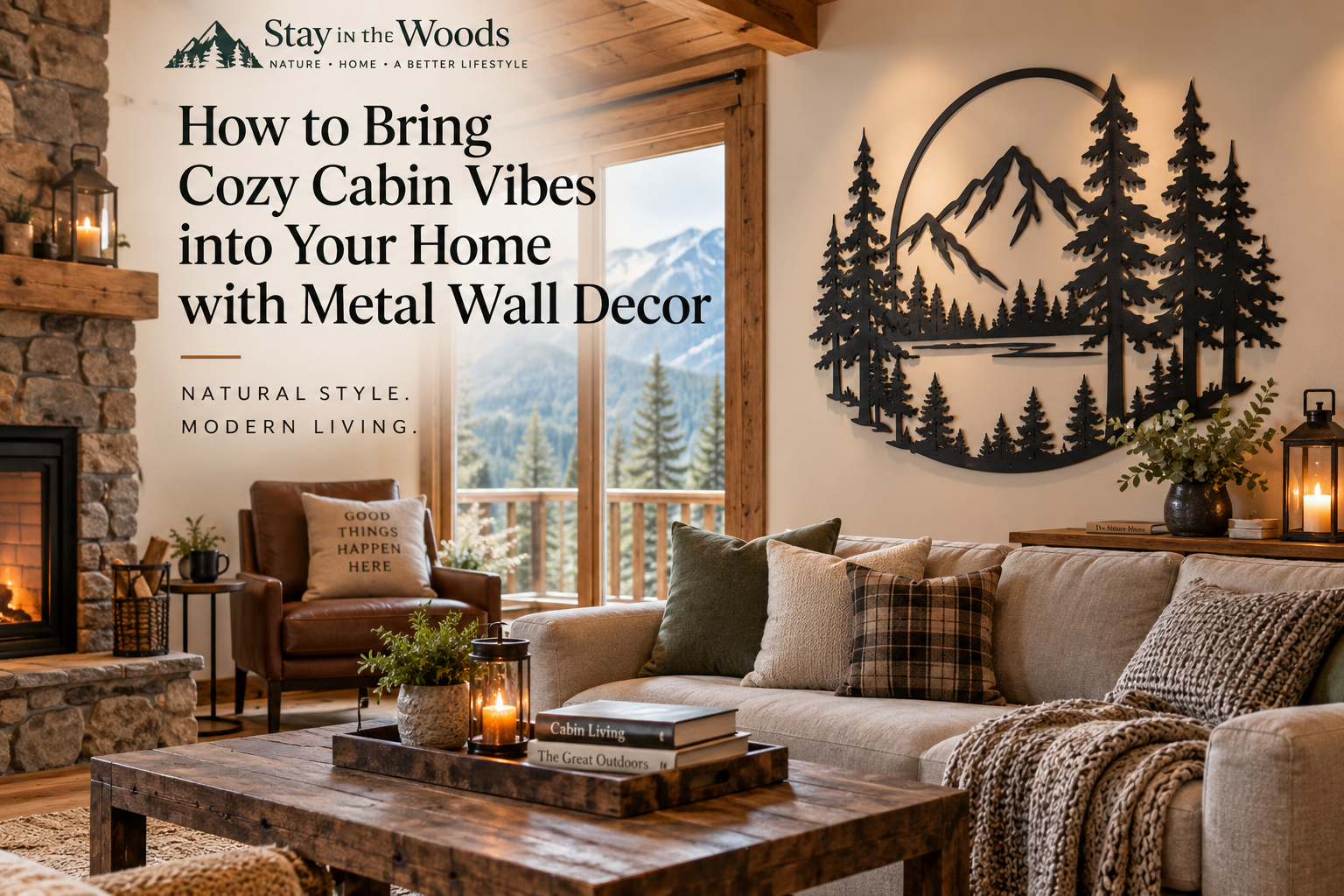
A cozy cabin interior is less about following a single decorating style and more about creating warmth, texture, and a connection to nature. Natural wood, soft textiles, warm lighting, earthy colors, and carefully chosen wall decor can bring that relaxed atmosphere into almost any home. Metal wall decor can be especially effective because it adds contrast and structure without taking away from the organic character of a rustic space.
How to Bring Cozy Cabin Vibes into Your Home with Metal Wall Decor
There is something instantly comforting about a well-designed cabin interior. Warm wood, natural textures, soft lighting, and an uncomplicated connection to the outdoors can make a space feel welcoming even when it is far from the mountains.
The good news is that you do not need to live in a log cabin to create the same atmosphere.
Modern rustic design takes many of the elements associated with traditional cabins and adapts them for contemporary homes. The result can work in a country house, suburban living room, apartment, bedroom, or weekend retreat.
One of the keys is balance. Too many rustic elements can make a room feel themed, while an overly modern space can lose the warmth that makes cabin interiors so inviting.
Metal wall decor offers an interesting way to connect those two sides. Used thoughtfully, it can provide definition and visual contrast while still complementing wood, stone, leather, linen, and other natural materials.
Start With Natural Materials
Wood is usually the visual foundation of cabin-inspired interiors.
Exposed beams, hardwood floors, paneled walls, reclaimed furniture, or even a simple wood coffee table can introduce warmth and natural variation. The goal does not have to be covering every surface in timber. A few well-chosen wood elements are often enough to establish the character of the room.
Stone works particularly well alongside wood. A stone fireplace, textured accent wall, or smaller decorative elements can reinforce the connection to nature.
Then add softer materials.
Wool throws, woven rugs, linen curtains, cotton cushions, and upholstered seating prevent harder architectural surfaces from dominating the room. These contrasting textures are a large part of what makes a cabin-inspired space feel comfortable rather than unfinished.
Use a Warm, Nature-Inspired Color Palette
Traditional cabin interiors often rely on brown, tan, cream, charcoal, forest green, and other colors found outdoors.
Modern rustic interiors can use the same family of colors without becoming dark or heavy.
Cream and warm white walls, for example, can make wood finishes feel brighter and more contemporary. Beige and oatmeal textiles soften dark furniture. Muted greens can reference forests and vegetation without overwhelming the room.
Black is also surprisingly useful.
Small amounts of black can provide definition among softer natural colors. Window frames, lighting fixtures, furniture legs, fireplace hardware, and wall decor can all introduce this contrast.
The important thing is repetition. A black decorative element feels more intentional when the same color appears subtly elsewhere in the room.
Let the Walls Contribute to the Atmosphere
Large empty walls can make an otherwise comfortable room feel unfinished.
Cabin-inspired spaces traditionally use paintings, landscapes, photographs, woven pieces, antlers, vintage objects, or wood signs. Modern rustic interiors can expand that vocabulary considerably.
Metal is particularly interesting because it provides physical dimension without requiring a bulky frame.
Open metal designs allow the wall behind the artwork to remain visible, which can be useful when the wall itself has character. On painted drywall, metal can create subtle shadows. Against wood or stone, the background becomes part of the artwork.
Nature-inspired pieces such as trees, mountains, leaves, wildlife, or botanical forms can reinforce the outdoor character of a cabin-style room. Abstract and geometric designs can push the same space in a more contemporary direction.
When exploring different styles of metal wall art, consider how the shape and finish relate to materials already present in the room rather than choosing the artwork in isolation. Hencely's collection includes nature-inspired, abstract, minimalist, black and gold designs, making this a natural contextual reference rather than a separate decorating idea.
Balance Rustic Materials With Modern Lines
One of the easiest ways to make cabin decor feel dated is to make every object rustic.
Modern rustic design works because of contrast.
A rough wood dining table can look more refined beneath a clean contemporary pendant. A stone fireplace can sit beside a minimalist sofa. Traditional wood flooring can be balanced with simple black metal furniture.
The same principle applies to wall decor.
Clean metal silhouettes can introduce structure beside irregular wood grain and natural stone. Instead of competing with rustic materials, the sharper lines give the eye a different texture to process.
This is particularly effective in spaces where homeowners want cabin warmth without creating a traditional lodge appearance.
Black Metal Works Especially Well With Wood
Black and wood are a natural pairing.
Wood provides warmth, variation, and organic texture. Black metal provides a defined silhouette and stronger visual edges. Together, they can make a room feel both comfortable and intentional.
Against light pine, oak, or warm neutral walls, black metal creates immediate contrast. Against darker wood, lighting becomes more important because it helps preserve the outline and dimensional quality of the piece.
The design itself matters too.
Botanical or tree silhouettes tend to soften black metal, while geometric pieces create a more architectural effect. Minimal line art can provide contrast without taking over a smaller room.
If black is already part of your decorating palette, a detailed guide to black metal wall art can help with wall colors, room placement, scale, lighting, and coordinating metal pieces with wood and other materials.
Choose Artwork That Reflects the Setting
Cabin-inspired decorating provides plenty of opportunities to reference nature, but those references do not have to be literal.
A mountain silhouette can work beautifully in a vacation property, but so can abstract lines that simply suggest movement or landscape.
Tree and botanical designs are especially versatile because they connect naturally with wood interiors while remaining appropriate in modern homes. Hencely's current nature and botanical collection, for example, includes tree, leaf, floral, and organic designs in black and gold finishes.
Consider the environment around the home as well.
A lakeside retreat might incorporate water or nautical influences. A wooded property may suit tree and forest designs. A mountain home can carry landscape references indoors.
The goal is not to reproduce the scenery on every wall. One or two subtle references are usually enough.
Pay Attention to Scale
Even the right artwork can look wrong when its size does not relate to the room.
A common mistake is choosing a small piece for a large wall simply because the design itself is attractive. Once installed, it can appear isolated.
Artwork above a sofa, bed, console, or sideboard should feel connected to the furniture below it. Large rooms and high ceilings generally need more visual presence, while narrow walls may work better with vertical designs.
Before ordering anything, measure both the wall and nearby furniture.
Painter's tape can be used to outline potential artwork dimensions directly on the wall. This simple step makes it much easier to judge scale from across the room before making holes or committing to a particular size.
Create Warmth Through Lighting
Cabin atmosphere depends heavily on lighting.
A single bright ceiling fixture rarely creates the same feeling as several softer sources distributed throughout the room.
Table lamps, floor lamps, wall sconces, pendant lights, and fireplaces can create layers of illumination. Warm-toned bulbs can enhance wood and neutral textiles while making the room feel more relaxed in the evening.
Lighting also changes the appearance of metal wall decor.
Because metal artwork has physical depth, directional light can cast subtle shadows behind open designs. The effect changes throughout the day as natural and artificial light shift.
This is one reason wall decor should be considered as part of the room rather than as a flat object added at the end.
Add Soft Textiles to Balance Hard Surfaces
Wood, stone, glass, and metal can create a beautiful interior, but too many hard surfaces can make the room feel visually cold.
Textiles restore softness.
Layer a woven rug beneath the seating area. Add throws to a sofa or reading chair. Use cushions with different textures rather than identical fabrics. In bedrooms, layer bedding instead of relying on a single heavy comforter.
These elements also provide an easy way to change the room seasonally.
Heavier fabrics and deeper colors can create a cozy winter atmosphere, while lighter cotton and linen can make the same cabin-inspired room feel comfortable during warmer months.
Avoid Turning the Room Into a Theme
The most convincing cabin-inspired interiors rarely look as though every object was purchased from the same rustic collection.
Mixing periods and materials creates a more natural result.
A vintage side table can sit beside a contemporary sofa. A traditional wool rug can work beneath modern lighting. Black metal artwork can appear against old wood paneling.
Think of cabin style as an atmosphere rather than a theme.
Metal wall decor works particularly well within this approach because it can bridge rustic and contemporary styles. Nature-inspired designs reinforce the connection to the outdoors, while minimalist and abstract pieces can keep the room feeling current.