
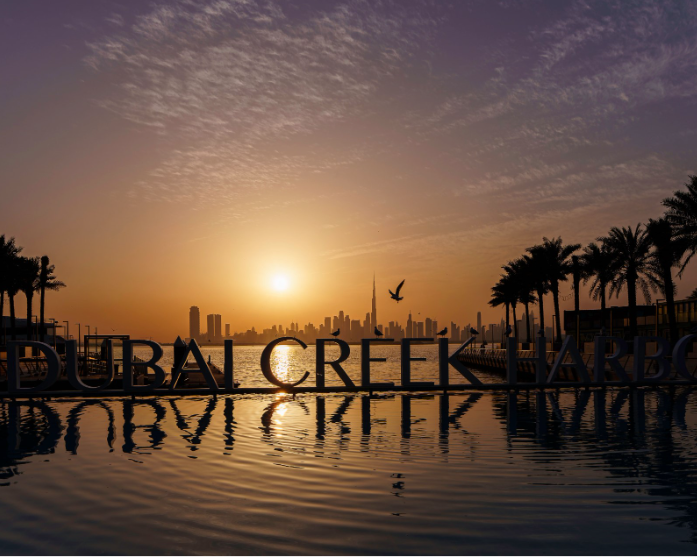
Drive down Al Khail Road on any given afternoon, and it’s obvious how quickly Dubai’s skyline shifts. For years, the city’s development playbook was all about vertical ambition. Build higher, pack in more glass, and put an infinity pool on the roof. Lately, though, something fundamental has changed in how people actually want to live here. The focus has moved away from towering apartment blocks toward neighborhoods where you can step outside, hear water, and walk your dog under real shade trees. Nobody has driven that shift quite like Emaar Properties, and watching how their master communities have evolved tells you almost everything about where Dubai is heading next.
It’s a story of two different styles of living.
Table of Contents
The waterfront blueprint at Dubai Creek Harbour
Look at Dubai Creek Harbour first.
A decade ago, this was an empty, salt-crusted stretch of land sitting right where the old city’s trade route fades into the desert. Today, it’s one of the most recognizable waterfront communities in the region.
What makes Creek Harbour interesting isn’t just the skyline views across the water toward Downtown. It’s the way the district is laid out. Instead of isolating residential towers behind security gates and parking podiums, the design pulls people down to ground level. You have wide, car-free promenades, pocket parks, and open waterfront plazas. You can stroll from your apartment lobby down to an outdoor café without having to cross a four-lane road.
It also sits right next to the historic wildlife reserve at Ras Al Khor. Having thousands of wild flamingos resting in the mangroves just across the bay from modern glass high-rises gives the whole neighborhood an anchor in nature that older waterfront districts never really had.
Creek Harbour proved that people living in a dense, urban high-rise community still crave open air, pedestrian paths, and a genuine connection to water.
Moving inland: The arrival of The Oasis
If Creek Harbour solved the problem of high-rise urban living, The Oasis is tackling the opposite end of the spectrum: the luxury suburban retreat.
Announced as a multi-billion-dollar resort-style master plan, The Oasis represents a massive pivot inland.
Why move out toward the desert? Space.
You can’t build sprawling four-to-six-bedroom mansions surrounded by swimmable blue lagoons, flowing canals, and interconnected green parks in the middle of an established coastal district. Buyers who moved to Dubai five or six years ago as single professionals are now married with young kids and pets. They’re tired of elevators. They want gardens, private swimming pools, and quiet cul-de-sacs where their children can ride bicycles without dodging delivery mopeds.
The Oasis takes the water-centric lifestyle that made Dubai’s coastal communities famous and brings it straight into the desert interior. Instead of looking out at superyachts, residents look out over tranquil waterways, botanical gardens, and wellness corridors.
It feels less like a typical residential suburb and more like checking into a luxury wellness retreat every time you pull into your driveway.
Part of a bigger urban puzzle
Neither of these developments happened by accident. They fit directly into the broader targets laid out in the government’s official urban master plan, which aims to double green spaces and build a “twenty-minute city” where residents can reach daily essentials on foot or by flexible transit.
In older Dubai neighborhoods, developers often built the towers first and figured out the parks, grocery stores, and road exits later. You ended up with great apartments trapped behind impossible traffic bottlenecks.
What Creek Harbour and The Oasis show is a much more mature approach to community planning. Infrastructure, pedestrian bridges, schools, and green corridors are mapped out years before the first resident picks up their keys.
The takeaway
Dubai isn’t just building for tourists looking for flashy landmarks anymore. It’s building for long-term residents who want daily comfort. Whether you prefer watching the sunset hit the Burj Khalifa from a sleek terrace in Creek Harbour or relaxing by a private canal in The Oasis, the message is clear: the future of Dubai living is all about water, greenery, and breathing room.