
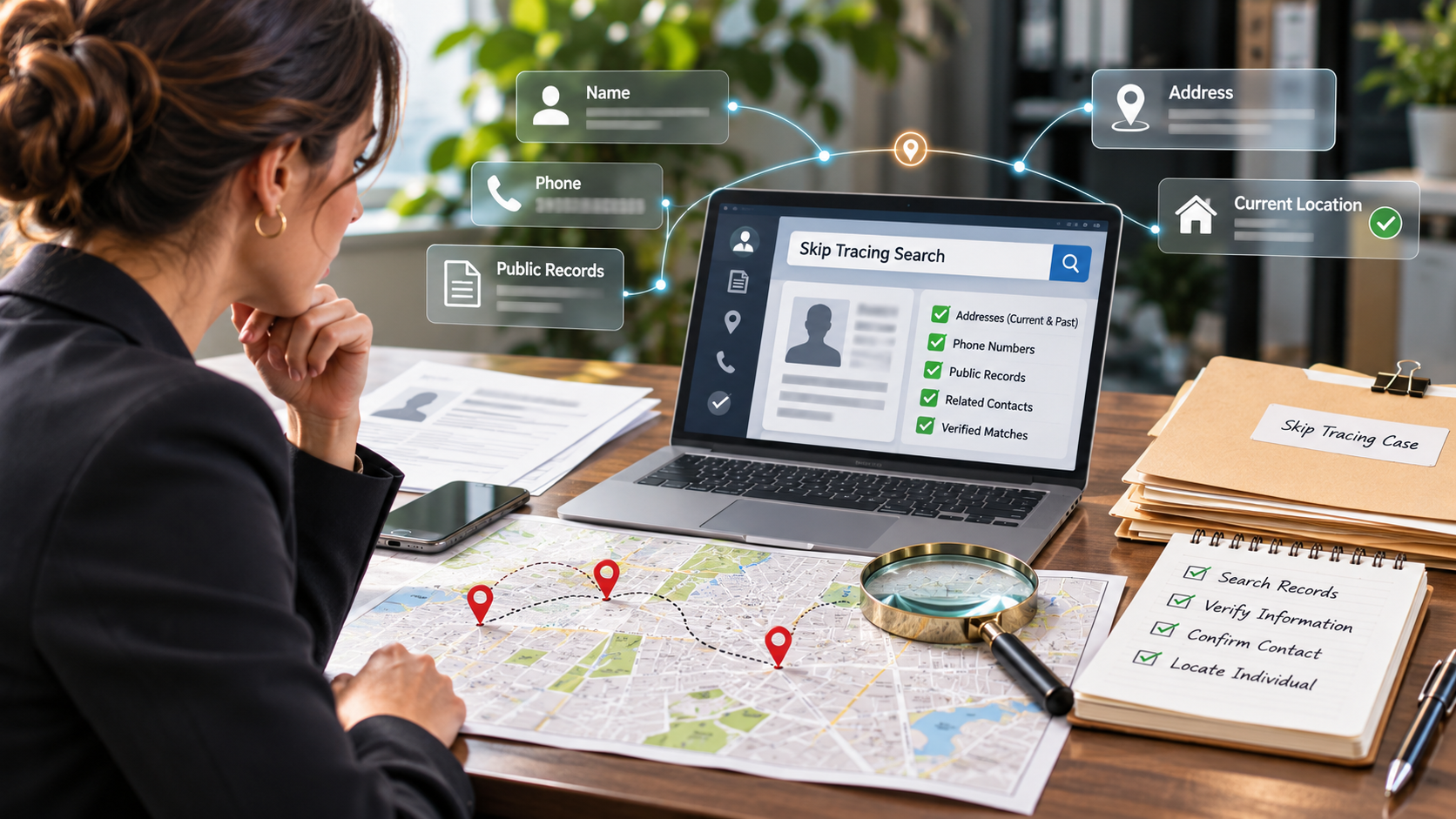
Have you ever wondered how someone can find a person whose address or phone number has changed? Skip tracing is a search process that helps find people who are hard to reach by checking records and other useful clues. It is used by licensed investigators, businesses, and other groups with a valid reason to make contact.
The process can involve public records, past addresses, phone details, and online activity. Each clue helps build a clearer picture, but every search must respect privacy laws. This guide explains the main steps, tools, and rules so you can understand the process with care.
Table of Contents
How Skip Tracing Builds a Search
Skip tracing starts with details, such as a full name, age, or last known city. An investigator checks whether the details are correct before searching further. A small error, like a misspelled name, can lead to the wrong person.
Next, the search may cover public records, such as court files, property records, and listings. These sources can show past addresses, name changes, or links to other people. Investigators compare dates and details to see which clues still make sense.
Where Records and Utility Leads Help
Utility leads may help when they are lawfully available. A past service record can point to an address linked to a person, but it does not prove that the person still lives there. Investigators use several sources to check whether a lead is current.
Online records can add more clues to the search. People search tools may show phone numbers, old addresses, or public profiles, while social media may reveal activity. Investigators must check each result because online data can be old or wrong.
How Digital Tools Support the Search
Some teams use skip tracing software to sort names, records, and address links together. These tools can save time by comparing data from many sources and flagging possible matches. A trained person still needs to review the results before taking action.
Real estate skip tracing is one common use of this process. Property firms may use it to find owners linked to vacant home, unpaid taxes, or property matters that need attention. The search should rely on lawful data and a clear business reason.
Why Careful Checks and Privacy Matter
Some searches call for more time or skill than a person can give. Professional services may help locate hard-to-find individuals when a search needs expert support. Investigators can combine record checks with careful review of each lead.
Finding a person does not give anyone the right to contact, threaten, or share private details about them. Laws limit how records may be used, and rules can differ by place and purpose. A lawful search should protect personal data and avoid harassment.
Make Every Search Count
Skip tracing brings together small clues to help confirm where a person may be reached. The process works best when searches use reliable sources, careful checks, and a clear legal purpose. Public records, utility leads, online details, and skip tracing software can all support a search, but none should be trusted alone.
Whether used for real estate skip tracing or another valid need, privacy must remain a priority. Skilled investigators know when to stop, verify a lead, and protect personal data.
Did this guide help you? Browse the rest of this section for more advice on a variety of topics.
