
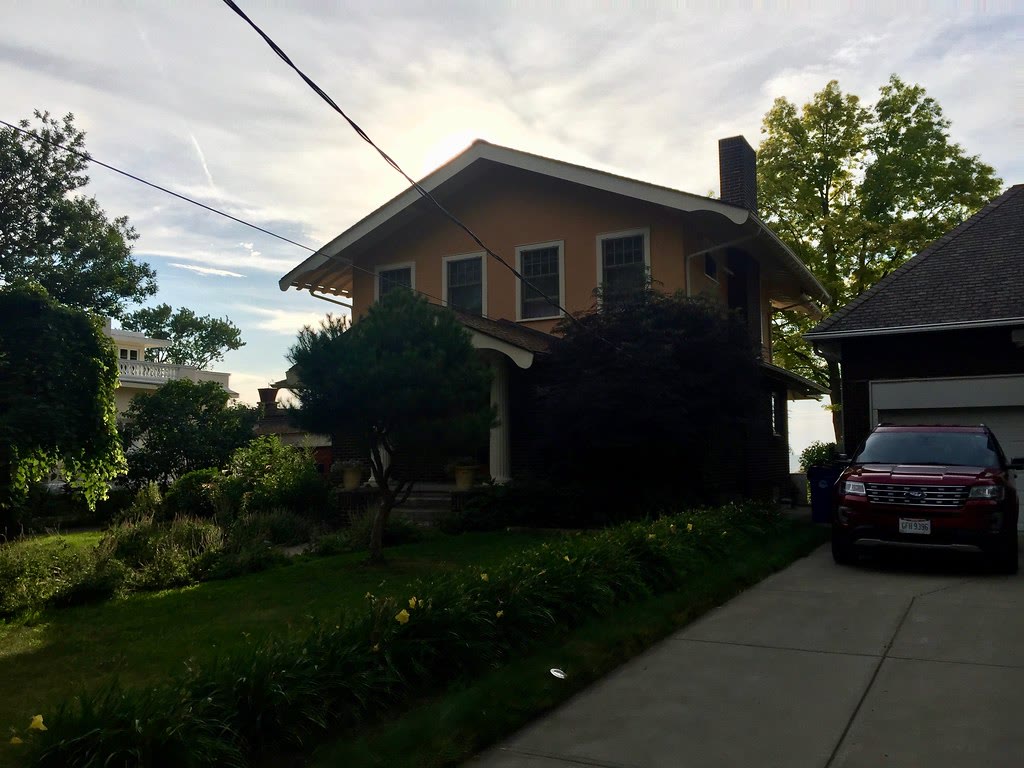
A row of tiny lights along a roof can look almost invisible after sunset. Switch them off the following morning, however, and the same installation may suddenly stand out. Small housings cast shadows beneath the eaves, a cable crosses a pale fascia board, or a line of fixtures interrupts what used to be a clean roof edge. The lights have not changed. The background has.
This is a detail worth thinking about before choosing permanent outdoor lighting. Most people judge exterior lights by nighttime photographs, when bright colors command attention and the hardware disappears into darkness. Daylight tells a different story. It shows the tracks, clips, mounting points, and transitions that remain visible even when the system is off.
For a homeowner discussing a roofline design with Astoria Lighting Co, a useful question is not simply how the lights will look when switched on. It is what a person standing at the driveway or walking toward the front door will see at noon. Considering both views helps turn a decorative upgrade into a better-integrated part of the exterior.
Table of Contents
- Daylight Reveals the Parts Nighttime Hides
- Color Contrast Matters More Than Fixture Size
- Placement Changes What People Notice
- Sunlight Can Exaggerate Small Alignment Errors
- Wiring Routes Can Draw More Attention Than the Lights
- Not Every Side of the House Needs the Same Treatment
- Request a Daytime Review Before Calling the Design Finished
Daylight Reveals the Parts Nighttime Hides
At night, the eye naturally follows the illuminated dots or the wash of color on a wall. In the afternoon, sunlight picks out the physical components instead. A dark mounting track against white trim can read as a long stripe. Individual light lenses may catch reflections. Even a neat cable can seem conspicuous when it passes across a flat surface with nothing to break up its outline.
The effect is strongest on houses with simple architecture. A wide, uninterrupted fascia board creates a clear horizontal line, so an added strip is easy to notice. Homes with layered trim, deeper eaves, and several roof planes may offer more places to tuck components out of direct view. Neither style is automatically better suited to lighting, but the installation details have to respond to the building rather than follow the same layout everywhere.
Color Contrast Matters More Than Fixture Size
A small component can be highly visible if its color differs sharply from the surface behind it. Black hardware beneath a light-colored overhang may attract attention even from the sidewalk. White hardware on dark-stained wood can do the same. The human eye notices a contrasting edge long before it can identify exactly what created it.
Matching the trim is not always the full answer
A track chosen to resemble the fascia may still look different because of its finish. Smooth plastic, powder-coated metal, and painted wood reflect daylight differently. Two materials with nearly identical colors can appear mismatched when the sun hits them from the side. Shadows below a projecting track can make that contrast stronger.
If several mounting options are available, compare them in outdoor light rather than under indoor showroom lighting. Look from a normal standing position, then step back toward the street. A sample that blends beautifully at arm’s length may form a more obvious line from farther away.
Placement Changes What People Notice
The distance between a fixture and the edge of an overhang affects how much of it is visible from below. A track installed near the front lip of a soffit might produce a crisp lighting effect at night, but its shape may also be easier to spot during the day. Moving components farther back can conceal some hardware, although the roof geometry and desired beam direction may limit that choice.
For permanent outdoor lighting, a good placement plan accounts for both the illuminated view and the unlit profile. It also considers windows on the second floor, elevated decks, and neighboring properties. A system that seems hidden when viewed from the driveway may be plainly visible from an upstairs bedroom.
Corners and roof transitions deserve extra attention
Straight runs are usually the easiest sections to make visually consistent. Corners are different. A roofline may turn around a porch, climb a gable, or stop at a dormer. Those changes can require short sections, joints, or exposed transitions. If the installer treats each segment independently, the finished pattern may appear orderly at night but fragmented in daylight.
Before work begins, ask where tracks will start and end, how they will turn corners, and what happens where one roof level meets another. A simple sketch or marked photograph of the planned permanent outdoor lighting can reveal awkward breaks before any hardware is attached.
Sunlight Can Exaggerate Small Alignment Errors
Low-angle morning and evening sunlight throws longer shadows beneath anything projecting from a surface. A slightly uneven track can create an irregular shadow that looks more noticeable than the hardware itself. The problem may vanish at midday or after dark, which makes it easy to miss during an installation check performed only at one time of day.
This does not mean every shadow is a defect. Fascia boards and soffits are rarely perfectly straight over long distances, especially on older homes. The goal is to decide how an installation should follow those real-world surfaces without creating distracting waves or sudden changes.
A practical inspection includes views from both sides of the front yard. Check the roofline in direct sunlight and in softer shade, if possible. The different angles make it easier to distinguish a harmless surface variation from a mounting detail worth adjusting.
Wiring Routes Can Draw More Attention Than the Lights
A carefully hidden row of fixtures may still look unfinished if wiring crosses an exposed section of siding. Cables sometimes need to pass around downspouts, move between roof elevations, or reach a power supply. Those routes can become the most visible feature of the entire project when the lights are off.
This is where planning becomes more valuable than simply selecting a discreet fixture. During a design discussion with Astoria Lighting Co, homeowners can ask to review the proposed cable route alongside the light positions. The conversation should include where power enters the system, which surfaces will be crossed, and whether service access will remain practical. Concealing every wire at any cost is not sensible if it leaves connections difficult to inspect or maintain.
Avoid hiding hardware in ways that create other problems
It can be tempting to push wires into a narrow gap, cover them with an unsuitable material, or fasten them wherever they disappear from view. Exterior electrical components need appropriate protection, mounting, and access. They should not obstruct drainage, interfere with gutter maintenance, or compromise roofing materials. Visual neatness matters, but it should never come ahead of safe, durable installation.
Not Every Side of the House Needs the Same Treatment
The front elevation usually receives the most attention because it faces visitors and the street. Yet a side wall visible from a patio or a roof edge overlooking a garden may be just as important to the people living there. The best approach is to identify the everyday viewpoints rather than assume that the front of the house is the only one that matters.
Walk around the property while the proposed lights are still just a plan. Notice where you spend time outside, which windows frame the roofline, and whether any installation surface is unusually exposed. On a house with several roof heights, it may make sense to treat a highly visible section differently from a sheltered one, provided the overall system remains visually coherent.
Request a Daytime Review Before Calling the Design Finished
Most homeowners naturally want to see a nighttime demonstration first. That is reasonable, but the final review should not end there. A daylight check can reveal clips that protrude, a transition that looks abrupt, or a cable path that could have been more discreet. Photographing the same roof section with the lights on and off makes the comparison easier.
A daytime review with Astoria Lighting Co should focus on observable details rather than broad promises about a seamless appearance. Which parts are visible from the sidewalk? Do track finishes suit the trim? Can future maintenance happen without disturbing nearby surfaces? Clear answers help you judge the design on its actual merits.
A thoughtful installation of permanent outdoor lighting should complement the house at all hours, not just during evening displays. The most successful result may be one that draws attention when the lights are on and quietly recedes into the architecture when they are off.
That daytime perspective belongs in the first design conversation with Astoria Lighting Co, rather than being discovered only after the fixtures are installed.