
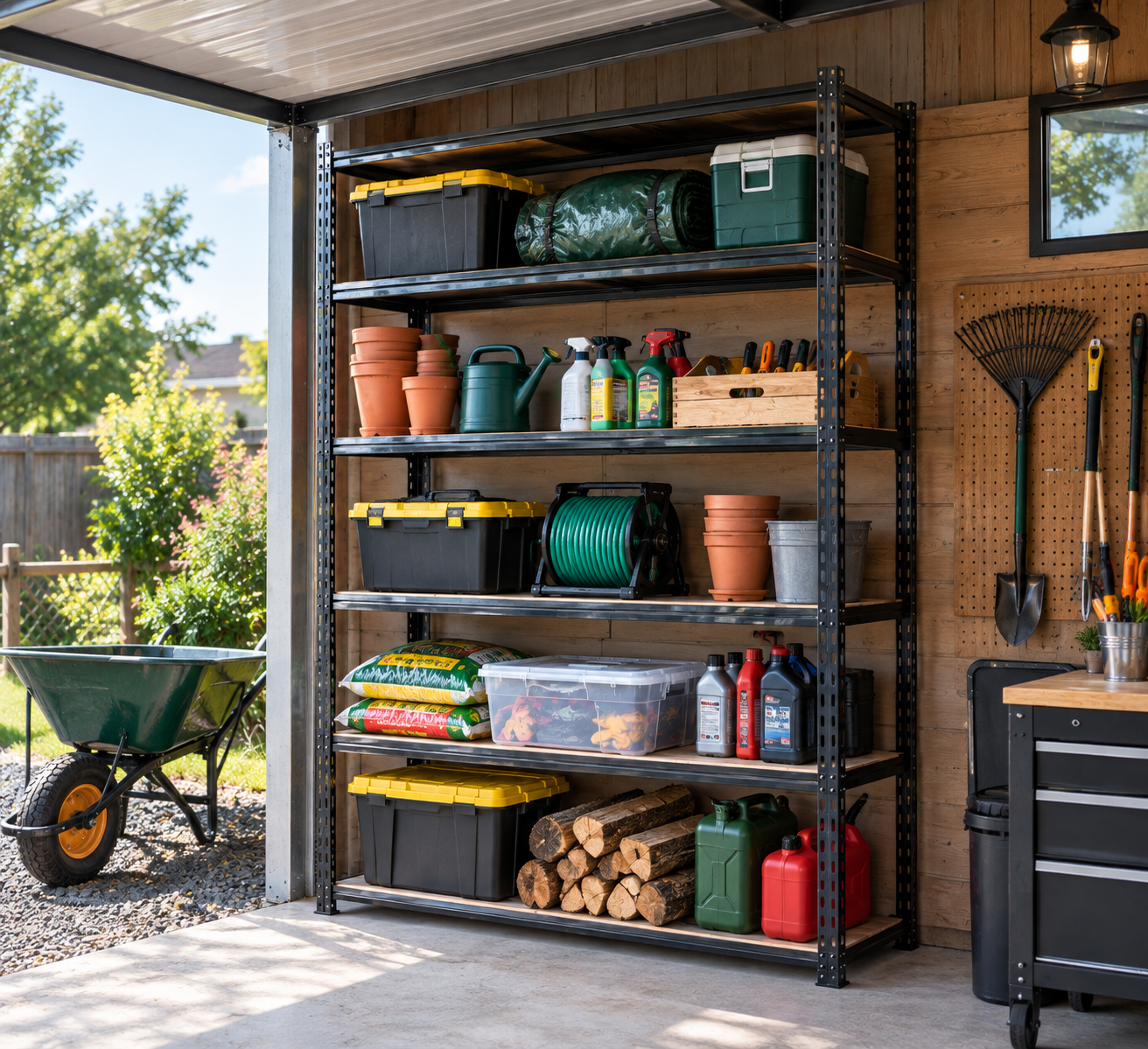
A garage can easily become one of the most difficult areas of the home to keep organized. Tools, sports equipment, gardening supplies, seasonal decorations, boxes, and automotive products often end up piled wherever there is an empty spot. Finding practical garage storage ideas can make a big difference, especially when the goal is to keep the floor clear while still having easy access to everyday items.
The good news is that you don't always need a major renovation to improve your garage. The right shelving system can turn unused wall and vertical space into useful storage and make it much easier to keep everything in its place. Here are five common garage storage problems and some practical ways shelving can help solve them.
Table of Contents
- 1. Too Many Items on the Garage Floor
- 2. Difficulty Finding Tools and Supplies
- 3. Limited Garage Space
- 4. Shelves That Don't Fit Different Items
- 5. Clutter Keeps Coming Back
- Create Storage Zones
- Keep Frequently Used Items Within Reach
- Don't Ignore Weight Capacity
- Leave Some Room to Grow
- Make Cleaning Easier
- Final Thoughts
1. Too Many Items on the Garage Floor
One of the most common garage problems is simply having too much stuff on the floor. Boxes, tool bags, gardening equipment, paint cans, and spare parts can quickly spread across the available space.
When items are stored on the floor, the garage can become difficult to walk through. It may also become harder to park a vehicle or use a workbench.
How Shelving Helps
Shelving moves storage upward and takes advantage of vertical space. Instead of keeping several boxes on the floor, you can stack them securely on different shelf levels.
A tall shelving unit can provide several layers of storage while taking up relatively little floor space. Heavy items can be placed on the lower levels, while lighter boxes and less frequently used belongings can be stored higher up.
This simple change can create a much clearer floor area without requiring you to throw away useful possessions.
2. Difficulty Finding Tools and Supplies
Another frustrating problem is knowing that something is in the garage but not being able to find it. Small tools, screws, cables, cleaning supplies, and accessories can disappear into boxes or piles of miscellaneous items.
Searching through several containers every time you need a screwdriver or spare part wastes time and can quickly discourage you from putting things away properly.
How Shelving Helps
Shelving allows you to create dedicated areas for different categories of items. For example, one section can be used for hand tools, another for automotive supplies, and another for gardening equipment.
You can also place smaller items inside labeled bins or containers. Keeping those containers on shelves makes them easier to see and access than when they are stacked randomly on the floor.
A simple organization system can be as effective as an expensive storage setup. The important thing is that each category has a designated place.
3. Limited Garage Space
Not every garage is large enough to accommodate multiple cabinets, storage boxes, and large pieces of equipment. When floor space is limited, adding more furniture can actually make the area feel even more crowded.
This is especially noticeable in garages that need to serve multiple purposes. You may need space for a car, bicycle, workbench, freezer, lawn equipment, and household storage at the same time.
How Shelving Helps
Using vertical space is one of the easiest ways to increase storage capacity without taking up much additional floor area.
Wall-mounted shelves can be useful when floor space is particularly limited. Freestanding units can also work well if they are positioned against an unused wall.
Corner shelving is another option. Corners often become wasted spaces because standard storage furniture doesn't fit comfortably there. A properly sized shelf can turn these areas into useful storage zones.
The key is to look upward rather than only looking at the floor.
4. Shelves That Don't Fit Different Items
Garage belongings rarely come in uniform sizes. You might have short containers, tall bottles, large toolboxes, and awkwardly shaped equipment all in the same storage area.
Fixed shelves can sometimes leave too much unused space between levels. In other cases, a tall item simply won't fit because the shelf above it is positioned too low.
How Shelving Helps
Adjustable shelving can solve much of this problem. Shelves that can be repositioned allow you to change the layout as your storage requirements change.
For example, you can create a taller section for large storage containers and use smaller gaps for hand tools and boxes. If you replace an item with something larger later, you can adjust the shelf instead of purchasing an entirely new storage system.
This flexibility is particularly useful for garages that double as workshops or storage areas.
5. Clutter Keeps Coming Back
Perhaps the biggest challenge is maintaining organization. You may spend an entire weekend cleaning your garage, only to find that everything becomes cluttered again a few months later.
This often happens because there isn't a convenient place to return items after using them. If putting something away requires moving several other objects first, it is easy to leave it on the nearest available surface.
How Shelving Helps
Well-planned garage storage shelves can make putting things away much easier. When every category has a specific shelf or section, returning an item takes only a few seconds.
You can organize the shelves based on how often you use different items. Everyday tools can stay at a comfortable height, while seasonal decorations and rarely used equipment can go on higher shelves.
Clear plastic containers can also make it easier to see what is stored inside. Adding simple labels provides another layer of organization, particularly when several boxes contain similar items.
Create Storage Zones
Once shelving is installed, consider dividing the garage into storage zones rather than putting everything wherever there is available space.
For example, you could have:
- Tool zone: Hand tools, power tools, drill accessories, and hardware
- Automotive zone: Car-care products, spare parts, and cleaning supplies
- Gardening zone: Pots, fertilizers, gloves, and small gardening tools
- Sports zone: Balls, helmets, bicycles, and outdoor equipment
- Seasonal zone: Holiday decorations and items used only at certain times of year
This approach makes the garage easier to navigate and helps prevent different types of belongings from becoming mixed together.
Keep Frequently Used Items Within Reach
A common mistake is organizing a garage based only on available space. Accessibility matters too.
Items that you use regularly should be stored where they are easy to reach. If you frequently work on your car, for example, keep basic automotive tools and cleaning supplies at a convenient height.
On the other hand, items such as holiday decorations may only be needed once or twice a year. These can be stored on higher shelves without causing inconvenience.
This small adjustment can make the entire storage system more practical.
Don't Ignore Weight Capacity
When adding shelving, always consider how much weight the shelves will need to support. Toolboxes, machinery, paint cans, and boxes filled with hardware can become surprisingly heavy.
Check the manufacturer's stated weight capacity and distribute heavy items appropriately. Keeping the heaviest belongings on lower shelves can also make the unit easier to access and manage.
Avoid overloading individual shelves just because there appears to be room available. A properly planned storage system should be both convenient and stable.
Leave Some Room to Grow
It's tempting to fill every shelf as soon as it is installed. However, leaving a little empty space can make the organization system easier to maintain.
You will probably acquire new tools, equipment, household items, or hobby supplies over time. If every shelf is already packed, new belongings are likely to end up on the floor.
A little spare capacity gives you somewhere to put new items without having to reorganize the entire garage.
Make Cleaning Easier
An organized garage isn't just easier to use; it is also easier to clean.
When boxes and equipment are raised off the floor, sweeping and vacuuming become much simpler. There are also fewer objects for dust and dirt to collect around.
Shelving can therefore contribute to a cleaner working environment while helping protect stored belongings from floor-level dirt and moisture.
Final Thoughts
Garage clutter usually develops because there is more stuff than available storage space—or because the available space isn't being used efficiently. Items left on the floor, poorly organized tools, limited space, inflexible shelves, and recurring clutter are all common problems.
Shelving provides a straightforward way to address these issues by using vertical space, creating dedicated storage zones, and making frequently used items easier to access. The most effective garage organization solutions don't necessarily require complicated equipment or a complete garage makeover. A practical shelving layout, combined with labeled containers and a consistent habit of returning items to their designated places, can make the space considerably easier to use and maintain.