
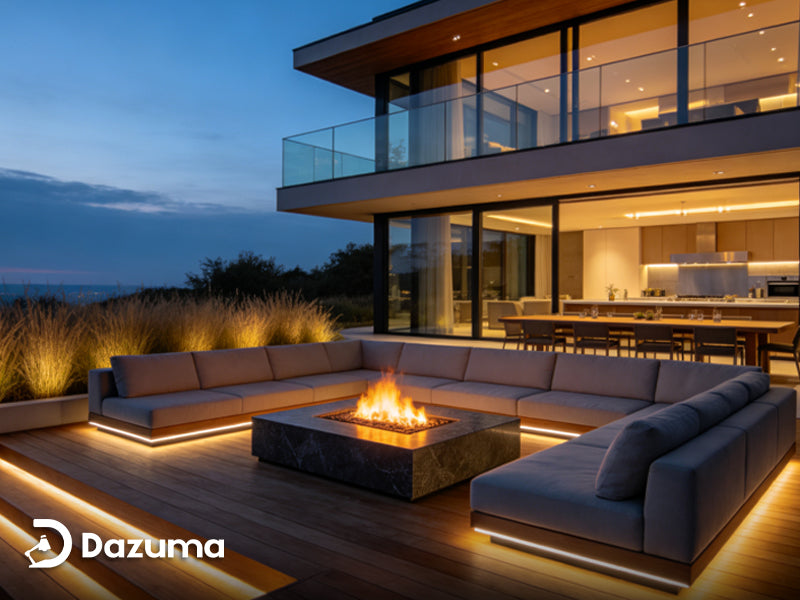
A backyard can provide more than a place for daytime gardening or weekend chores. With comfortable seating, a few well-chosen plants and thoughtful illumination, it can become a quiet retreat for reading, dining and spending time with family after sunset. The transformation does not require a complete landscape renovation. Small improvements made in the right order can produce a surprisingly polished result.
Lighting is especially important because it influences how safe, comfortable and spacious the garden feels at night. One extremely bright fixture may illuminate the area, but it can also create glare and deep shadows. A layered plan uses several softer sources to guide movement, define activity zones and reveal selected landscape features.
Table of Contents
- Decide How You Want to Use the Space
- Walk Through the Garden After Dark
- Create a Comfortable Seating Area
- Use Several Lighting Layers
- Guide Movement Without Creating a Runway
- Consider a Low-Voltage Landscape System
- Highlight Only the Best Landscape Features
- Choose Warm and Consistent Light
- Control Glare and Light Spill
- Add Natural Elements for Day and Night
- Use Controls That Match Your Routine
- Build the Backyard Gradually
Decide How You Want to Use the Space
Begin by thinking about the activities the backyard should support. A family dining area has different lighting needs from a quiet reading corner or a path leading to a garden shed. If the space must serve several purposes, divide it into small zones.
The patio might become the main social area, while a bench beneath a tree provides a more private place to relax. Walkways, gates and steps connect these spaces and require enough visibility for safe movement. Defining these functions before purchasing furniture or fixtures helps prevent the garden from becoming a collection of unrelated objects.
Walk Through the Garden After Dark
Many outdoor design decisions are made during daylight, when it is difficult to understand how the property will feel at night. Take a slow walk around the garden after sunset and follow the routes your household normally uses.
Look for uneven paving, steps, low branches and sudden changes in elevation. Notice whether the lock on the back gate is difficult to find or whether the route between the patio and house disappears into shadow. These practical locations should receive attention before decorative features.
Also identify areas that can remain dark. Darkness adds depth and allows each illuminated feature to stand out. Lighting every section equally can make a garden feel flat and smaller than it really is.
Create a Comfortable Seating Area
Outdoor seating should feel connected to the house without appearing like an indoor room placed on the lawn. Arrange chairs so people can talk easily and provide a stable surface for drinks, books or food. Weather-resistant cushions, throws and planters can introduce colour and softness.
Protection from the elements is also important when you set up an outdoor seating space. Adding a shade sail or a privacy screen helps block intense heat and creates a more defined boundary. You can find durable outdoor covers and shade structures at Sunny Garden Market to keep your seating area cool. These additions make the space more practical for daily use throughout the warmer months.
Separate controls or compatible dimmers make it easier to change the mood without rearranging the entire area.
Use Several Lighting Layers
A balanced backyard normally combines ambient, task and accent illumination. Ambient lighting creates the general glow around a patio or covered seating area. Task lighting helps people use stairs, prepare food or unlock a door. Accent lighting brings attention to a tree, textured wall, sculpture or planting bed.
Homeowners exploring different fixture formats can use Dazuma’s Outdoor Lighting collection as inspiration for combining wall lights, path fixtures, post lights and landscape accents. The goal is not to include every type. Each selected fixture should serve a clear purpose within the overall plan.
Layering several modest sources usually creates better visual comfort than attempting to illuminate the entire backyard with one powerful floodlight.
Guide Movement Without Creating a Runway
Paths do not need to be outlined by identical lights placed at perfectly equal intervals. That arrangement can appear overly formal and may use more fixtures than necessary. Instead, concentrate illumination near turns, intersections, steps and changes in paving.
Staggering lights from one side of a path to the other creates a more natural rhythm. The beam should reach the walking surface while the light source remains shielded. This helps visitors understand the route without experiencing uncomfortable glare.
Temporary markers are useful during planning. Position them where fixtures may be installed, then view the arrangement after dark. You may discover that fewer locations are required than expected.
Consider a Low-Voltage Landscape System
Properties requiring several fixtures across paths and planting beds may benefit from a compatible low-voltage system. A transformer reduces household electrical voltage before supplying appropriate landscape fixtures. This format is commonly used because it provides flexibility when distributing lights around a garden.
Dazuma’s Outdoor Low Voltage Lights show how path, recessed, post and decorative fixtures can contribute to a coordinated exterior plan. Before choosing a system, calculate the combined fixture load, check transformer capacity and confirm that every cable, connector and light is compatible.
Low voltage does not eliminate the need for safe installation. Components still require protection from moisture and physical damage, and the complete system must follow manufacturer instructions and applicable local requirements.
Highlight Only the Best Landscape Features
Accent lighting is most effective when it is selective. Choose a small number of features that give the garden its identity. A mature tree, stone wall, water feature or sculptural plant may become a strong nighttime focal point.
Uplighting a tree can reveal the texture of its trunk and the shape of its canopy. A beam directed across a rough wall can emphasise stone or brick, while soft backlighting can turn ornamental grass into a silhouette.
Avoid highlighting every plant. When several features compete at the same brightness, the eye has nowhere to rest. One primary focal point supported by a few softer accents will create a clearer composition.
Choose Warm and Consistent Light
Light colour has a strong influence on atmosphere. Warm white illumination generally complements timber, brick, stone and green foliage. It can make an outdoor seating area feel more welcoming and coordinate naturally with the light visible through the windows of the house.
Cooler light may suit certain modern exteriors or functional work areas, but mixing noticeably different colours within one view can make the landscape appear disconnected. Check the colour information for integrated LEDs and replacement bulbs before purchasing them.
Consistency does not mean that every fixture must have the same brightness. Variation in intensity helps establish which areas are functional and which are decorative.
Control Glare and Light Spill
A bright fixture visible from a chair or window can make the backyard less comfortable. Glare also reduces the ability to see beyond the light into darker areas. Select shielded designs and aim beams towards the ground, wall or landscape feature they are intended to illuminate.
View the proposed lighting from neighbouring properties as well as from your own home. Light that extends beyond the boundary may enter nearby bedrooms or interfere with another household’s outdoor space. Lower brightness and precise positioning often solve the problem without reducing useful visibility.
Timers can switch decorative lights off later in the evening, helping to preserve a calmer nighttime environment.
Add Natural Elements for Day and Night
Lighting alone will not make a backyard feel relaxing. Plants provide movement, texture and seasonal interest during the day, while carefully directed light allows selected forms to remain visible after dark.
Choose plants suited to the climate, soil and available sunlight rather than selecting them only for appearance. A combination of evergreen structure, flowering plants and ornamental grasses can keep the garden interesting throughout the year. Containers offer flexibility where permanent planting space is limited.
Remember that plants grow. A small shrub can eventually block a path light, while tree branches may interrupt an accent beam. Allow enough space for mature growth and keep important fixtures accessible.
Use Controls That Match Your Routine
Outdoor lighting does not need to operate at full output throughout the night. Dusk-to-dawn sensors can activate the system as daylight fades, while timers can turn decorative zones off after the normal period of use. Smart controls may allow different scenes for dining, entertaining and quiet evenings.
For homeowners who want to coordinate more than lighting alone, outdoor smart home automation solutions can bring features such as lighting control, audio, security and other connected outdoor systems together. Planning these elements as part of the wider backyard setup can make it easier to create scenes and controls that suit different ways of using the space.
Plan for Weather and Maintenance
Every fixture must be suitable for its exact outdoor location. A light beneath a covered roof experiences different conditions from one installed in an exposed planting bed. Rain, irrigation, humidity, sunlight, freezing temperatures and coastal air can all affect materials and electrical components.
Check outdoor suitability, construction and installation instructions before purchasing. Make sure lenses can be cleaned and bulbs or other serviceable components can be reached. Cables should be protected from gardening tools, pets and normal foot traffic.
Inspect the lighting several times a year. Remove dirt and fallen leaves, trim plants blocking beams and confirm that fixtures remain correctly aimed. Regular attention prevents a carefully designed effect from gradually becoming uneven.
Build the Backyard Gradually
There is no need to complete the entire transformation in one weekend. Start with the busiest route and the main seating area. Live with the changes for several evenings before adding more fixtures or decorative features.
This gradual approach makes it easier to judge brightness, spacing and light colour in real conditions. It also reduces the risk of purchasing equipment that does not contribute to the final design.
A relaxing backyard is created through balance rather than quantity. Comfortable seating, healthy planting and thoughtfully layered light can turn an ordinary outdoor area into a useful part of everyday life. By illuminating only what matters, the garden can feel safe and welcoming while retaining the peaceful atmosphere that makes evenings outdoors so enjoyable.