
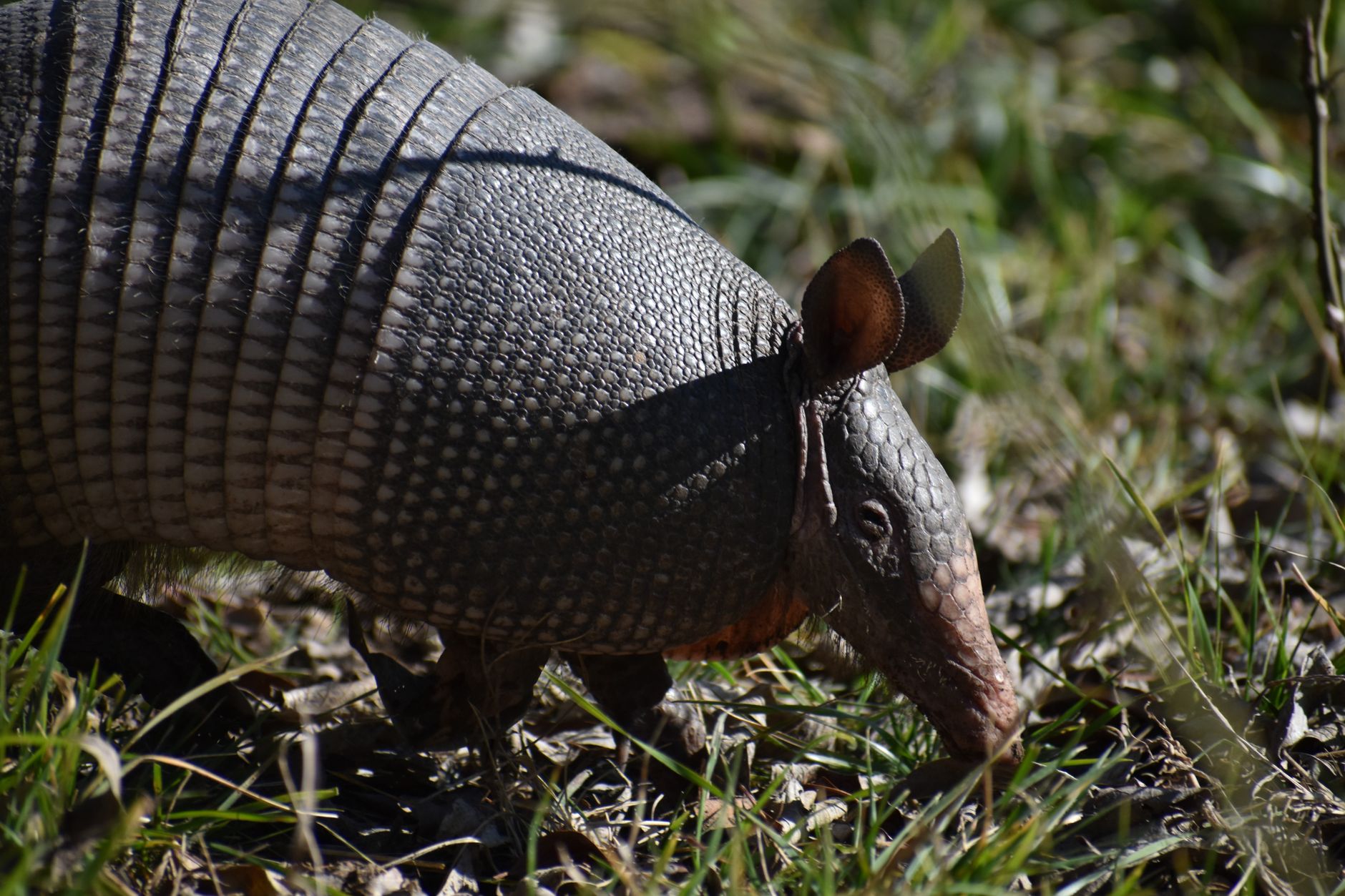
You wake to a familiar scene in late spring. The lawn you mowed on Saturday is pocked with shallow cone-shaped holes, mulch is scattered across the walkway, and a flower bed along the fence looks rooted up overnight. In Texas, Florida, Georgia, Mississippi and Arkansas, that pattern often points to one nocturnal visitor. General background on the Armadillo helps explain why the damage appears in patches and why it returns until the animal is removed. For many homeowners, a live armadillo trap becomes the practical next step after fencing and repellents fall short.
Our top pick is The Armadillo Trap for homeowners who want a ready-to-place wooden box trap, because the seller offers it pre-scented and fully assembled. The maker describes a place-and-wait approach built around treated lumber and a gravity door design, without separate bait sourcing or assembly tools. For buyers who prefer an open wire-cage design, Tru Catch Traps is the strongest alternative on this shortlist. Minnesota Trapline Products is the strongest alternative for trappers who want to buy lures and accessories alongside their trap.
This guide is written for Southern homeowners and rural landowners with no trapping background who need to match their yard situation to the right option. We compared seller-described features, including build materials and setup effort, along with scent approach, safety considerations, sourcing clarity and seller track record. What follows is a ranked shortlist of five armadillo trap suppliers and formats to consider for 2026, each framed for a different buyer need, plus placement guidance and answers to common buying questions.
How We Chose
We treated this as a brand and supplier roundup based on publicly described features, not as hands-on field testing. We did not measure capture rates and we do not present any pick as scientifically proven to outperform another. Instead we looked at how each seller describes its offer and how that description fits yard protection use. Comparing those stated features gives readers a consistent basis for choosing when public detail is uneven across brands.
Build Materials and Durability
We noted what each seller says about construction, such as lumber thickness, hardware type or wire format, and whether the trap ships assembled. For yard use, we favored designs described as sturdy and simple to position along fences or structures.
Ease of Setup and Scent Approach
We compared assembled versus unassembled presentation and whether the seller describes a scented, unscented or bait-related approach. For first-time buyers, fewer steps and clearer placement instructions matter more than added accessories.
Safety and Responsible Use
We looked for enclosed or live-capture presentation and for any seller guidance on checking traps promptly and limiting access by children and pets. Any live trap requires restricted access and frequent checks, with a lawful plan for handling captured wildlife before the trap is set.
Seller Track Record and Sourcing Clarity
We considered how clearly each seller identifies its business, location and contact path, plus any seller-stated history, unit counts or third-party field work. Seller claims are reported as seller claims, not as independent validation.
Fit for Protecting Lawns and Gardens
We considered how each option fits a specific yard scenario, from a single damaged bed to a larger rural property. The goal was to match each supplier to a distinct buyer, so readers can choose by situation rather than by hype.
The 5 Best Armadillo Traps for Protecting Your Yard
The following five options cover different buyer needs in 2026, from a no-bait, pre-scented wooden trap for homeowners who want fewer setup steps to wire cages and suppliers with broader equipment catalogs. Each entry below explains how that supplier fits yard protection and where its limits lie, including when buyers need to confirm a cage's suitability for armadillos. The list starts with our overall pick for first-time homeowners and moves through alternatives that require more model selection or equipment knowledge.
|
Trap |
Best For |
Key Strength |
|
The Armadillo Trap |
Homeowners Wanting a Ready to Place Option |
Seller Described Pre Scented Wooden Box Design |
|
Tru Catch Traps |
Buyers comparing wire-cage formats |
Live-trap categories, manuals and size guide |
|
Duke Traps |
Buyers comparing a broad trapping catalog |
Published cage construction and several retail channels |
|
Minnesota Trapline Products |
Trappers wanting cages plus accessories |
Live-cage listing alongside equipment and instructional resources |
|
Pied Piper Animal Trap |
Buyers comparing an armadillo-listed retail cage |
Retailer-listed #201 dimensions and materials; confirm stock |
#1. The Armadillo Trap – Best No-Bait Trap For Homeowners
The Armadillo Trap is our first choice here for homeowners who want the simplest path from purchase to placement, based on the seller's description of its setup.
The Armadillo Trap is described by its seller as a handmade wooden box trap built in Mississippi by owner Josh Russell, who the seller says brings more than 17 years of armadillo trapping experience. The seller states the trap ships fully assembled with armadillo scent embedded in the wood, so the buyer places it without sourcing separate armadillo trap bait. The seller also states the scent presentation lasts 6 to 11 months, that more than 10,000 units have been sold, and that the design was field tested by Mississippi State University. Those points are seller claims and describe how the maker presents the product; they should not be read as a university endorsement or a guarantee of results.
In practical terms, the seller describes 3/4-inch treated lumber, a dual gravity door and galvanized hardware. The seller describes the trap as safe for pets, but that claim should not be treated as a reason to allow pets near a set trap. Any live trap should be placed where children and pets cannot reach it and checked frequently according to wildlife authority guidance, local rules and weather conditions, with no direct contact with captured animals and advice from a licensed professional or local wildlife agency whenever handling is unclear.
Strengths
- Scent already in the wood and no assembly required, according to the seller
- Seller-stated field work history and high unit count provide context for consideration
- Enclosed wooden box format described as focused on armadillos and yard use
- Seller-stated buyer terms include free shipping and a 90-day money-back guarantee
Trade-offs
- Wood benefits from dry storage between uses and is not ideal for constant wet exposure
- Single-species focus means it is not positioned as a general-purpose trap
- Buyers who want to see inside without approaching will find a box less open than wire
- Limited public third-party detail beyond the seller account of university field testing
Best for homeowners and first-time trappers who want a ready-to-use scented armadillo trap with minimal setup steps.
#2. Tru Catch Traps – Best for Comparing Wire-Cage Formats
Tru Catch Traps sells live-animal traps from its Belle Fourche, South Dakota operation. Its website lists small-animal, wildlife and large-animal trap categories, as well as carriers and accessories. The company states that it has provided live traps since 1987 and publishes product manuals, how-to videos and a size guide.
Those support resources make it worth considering for buyers who prefer a wire-cage format and want to understand the mechanism before buying. The homepage alone does not establish which model is suitable for an armadillo. Ask the seller about the intended species, internal dimensions, entrance height, door retention and setup instructions rather than choosing a popular cat trap because it appears first in the catalog.
An open cage makes visual inspection easier, but it still needs a protected location and restricted access, with frequent monitoring appropriate to local guidance and weather. Confirm current stock and shipping before ordering, especially if damage is ongoing and you need equipment soon. Compare a specific cage confirmed as suitable for armadillos with the pre-scented box, rather than treating one brand's entire catalog as equivalent to one specialized product.
Strengths
- Dedicated live-trap catalog with multiple size categories
- Buyers can assess setup using the published manuals and videos, with a size guide for comparison
- Company-stated operating history since 1987
Trade-offs
- Buyers need to confirm a model intended for armadillo capture rather than assuming every wildlife trap fits
- Shipping and stock should be checked before purchase
- Cage visibility does not eliminate animal stress, exposure or handling risk
Best for: Buyers comparing open cage options who are willing to obtain model-specific suitability advice before ordering.
#3. Duke Traps – Best for Comparing a Broad Trapping Catalog
Duke Traps is based in West Point, Mississippi and manufactures cage traps alongside other wildlife-management equipment. Its homepage describes the Model 1112 cage as having a reinforced frame, gravity-drop door, narrow cage mesh and a pressure-sensitive pan system. The manufacturer presents that model primarily for raccoons, so armadillo buyers should confirm suitability with the seller rather than treating the description as armadillo-specific testing.
This is a practical option for people who prefer a conventional cage and want to compare sourcing through trapping suppliers, farm stores, hardware stores or online retailers. Duke identifies those channels on its website. A Mississippi business address gives buyers a regional company to contact, though the location alone offers no evidence of capture performance or delivery speed.
For this yard-protection guide, focus on the live-cage range. The same catalog also contains foothold, body-gripping and other trap types that are not substitutes for the live boxes and cages compared here. Ask about the exact model and its dimensions, then confirm the door mechanism, assembly requirements and responsible handling before purchasing.
Strengths
- Publishes construction details for its cage range
- Describes several retail channels for purchasing equipment
- Buyers can contact the Mississippi-based company directly using its published contact information
Trade-offs
- The featured Model 1112 is described for raccoons, not supported here by armadillo-specific performance data
- Buyers must distinguish live cages from other trap types in the catalog
- Retailer price, stock and return terms can differ
Best for buyers who want to compare conventional live cages through a broad Mississippi manufacturer's retail network.
#4. Minnesota Trapline Products – Best for Trappers Who Want a Full Supply Kit
Minnesota Trapline Products is included for serious or repeat trappers who want to order their trap and related accessories from one specialist supplier.
Minnesota Trapline Products lists traps, lures, baits, tools, animal-handling equipment and instructional resources, with warehouse locations in Pennock and Alexandria, Minnesota. Its Raccoon Cage Trap page describes a Bridger cage measuring 12 by 12 by 29 inches, galvanized after assembly and powder-coated black. That gives buyers a specific live cage to discuss with the seller, although the reviewed page does not label it as armadillo-specific. Confirm suitability and stock before ordering; the product page showed it backordered when checked. The breadth of supplies is most relevant to buyers who already know their equipment needs and want consolidated ordering.
Keep expectations measured. Armadillos may enter well-placed cages without bait, and public evidence does not establish that any particular lure is proven for armadillos. Placement along travel paths matters more than adding scent products, as do guide boards that funnel movement and frequent checks appropriate to conditions. Buyers should treat lures and baits as optional accessories to discuss with the seller or a wildlife professional, not as requirements.
Strengths
- Specialist supplier offering traps alongside accessories
- Serves both beginners and professionals according to seller description
- Useful for buyers who want consolidated sourcing for ongoing trapping
Trade-offs
- The reviewed cage is listed for raccoons, so confirm armadillo suitability rather than assuming it
- Stock and delivery need checking before planning a trapping start date
- Broad assortment may feel complex for a homeowner who needs one live cage; other trap types are not substitutes
Best for: Trappers who want to buy a trap plus lures, baits and accessories from one specialist supplier.
#5. Pied Piper Animal Trap – Best for Comparing an Armadillo-Listed Retail Cage
Pied Piper Animal Trap products are listed by trapping and feed retailers, although the brand's listed website currently shows a launching-soon page rather than a working product catalog. That leaves buyers relying on the exact retail listing and the retailer's terms when assessing a purchase, rather than on a general company profile.
Texas retailer Ultramatic Feeders lists the Pied Piper #201 Live Animal Trap for armadillos as well as cats, skunks, opossums and raccoons. Its product listing describes a 12-by-12-by-36-inch cage, galvanized wire, a steel-rod frame, double locking arms and a metal handle with a sheet-metal protector underneath. These are the retailer's specifications, not measurements or capture tests conducted for this guide. The page showed the item out of stock when checked, so verify availability before deciding it is a solution to immediate damage.
The listed armadillo application makes this a more specific comparison than choosing solely from a manufacturer's general wildlife category. Still, a multi-species cage can catch non-target animals, and protective hardware does not make handling a trapped animal risk-free. Confirm the operating instructions and a safe, lawful post-capture plan with a wildlife professional before setting it, rather than attempting direct contact with a captured animal.
Strengths
- A retailer explicitly lists armadillos among the intended animals
- Published cage dimensions and construction details support comparison
- Multi-species live-cage format may interest buyers with more than one wildlife-management need
Trade-offs
- The brand's listed website is not currently a full product catalog
- Stock must be confirmed; the reviewed retailer page showed it unavailable
- Product specifications do not establish capture rates or protection from non-target captures
Best for buyers comparing an armadillo-listed cage through a retailer who are willing to verify current stock, instructions and return terms.
Where and How to Set an Armadillo Trap for Yard Protection
Good placement often matters more than trap style. Armadillos are nocturnal and tend to follow edges, so many armadillo trapping tips focus on fence lines, foundation lines, dense hedges and the mouths of active burrows. The Nine-banded armadillo is the species most US homeowners encounter, providing useful background for identifying the animal before deciding whether trapping is appropriate.
Use temporary guide boards or wings of scrap lumber to funnel movement toward the entrance, keeping the trap level and stable with no mulch or soil blocking the door swing. Check live traps frequently under wildlife authority guidance and state rules, adjusting monitoring to weather conditions, keeping pets and children away and avoiding direct contact with captured wildlife or unlawful transport. If capture, injury or uncertainty occurs, pause and consult a licensed wildlife professional or your local wildlife agency before acting. Effective yard protection includes humane handling and prompt attention, with a lawful plan in place before setting any trap.
Frequently Asked Questions to Help You Decide
Should I Use a Live Armadillo Trap to Protect My Yard?
A wooden armadillo trap or wire live trap can fit yard protection when rooting and burrowing continue despite exclusion and cleanup. Live capture avoids poisons and keeps control targeted, but it requires lawful handling and daily commitment. If you cannot check traps promptly or cannot confirm local rules and a lawful post-capture plan, contact a professional first.
Is a Scented Armadillo Trap Worth It for First Time Buyers?
A scented armadillo trap may be worth considering if you want to avoid sourcing and applying bait yourself. The seller of the top pick states scent is embedded in the wood, which reduces setup steps. Scent does not replace placement, and no scent is proven to guarantee capture, so weigh convenience against cost and keep expectations realistic.
Should I Choose a Wooden Box Trap or a Wire Cage Trap?
Choose by visibility and yard context rather than by assumed capture performance. A wooden box offers enclosure and a simple place-and-wait approach, while a wire cage offers open visibility from a distance. Both are live armadillo trap formats that depend on stable placement along travel paths and on prompt, responsible monitoring.
Should I Use Bait in My Armadillo Trap or Rely on Placement?
Many guides emphasize placement over bait because armadillos often follow edges and enter well-positioned traps without food. If you use armadillo trap bait or lures, treat them as optional and follow seller and agency guidance. Focus first on a level set in a location tied to fresh damage, using boards to funnel movement toward the entrance.
Is a Higher Priced Specialty Trap Worth It or Should I Start With a Basic Option?
The choice depends on how much setup help you want. A specialty handmade box may appeal when you value assembled delivery and seller-stated support terms. A basic catalog option may appeal when you already own accessories or trap often. Compare seller-described materials, assembly and support terms against the time you can spend on setup, rather than relying on marketing claims.
Should I Trap Armadillos Myself or Check Local Rules and Call a Professional First?
Always check local rules first. City, county and state requirements for live trapping, transport and release vary, and some situations require permits or professional handling. If you are unsure about identification, safety or what to do after capture, consult a licensed professional or local wildlife agency before setting a trap.
Should I Set My Trap Along a Fence, Burrow, or Damaged Bed for Best Results?
Start with the most active edge. Fence lines, wall bases and established trails often produce more encounters than the center of a lawn. An active burrow entrance or a bed with fresh nightly damage is also reasonable. Keep the trap flush to the path and stable enough that it does not rock, and avoid moving it every night.
Should I Keep Pets and Children Away and How Long Should I Monitor the Trap?
Yes, restrict access and monitor closely. Even shoppers seeking a humane armadillo trap should treat every set as a controlled site with frequent checks under wildlife authority guidance, state requirements and current weather conditions. Time to first encounter varies with pressure, weather and placement, so allow patient, lawful monitoring and reset placement if sign shifts elsewhere.
Our Final Take for Yard Protection in 2026
Each of these five suppliers fits a different version of the same job. Wire and catalog options suit buyers who already know what format they want, the Minnesota supplier suits those building a broader kit, and the Pied Piper listing offers a retail cage explicitly listed for armadillos, subject to stock confirmation. For most first-time homeowners focused on a single damaged yard, the ready-to-place wooden box remains our simplest fit, with seller-described convenience and support terms as its main appeal rather than independently measured capture performance. If that matches your situation, start with the top pick, confirm local rules and your handling plan, then set it carefully and monitor it as conditions require.