
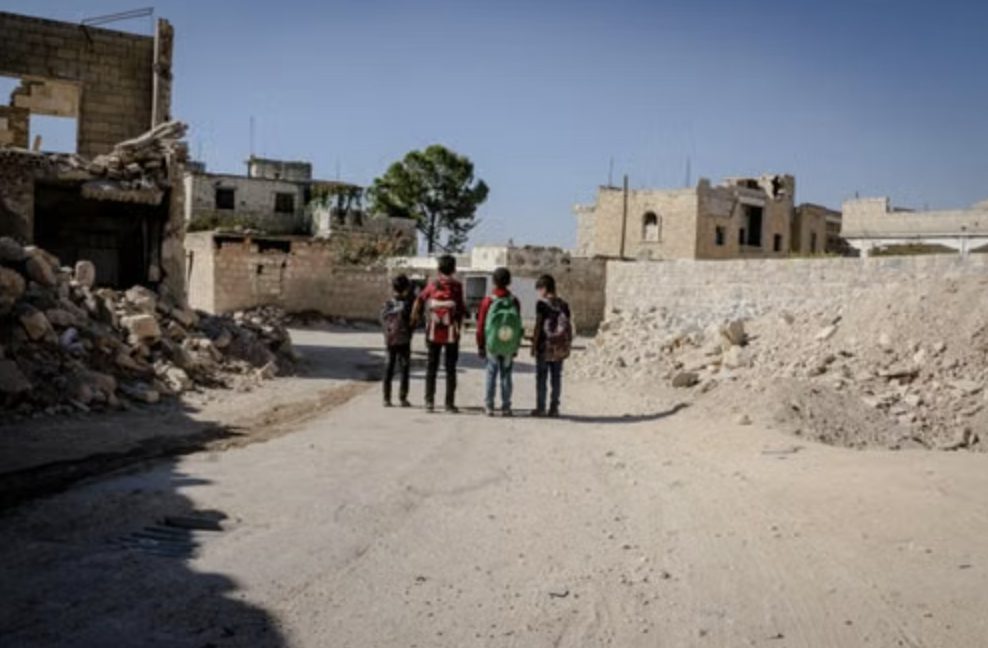
A war can end without making the places children live, play, and learn safe again. Landmines and explosive remnants of war can remain active long after hostilities end, creating risks in places children use for everyday activities such as walking to school, collecting water, and playing outdoors. Organizations such as War Child USA recognize that protecting children affected by conflict requires addressing risks that can continue long after active fighting has stopped.
As conflict fades from daily life, these hazards can become easier to overlook even though they remain physically present. In Bosnia and Herzegovina, landmines and explosive remnants of war still pose a threat 30 years after the armed conflict, including to younger generations with no personal memory of the war.
This is why landmine risk education for children remains an important part of post-conflict recovery. It can help children and communities understand explosive hazards and adopt safer behavior while clearance and other mine-action efforts continue.
Table of Contents
- Why Can Landmines and UXO Remain Dangerous After War Ends?
- Why Are Children Especially Vulnerable to Explosive Hazards?
- How Can Explosive Hazards Disrupt Children's Education?
- What Makes Unexploded Ordnance Awareness Important for Children?
- How Does Landmine Risk Education for Children Help?
- Is Education Alone Enough to Protect Children?
- Closing Thoughts
Why Can Landmines and UXO Remain Dangerous After War Ends?
Landmines and unexploded ordnance (UXO) can remain dangerous for years or decades because explosive hazards may stay hidden in fields, roads, schools, homes, and other areas used by communities.
UXO refers to explosive ordnance that has been used or deployed but failed to detonate as intended. Explosive remnants of war is a broader term that includes UXO and certain abandoned explosive ordnance.
The danger can become harder to recognize as communities return to normal routines. Families return home, children resume school, and people begin using roads and farmland again, while explosive contamination may remain in the surrounding environment.
Why Are Children Especially Vulnerable to Explosive Hazards?
Children can face particular risks because ordinary activities may take them into contaminated areas. UN reporting identifies activities such as walking to school, collecting water, and playing outdoors as situations in which children can encounter explosive hazards.
Children may also encounter unfamiliar objects without understanding what they are. UNMAS notes that children may mistake unexploded items for toys, making age-appropriate safety education particularly important.
This makes child safety in post-conflict zones an ongoing concern. The visible signs of conflict may fade, but children still need to understand that unfamiliar objects and areas may present a danger.
How Can Explosive Hazards Disrupt Children's Education?
Explosive contamination can disrupt education even when a school building itself is still standing. Contaminated roads and surrounding areas can restrict movement and make it harder for children to travel safely to school.
The impact can extend beyond the journey itself. Weapon contamination can affect places where children live, play, and travel to school, while injuries can interrupt education and access to essential services.
Safe access to education therefore depends on more than a functioning school. Children also need safe routes through their communities, particularly when families are returning to areas affected by previous fighting.
What Makes Unexploded Ordnance Awareness Important for Children?
Unexploded ordnance awareness should teach children how to respond safely to a potential hazard rather than encourage them to inspect or handle unfamiliar objects.
Explosive Ordnance Risk Education can teach people to recognize, avoid, and safely report dangerous explosive hazards. UNMAS identifies EORE as one of the core pillars of mine action and describes approaches including school sessions, community meetings, public information, signs, and mobile messaging.
Child-focused materials can make these messages easier to understand. UNMAS provides resources including animated videos, storybooks, games, and coloring materials for explosive ordnance risk education for children.
The distinction matters: awareness establishes that a danger exists, while risk education focuses on behavior that can reduce exposure to that danger.
How Does Landmine Risk Education for Children Help?
Mine risk education programs help bridge the gap between knowing that explosive hazards exist and knowing how to respond safely.
UNMAS states that EORE helps communities recognize threats, avoid dangerous areas, and report explosive hazards safely. It is used during emergencies as well as recovery and development phases, including when communities resume activities such as traveling, attending school, farming, and rebuilding livelihoods.
The approach can also reach children through schools and community settings. In Bosnia and Herzegovina, mine risk education has been delivered through school visits, camps, and door-to-door outreach to reach children and other people likely to encounter unexploded ordnance.
Education does not remove the hazard itself. Its role is to help people make safer decisions while broader mine-action efforts address contamination.
Is Education Alone Enough to Protect Children?
No. Risk education can help reduce exposure, but it cannot remove explosive contamination.
These measures address different parts of the same problem:
|
Protection measure |
Purpose |
|
Risk education |
Helps children and communities understand hazards and adopt safer behavior. |
|
Clearance |
Removes explosive hazards from contaminated areas. |
|
Warning and marking |
Identifies or marks known hazardous areas. |
|
Safe reporting |
Helps mine-action teams and authorities identify potential hazards. |
|
Victim assistance |
Supports people affected by explosive ordnance through medical care, rehabilitation, psychosocial support, and social inclusion. |
These measures therefore work toward a shared goal: helping communities safely return to homes, schools, livelihoods, and everyday activities.
Closing Thoughts
The danger from landmines and UXO can be overlooked precisely because it may remain after the conflict itself is no longer visible in everyday life. In Bosnia and Herzegovina, for example, the ICRC describes the threat as increasingly difficult for younger generations to recognize because many have no personal memory of the conflict.
Protecting children therefore has to continue beyond the end of active fighting. Landmine risk education for children, combined with clearance, warnings, safe reporting, and victim assistance, can help reduce exposure while communities work toward safer long-term recovery.