
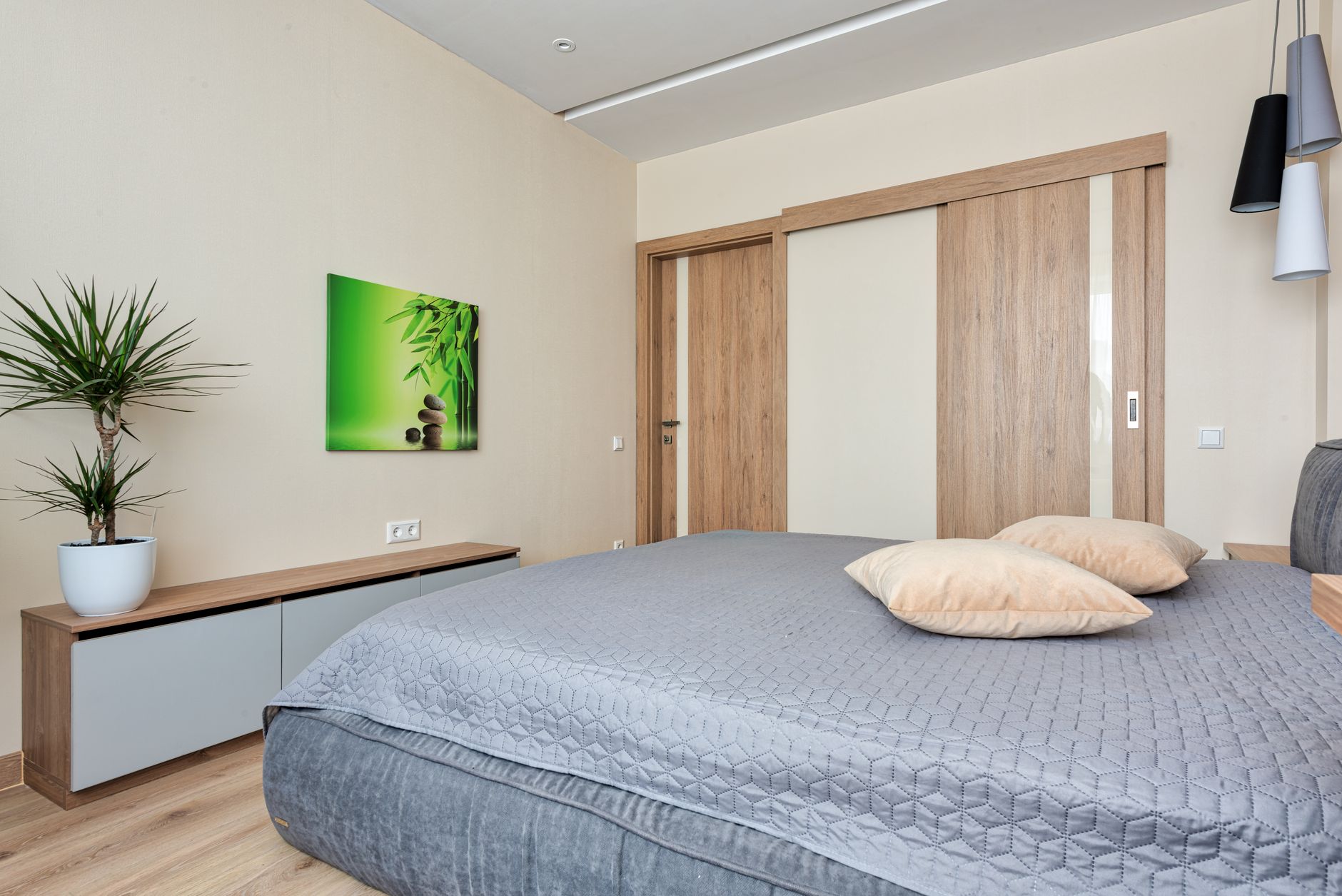
A wardrobe door is easy to overlook until it blocks a bedside table or makes the back corner of a shelf awkward to reach. Sliding and hinged doors use space differently, so the best choice depends less on a general rule than on your room’s layout and your habits. Before settling on a finish, picture an ordinary morning: where do you stand, what do you need to reach, and what else is happening in the room?
Table of Contents
Before choosing, map the space around the wardrobe
Start with the floor area in front of the opening. Hinged doors swing out, which may be inconvenient beside a bed, a narrow walkway or a door into the room. Sliding doors stay within their tracks, leaving that floor space available. In a generous bedroom, though, the swing of a hinged door may barely register. Check the space with the furniture where it will actually sit, rather than judging an empty room.
Also consider the opening itself. Hinged doors can give you a broad view of the wardrobe when several doors are open; sliding panels usually leave part of the opening covered at any one time. That difference matters if two people often dress at once or you need easy access to wide drawers. While planning built in wardrobes, work out where drawers, rails and shelves will sit relative to each door. A tidy-looking front is less useful if it makes everyday storage awkward to reach.
Think through the routine behind the doors
What you store should influence how you enter the space. A wardrobe dominated by hanging clothes may work well with either style. Drawers, pull-out baskets and bulky items call for more careful planning: a door needs to clear their path, and a sliding panel should not leave a frequently used drawer behind an inconvenient overlap. Try grouping items by how often you use them, then imagine reaching each group with the proposed doors in place.
Shared bedrooms add another consideration. One person may need the wardrobe while the other is moving past it or using a nearby desk. Sliding doors can reduce obstruction in a tight room, but each panel must be moved to reveal a different section. Hinged doors can offer more immediate access to several sections, provided there is room to leave them open briefly. Neither option removes the need for a sensible internal layout.
During planning, test the details that affect daily use
A door choice is also a choice about how the wardrobe feels to operate. Before committing, ask to see how the proposed panels open and close, and consider the height and reach of everyone who will use them. Handles should be comfortable without catching on nearby furnishings. If you are considering mirrors, think about what they will reflect at different times of day, as well as cleaning and the suitability of the fittings for the room.
It helps to walk through three ordinary moments rather than relying on a drawing alone:
- Getting dressed: Can you see and reach the clothes and accessories you typically use together, without repeatedly shifting panels or stepping around an open door?
- Putting washing away: Will you have space to sort items, open drawers and move between sections without blocking the bedroom’s main path?
- Changing the room later: Would a larger bed, a desk or a different bedside table interfere with the door movement you have chosen?
These questions can expose compromises before they become daily irritations. A sliding door may solve a clearance problem but limit simultaneous access. A hinged door may make the whole interior easier to survey but constrain furniture placement. Decide which compromise is easier to live with, rather than expecting either door type to solve every storage problem.
Check the practical fit, not just the appearance
Room surfaces deserve attention during the design conversation. Skirting boards, uneven floors, ceiling heights and nearby power points can affect how a wardrobe fits and how its doors operate. Do not assume a measurement taken at one point describes the entire opening. Ask what measurements are needed, how the proposed doors will be fitted and what access is required for installation. If you rent, clarify what changes you are allowed to make before planning a fixed wardrobe.
Finishes matter, but they are best considered after the layout works. A mirrored panel may make a compact bedroom feel brighter to some people, while a plain finish may sit more quietly alongside patterned bedding or existing joinery. Sliding doors have tracks and hinged doors have hinges; both involve hardware that you will use regularly. Ask how the chosen hardware can be cleaned and maintained, and whether worn components can be addressed later.
After choosing, review the plan as a room
Before finalising anything, look beyond the wardrobe elevation. Mark out the bed, bedside tables and walking routes on a floor plan, then check the proposed door movement against them. Confirm which sections will be visible or reachable when the doors are open, particularly where drawers sit behind the front. If the layout feels cramped on paper, changing a shelf position or door arrangement may be more useful than changing the colour.
The right choice is the one that makes your particular bedroom easier to use. Hinged doors can suit a room with comfortable clearance and a need for broad access; sliding doors can preserve floor space where a swing would get in the way. Give the internal storage, furniture and daily routine equal weight. Once those elements work together, the door style becomes a considered part of the room rather than an isolated design decision.
1 thought on “Sliding or Hinged Wardrobe Doors? Factors to Weigh for Your Room”