
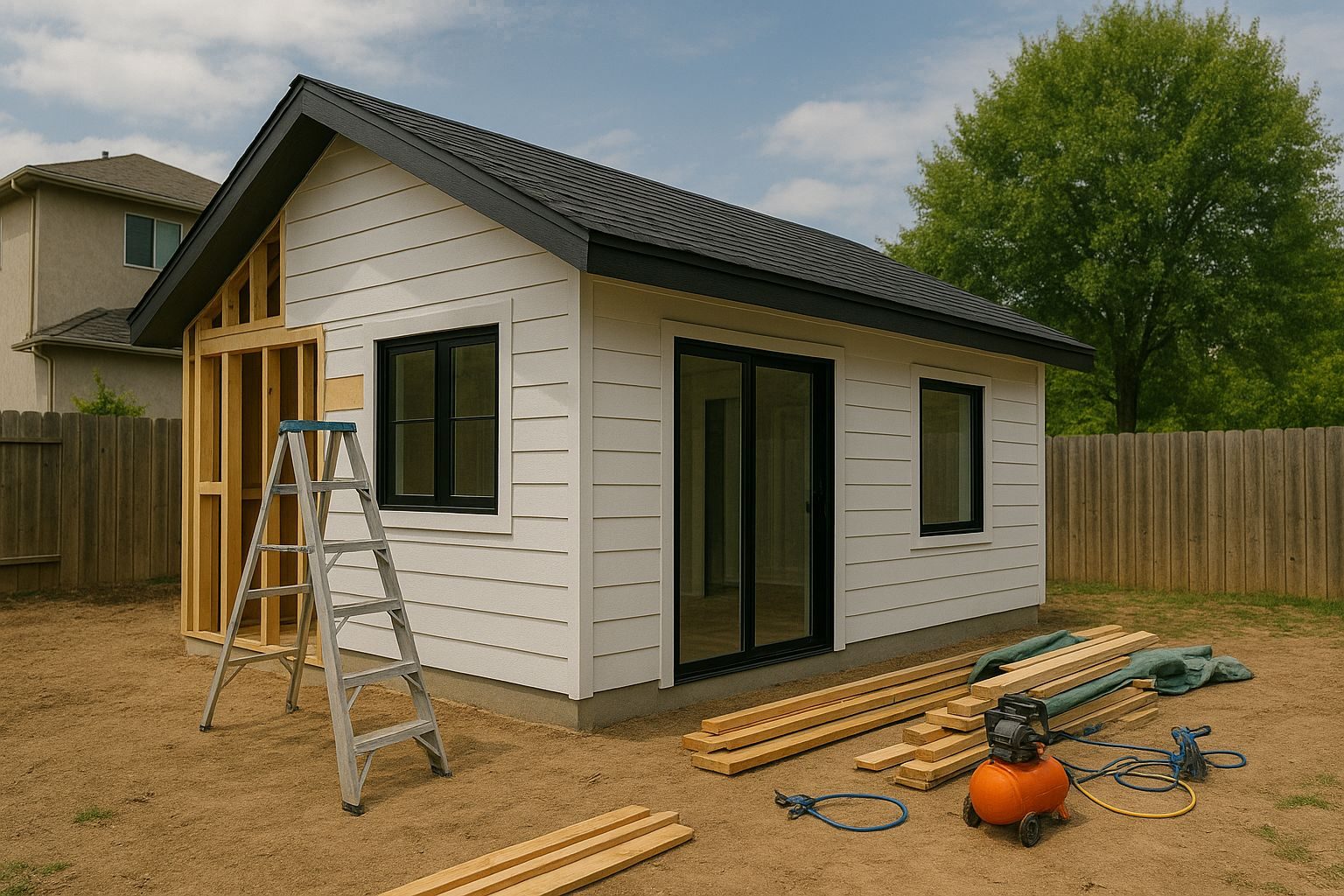
Contractor Vetting, Bid Comparison, and Contract Structure Protect Sacramento ADU Investments
Sacramento ADU Builder, a Sacramento based accessory dwelling unit company, is publishing practical guidance on the decision that determines every ADU project's outcome before a shovel touches soil: selecting the contractor. The regional ADU boom has drawn builders of every caliber into the market, and homeowners committing six-figure budgets deserve a disciplined method for separating professional operations from improvised ones.
The method is not mysterious. California gives consumers real tools, from license verification through contract requirements written into state law, and the warning signs of a troubled project are visible during the sales process to anyone who knows where to look. The company shares this guidance openly, confident that informed comparison favors builders who operate properly.
License, Bond, and Insurance: The Non-Negotiable Baseline
Every legitimate ADU builder holds an active California contractor license, verifiable in minutes through the Contractors State License Board, along with the required bond and insurance. Verification should cover license classification, standing, bond status, and any disciplinary history, and the builder's workers compensation coverage protects the homeowner from liability for crew injuries on their property. A builder who hesitates over documentation requests has answered the vetting question already.
References and completed work carry the verification further. Speaking with past ADU clients specifically, not remodel clients generally, reveals how a builder handles permitting, schedule, communication, and the inevitable surprises of construction. Visiting a current jobsite shows the operation's daily reality: site cleanliness, crew professionalism, and protection of the client's property speak more honestly than any portfolio.
What California Law Requires in Home Improvement Contracts
State law mandates specific content in home improvement contracts, including scope, price, schedule of progress payments tied to work performed, and strict limits on down payments. Contracts that ignore these requirements signal builders who ignore other rules as well.
California has spent nearly a decade reshaping the legal landscape around accessory dwelling units, and the current framework is the most permissive in state history. State law requires local agencies to approve or deny a complete ADU application within 60 days, prohibits minimum lot size requirements that would block ADU development, and limits the setback rules cities can impose on new units. Owner occupancy requirements for standard ADUs have been suspended through state legislation, and impact fees are waived entirely for units under 750 square feet. For homeowners considering choosing an ADU contractor: licensing, bids, and contracts, this legal foundation means the path to approval is more predictable than at any point in the past, provided the application package is complete and the design complies with the objective standards local agencies are still permitted to enforce.
Comparing Bids That Refuse to Line Up
ADU bids resist comparison because scopes differ invisibly: one price includes utility trenching, engineering, and permit fees while another quietly excludes them, and the cheapest number frequently belongs to the least complete scope. Genuine comparison requires normalizing what each bid covers, itemizing exclusions, and pricing the allowances honestly. Sacramento ADU Builder provides itemized proposals precisely to make this comparison possible, on the view that a homeowner who understands every line is a client whose project will hold its budget.
Rather than handing homeowners a set of drawings and leaving them to coordinate trades on their own, the company manages the full sequence of work under one roof. Site evaluation, feasibility review, architectural design, structural engineering coordination, permit submittal, and construction are treated as phases of a single continuous project rather than separate contracts. This integrated approach is particularly valuable for choosing an ADU contractor: licensing, bids, and contracts, where design decisions, code requirements, and field conditions interact constantly. When the same team that drew the plans is responsible for building them, questions get answered in hours instead of weeks, and the homeowner is never left mediating disputes between a designer and a contractor who have never spoken to each other.
Payment Schedules, Change Orders, and Communication Terms
Contract mechanics protect both parties when structured properly: progress payments tied to completed milestones rather than calendar dates, retention held until final completion, written change orders pricing every scope adjustment before work proceeds, and clear warranty terms. The change order discipline deserves particular attention, since undocumented verbal changes are the origin of most construction disputes.
Communication expectations belong in the working relationship from day one: a named point of contact, a regular update rhythm, and defined response times for questions. Builders who communicate well during the sales process usually communicate well during construction, and builders who go quiet between deposit and mobilization have shown the pattern to expect for the following months.
Why Selection Discipline Is Worth the Effort
The gap between a well-run and poorly-run project of identical design is measured in months of delay, five-figure overruns, and years of defect repair. The week spent vetting thoroughly is the highest-return work a homeowner performs on the entire project.
Property owners weighing the investment should consider how choosing an ADU contractor: licensing, bids, and contracts performs over a multi decade horizon rather than a single use case. California real estate has historically rewarded permitted, high quality additions of livable space, and accessory dwelling units occupy a unique position because they combine independent functionality with shared land cost. The same structure can house an aging parent in one decade and a rent paying tenant in the next, all while increasing the appraised value of the parcel. That flexibility is difficult to replicate with any other home improvement, and it explains why demand for professionally built units continues to grow even as other categories of residential construction fluctuate.
Starting the Selection Process Properly
Homeowners beginning their search should gather two or three genuinely comparable proposals, verify every license, and weight communication quality as heavily as price in the final decision.
Quality control throughout construction is another factor that separates durable projects from problematic ones. Every phase of work, from foundation preparation through final finishes, is subject to inspection under the California Residential Code, but code compliance represents a minimum standard rather than a mark of excellence. Experienced builders layer their own quality checkpoints on top of required inspections, verifying moisture protection details, fastening schedules, insulation installation, and mechanical connections before they are concealed by drywall. That discipline is invisible in photographs but decisive in how the unit performs over decades of use.
Communication practices during construction also shape the homeowner experience. Because most accessory dwelling units are built on occupied residential properties, homeowners live alongside the project from the first day of sitework to the final walkthrough. Clear scheduling, advance notice of noisy or disruptive phases, tidy site management, and a single point of contact for questions all reduce the friction of living next to an active construction site. Companies that manage this dimension well consistently earn the referrals that sustain their business, since neighbors watch these projects closely and remember how they were run.
Material and labor market conditions influence project planning as well, and experienced builders help homeowners navigate them rather than absorb them blindly. Lumber, concrete, and fixture pricing move with broader construction cycles, and lead times for windows, electrical equipment, and specialty items can shape schedules months in advance. Builders who order long-lead materials early, lock pricing at contract where possible, and maintain relationships with reliable suppliers insulate their clients from the volatility that catches unmanaged projects off guard. Transparent conversations about these dynamics during the bidding phase are a mark of a contractor who intends to deliver on the numbers presented.
Homeowners across the greater Sacramento region who are considering choosing an ADU contractor: licensing, bids, and contracts can contact Sacramento ADU Builder to arrange a property evaluation and discuss project options. The company provides guidance on feasibility, design, permitting, and construction scheduling, and its team works with each homeowner to match the project scope to the realities of the site and the budget. Further details are available on the company website.
About Sacramento ADU Builder
Sacramento ADU Builder is a Sacramento based accessory dwelling unit company serving homeowners throughout the Sacramento region. The company provides ADU design, planning, permitting, and construction services for detached ADUs, attached ADUs, garage conversions, junior ADUs, backyard cottages, and custom secondary housing structures. Its work emphasizes local code knowledge, practical design, dependable project management, and long term value for California homeowners.
Sacramento ADU Builder180 Promenade Circle, Suite 300Sacramento, CA 95834, USAPhone: 916-303-2761https://sacramentoadubuilders.com
1 thought on “Sacramento ADU Builder Details How Homeowners Should Vet Contractors, Compare Bids, and Structure ADU Contracts”
Comments are closed.