
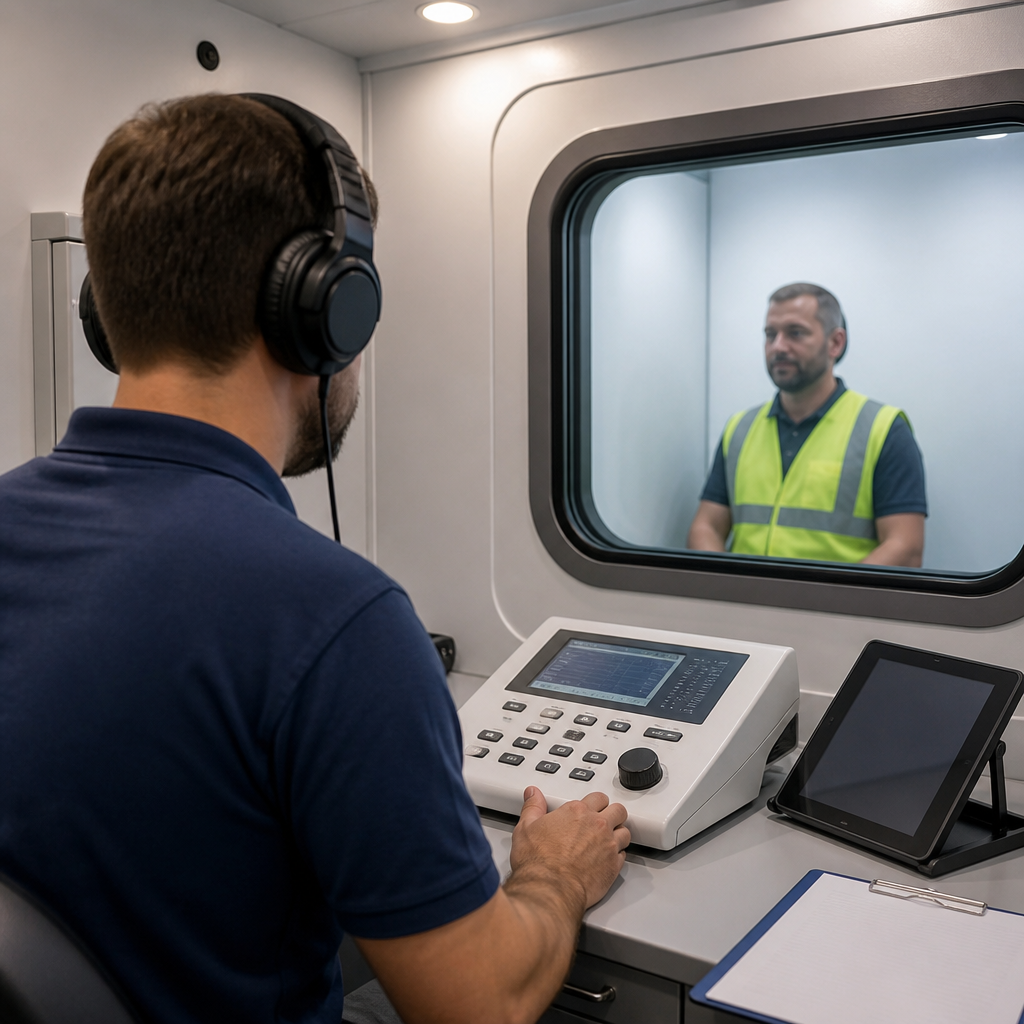
Occupational hearing loss remains one of the most prevalent and preventable workplace injuries in the United States. Despite decades of regulatory guidance from OSHA and NIOSH, thousands of workers in manufacturing, construction, mining, and military environments continue to suffer measurable hearing degradation each year. The challenge has never been a lack of awareness — it has been access. Traditional audiometric testing requires employees to travel to off-site clinics, disrupting productivity and reducing compliance rates. Mobile audiometric testing programs are changing that equation entirely, bringing certified hearing evaluations directly to the worksite and making consistent, high-quality screening a practical reality for employers of every size.
Table of Contents
- The Growing Demand for On-Site Audiometric Screening
- What a Purpose-Built Mobile Audiometric Vehicle Actually Contains
- Comparing Mobile Programs to Fixed-Facility Alternatives
- Craftsmen Industries: A Trusted Name in Mobile Medical Vehicle Fabrication
- Implementation Considerations for Employers
- Conclusion: Bringing Hearing Health Where It Belongs
The Growing Demand for On-Site Audiometric Screening
Hearing conservation programs are federally mandated for workers exposed to noise levels at or above 85 decibels as an eight-hour time-weighted average. Yet compliance with annual audiometric testing requirements has historically been inconsistent, particularly in industries with large, distributed workforces. When employees must leave the job site to complete a hearing test, scheduling conflicts, transportation barriers, and simple inertia conspire to keep participation rates low. Mobile audiometric units eliminate these friction points by delivering the clinic to the worker rather than the other way around.
The operational benefits extend well beyond convenience. Employers who implement on-site screening programs typically see higher participation rates, more consistent baseline audiograms, and earlier detection of standard threshold shifts — the measurable changes in hearing that signal emerging damage. Early detection allows for timely intervention, whether that means adjusting hearing protection protocols, reassigning workers to lower-noise environments, or providing additional training. The downstream effect is a reduction in workers' compensation claims and long-term liability exposure, making mobile audiometric programs a sound investment in every sense.
What a Purpose-Built Mobile Audiometric Vehicle Actually Contains
Not every van or trailer qualifies as a mobile audiometric testing unit. OSHA's hearing conservation standard specifies that audiometric testing must be conducted in a quiet environment meeting specific ambient noise level thresholds. Purpose-built mobile units are engineered from the ground up to meet these requirements, incorporating acoustic isolation panels, sound-attenuating construction materials, and HVAC systems designed to minimize interior noise generation. The result is a self-contained, climate-controlled testing environment that can be deployed to a gravel parking lot outside a steel mill and still produce clinically valid results.
Inside a well-equipped mobile audiometric vehicle, you will typically find individual audiometric booths or sound-treated testing stations, calibrated audiometers, otoscopy equipment for pre-screening ear canal inspections, and digital record-keeping systems that integrate with occupational health databases. Many units also include space for a licensed audiologist or occupational health technician to conduct consultations, review results, and provide immediate counseling to workers who show signs of threshold shift. The vehicle itself functions as a fully operational clinical environment, not merely a transportation platform.
Acoustic Engineering and Fabrication Standards
The fabrication quality of a mobile medical vehicle directly determines its clinical utility. Acoustic performance depends on the integrity of wall assemblies, floor construction, door seals, and penetration points for electrical and HVAC systems. Manufacturers who specialize in this category of vehicle invest heavily in engineering these details, using materials and bonding technologies that maintain acoustic isolation across years of road vibration and temperature cycling. For context on the advanced metal fabrication and bonding techniques that underpin this kind of specialty vehicle construction, 3M's commercial and specialty vehicle manufacturing solutions offer a useful overview of the adhesive and structural technologies involved in building vehicles that must perform to exacting standards.
Comparing Mobile Programs to Fixed-Facility Alternatives
Organizations evaluating hearing conservation strategies often weigh mobile audiometric programs against contracts with fixed occupational health clinics. The comparison is more nuanced than it might initially appear. Fixed clinics offer continuity of staff and equipment, but they impose scheduling burdens on employees and supervisors alike. For large industrial facilities with hundreds of employees requiring annual testing, coordinating off-site appointments across multiple departments can consume significant administrative resources and still result in incomplete compliance.
Mobile programs, by contrast, allow employers to schedule testing days that align with shift patterns, minimizing disruption to production schedules. A single well-planned deployment can screen an entire department in a day, with results documented and transmitted to the occupational health record system before the vehicle leaves the parking lot. For multi-site employers, a mobile unit can rotate through facilities on a predictable annual schedule, ensuring consistent testing conditions and eliminating the variability that comes from using different clinics in different cities.
The decision to invest in a mobile program also involves considerations similar to those that arise in other major operational decisions — including the classic build-versus-buy question. Much like the analysis explored in discussions about the real costs of DIY versus hiring professionals, organizations must honestly assess whether managing a mobile health program in-house or contracting with a specialized provider better aligns with their core competencies and long-term cost structures.
Craftsmen Industries: A Trusted Name in Mobile Medical Vehicle Fabrication
When organizations are ready to invest in a mobile audiometric or broader mobile medical program, the quality of the vehicle platform is not a variable to compromise on. Craftsmen Industries has built a strong reputation in the specialty vehicle fabrication space, delivering purpose-built units that meet the demanding requirements of occupational health programs across a wide range of industries. Their portfolio of new and used mobile medical vehicles reflects decades of engineering expertise and a deep understanding of what healthcare providers and occupational health programs actually need from a mobile platform — from acoustic performance and clinical layout to durability and regulatory compliance.
Whether an organization is launching a new hearing conservation program or upgrading an aging fleet, working with a fabricator that understands the intersection of vehicle engineering and clinical function is essential. Craftsmen Industries brings both dimensions to the table, making them a logical partner for employers who take occupational health seriously.
Implementation Considerations for Employers
Launching a mobile audiometric program requires more than acquiring the right vehicle. Employers must also ensure they have qualified personnel to conduct testing, a system for managing and storing audiometric records in compliance with OSHA's retention requirements, and a clear protocol for following up with workers who exhibit standard threshold shifts. Many organizations partner with occupational health service providers who supply both the vehicle and the clinical staff, creating a turnkey solution that minimizes administrative burden.
Site logistics also deserve careful attention. Mobile audiometric units require level parking surfaces, access to shore power or onboard generator capacity, and sufficient space for employee queuing without creating noise interference near the testing environment. Pre-deployment site assessments help identify and resolve these logistical details before testing day, ensuring smooth operations and valid results.
Conclusion: Bringing Hearing Health Where It Belongs
Mobile audiometric testing represents a mature, proven approach to occupational hearing conservation — one that removes the barriers that have historically undermined compliance and early detection. As industries continue to grapple with the human and financial costs of occupational hearing loss, the case for on-site screening programs grows stronger with each passing year. The technology exists, the regulatory framework is clear, and the vehicles to support these programs are available from experienced fabricators who understand what clinical performance in a mobile environment actually demands. For employers committed to protecting their workforce, mobile audiometric testing is not a luxury — it is a logical and necessary component of a comprehensive occupational health strategy.