
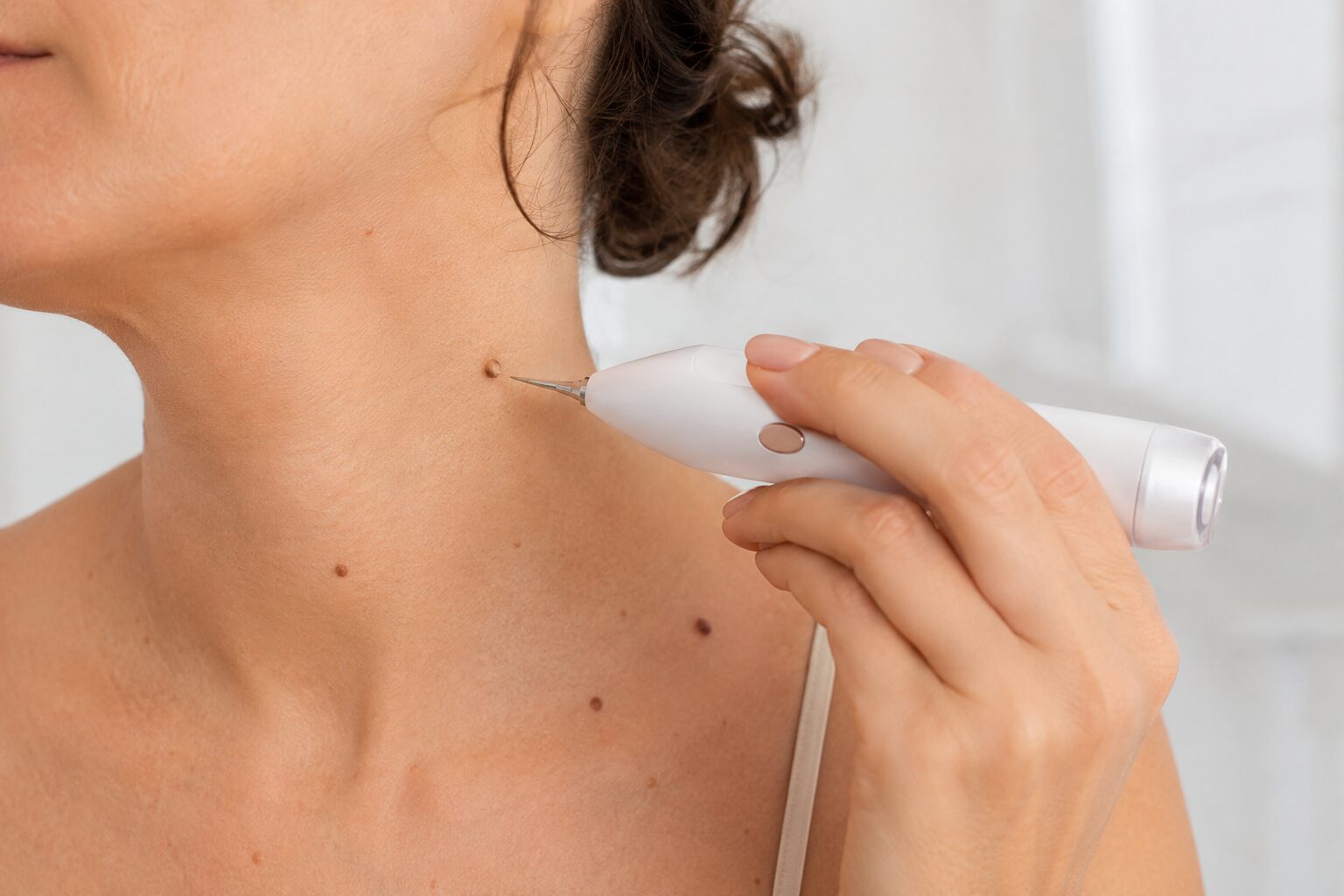
Skin tags are one of those small, harmless skin quirks that almost everyone deals with at some point — under the arms, around the neck, on the eyelids, or in skin folds. They’re not dangerous, but they can catch on jewelry, clothing, or razors, which is usually what pushes people to start looking for a solution. The good news is you don’t always need a dermatologist visit to deal with them. There are several at-home skin tag remover options worth understanding before you pick one.
Table of Contents
What Causes Skin Tags to Appear
Skin tags form when collagen and blood vessels get trapped inside thicker pieces of skin, usually in areas where skin rubs against skin or fabric. Friction is the biggest driver, which is why they show up so often in the armpits, neck, groin, and under the breasts. Weight gain, pregnancy, and aging can also make someone more prone to developing them, since skin folds increase with these changes.
Genetics plays a role too — if a parent has a history of skin tags, it’s common to see them run in the family. Insulin resistance and type 2 diabetes have also been linked to a higher likelihood of developing them, though having skin tags alone doesn’t mean someone has an underlying condition. Understanding what’s behind skin tags appearance helps set realistic expectations: they may keep forming even after you remove the ones you currently have, especially if the underlying friction or skin-fold pattern hasn’t changed.
Is It Safe to Remove Skin Tags at Home?
For most small, uncomplicated skin tags, at-home removal is generally considered low-risk — but “low-risk” isn’t the same as “risk-free.” Cutting or tying off a skin tag with dental floss or string is a method some people try, but it can lead to bleeding, infection, or scarring if not done carefully, especially in sensitive areas like the eyelids or genitals.
This is why many people prefer gentler, non-invasive approaches over cutting tools. Topical treatments that work gradually — rather than causing an open wound — tend to carry a lower risk of infection and scarring. If a skin tag is large, rapidly changing shape or color, or located somewhere hard to reach safely, that’s a sign to loop in a doctor rather than attempt DIY removal.
Popular At-Home Skin Tag Remover Options
There isn’t a single best method — it really depends on the size, location, and your comfort level with the process. A few of the most common approaches include:
- Tying-off methods (string or dental floss) that cut off blood supply over several days
- Freezing kits designed for at-home use, similar to over-the-counter wart treatments
- Topical serums and oils applied consistently over days or weeks to dry out the tag naturally
Among these, natural topical formulas have become popular because they don’t involve cutting, burning, or freezing the skin. Brands like Amoils make an H-Skin Tags Formula, a plant-based oil blend applied directly to the tag a few times a day. It’s designed to work gradually, which appeals to people who want an option that doesn’t require any tools or a steady hand.
Choosing a Treatment That Fits Your Skin
Picking the right option often comes down to patience versus speed. Tying-off methods can work in days but carry more discomfort and a higher chance of irritation. Natural oil treatments take longer — often a few weeks of daily use — but tend to be gentler, which matters a lot for skin tags near the eyes or other delicate spots.
For those also maintaining a broader skincare routine, established brands such as SkinCeuticals may be worth considering when choosing products suited to their individual skin needs. Essential-oil-based formulas, like the ones used in Amoils’ skin tag line, are generally marketed as free from harsh chemicals, which some people prefer for sensitive skin. As with any home remedy, doing a small patch test first and following the product’s instructions closely will reduce the chance of irritation.
When to See a Doctor Instead
At-home methods work well for typical, small skin tags, but there are times when professional care is the safer route. If a growth is bleeding without an obvious cause, growing quickly, or looks different from a typical skin tag — irregular borders, unusual color, or unusual texture — it’s worth having a dermatologist take a look rather than assuming it’s harmless.
People with diabetes or circulation issues should also be more cautious with at-home removal, since healing can take longer and infection risk is higher. According to the American Academy of Dermatology, a professional can remove skin tags quickly and safely in-office if home methods aren’t a good fit or haven’t worked after a reasonable trial period.