
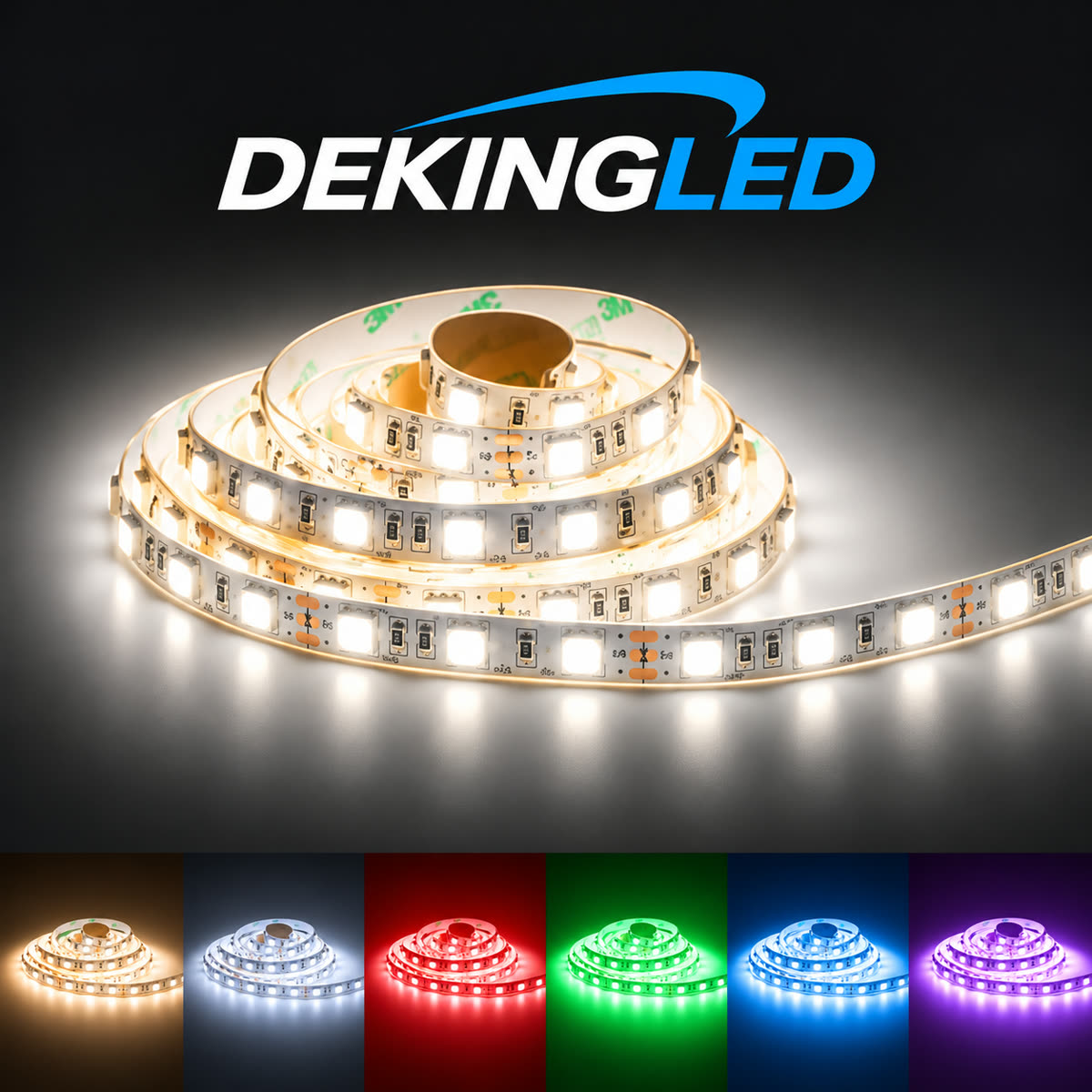
LED tape lights have become a popular choice for commercial, architectural, decorative, and residential lighting applications. Their flexible design makes them suitable for installations where traditional lighting fixtures may not provide the desired appearance or coverage. However, selecting the right product requires more than comparing prices. Businesses should evaluate product specifications, LED technology, operating voltage, installation requirements, and supplier support. Working with a reliable LED tape light manufacturer can help buyers identify suitable lighting solutions for their projects.
Whether the requirement involves retail displays, signage, concealed ceiling lighting, or architectural features, understanding the available LED tape light options can make purchasing decisions more effective.
Table of Contents
Understanding LED Tape Lights
LED tape lights are flexible lighting products that contain multiple LEDs mounted on a flexible printed circuit board (PCB). They can be installed along different surfaces and are commonly used for continuous linear illumination.
Their flexibility makes them useful for applications such as:
- Cove and ceiling lighting
- Architectural outlines
- Furniture and cabinet lighting
- Retail displays and show windows
- Signage backlighting
- Decorative lighting for events and exhibitions
Different LED configurations provide different brightness levels, power requirements, and installation characteristics. Buyers should select a product according to the intended application rather than assuming that one type is suitable for every project.
Popular LED Tape Light Types
Understanding the differences between LED types can help businesses select appropriate products.
3528 LED Strip
The 3528 LED strip is an option for projects that require a relatively low-power lighting configuration. Dekingled’s 3528 model features 300 LEDs per 5 meters, a maximum power consumption of 4.8W per meter, and an 8mm-wide PCB.
It supports 12V DC and 24V DC operation and is available with IP65 protection. These characteristics make it worth considering for installations where the product’s electrical and protection specifications match the project requirements.
5050 LED Strip
The 5050 LED strip is suitable for decorative, architectural, and signage applications. Dekingled’s model includes 300 LEDs per 5 meters, a maximum power of 17W per meter, and a 120-degree viewing angle.
The product is available with IP65 and IP68 protection options and has a 100mm cutting length. Applications include cove lighting, architectural features, signage backlighting, DIY home lighting, and decorative installations.
2835 LED Strip
Dekingled also offers a 2835 LED strip with 180 LEDs per meter. Its specifications include 26–30 lumens per LED, 900 LEDs per 5 meters, and a maximum power rating of 48W.
This model operates at 24V DC and can be cut at intervals of 9 LEDs. Its 3oz copper foil is another specification buyers may consider when comparing available LED tape light configurations.
Important Factors to Consider Before Purchasing
Choosing the right LED tape light involves evaluating several technical and practical requirements.
1. Brightness and LED Density
LED density refers to the number of LEDs installed along a specific length of tape. A higher LED count can influence the appearance and distribution of illumination.
Buyers should compare the LED quantity, brightness information, and intended installation distance. The appropriate configuration depends on whether the project requires accent lighting, decorative illumination, or more prominent lighting coverage.
2. Operating Voltage and Power Consumption
Operating voltage and power consumption are essential specifications. Dekingled’s product range includes 12V DC and 24V DC LED strips, with different maximum power ratings depending on the model.
Before purchasing, businesses should confirm the required voltage and calculate the total power consumption of the planned installation. The compatible power supply should be selected according to the electrical requirements of the connected LED tape lights.
3. Waterproof Protection
The installation environment should determine the required protection level. Indoor installations in dry locations may have different requirements from outdoor or moisture-exposed projects.
Dekingled’s product range includes IP65 and IP68 LED strip options. Its IP68 waterproof strip is designed to remain impervious to water ingress at 3 meters depth.
Buyers should confirm the exact protection rating of the selected product and check whether it is appropriate for the intended installation conditions.
4. Cutting Length and Installation Flexibility
Cutting intervals are important when LED tape lights need to fit specific dimensions. Different models have different cutting requirements.
For example, Dekingled’s 5050 LED strip supports a 100mm cutting length, while its 2835 LED strip with 180 LEDs per meter can be cut at intervals of 9 LEDs.
Checking these details before ordering can help businesses plan installations and reduce material waste.
Why Choosing the Right LED Tape Light Factory Matters
Selecting an appropriate LED tape light factory is an important part of the sourcing process. Commercial buyers should look for manufacturers that provide clear product specifications, consistent communication, and technical assistance.
Before establishing a purchasing relationship, consider the following points:
- Product information: Check whether complete technical specifications are available.
- Product selection: Review the available LED types, voltages, and protection options.
- Quality control: Ask about inspection procedures and product testing information.
- Technical support: Confirm whether assistance is available for product selection and compatibility questions.
- Order coordination: Discuss quantities, availability, packaging, and delivery arrangements.
- Customization: If the project has specific requirements, ask about available customization options.
These considerations can help businesses evaluate manufacturers more effectively and choose products that match their project requirements.
Common Applications of LED Tape Lights
LED tape lights are used across different industries because of their flexible installation options.
- Commercial spaces: Retail stores, shopping malls, and show windows can use LED tape lights to highlight products and architectural details.
- Signage and advertising: LED strips can be used for illuminated advertising words, ultra-thin light boxes, signboard backlighting, and edge lighting.
- Architectural installations: Canopies, corridors, windows, archways, and building outlines are suitable applications when the selected product meets the environmental requirements.
- Residential interiors: Furniture, staircases, cabinets, and concealed ceiling areas can benefit from decorative LED tape lighting.
- Events and exhibitions: Flexible LED strips can support decorative lighting arrangements for exhibitions, celebrations, and temporary displays.
Conclusion
Choosing the right LED tape light requires careful consideration of LED type, brightness, voltage, power consumption, protection rating, and cutting intervals. Different products serve different purposes, so businesses should compare technical specifications before making a purchasing decision.
By working with a suitable manufacturer and reviewing product details carefully, buyers can identify LED tape lighting solutions for commercial, architectural, signage, and decorative applications. A well-planned selection process can also help improve installation compatibility and make future sourcing more efficient.
1 thought on “How to Choose the Right LED Tape Light Manufacturer for Commercial Lighting Projects”