
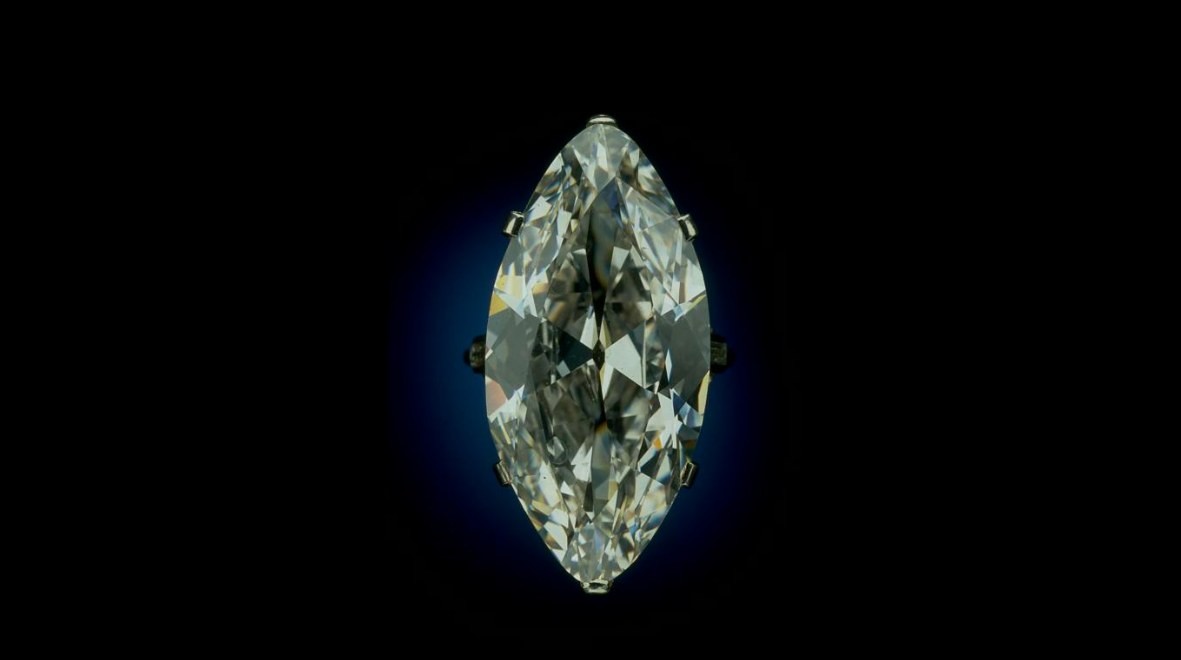
A 3-carat marquise laboratory-grown diamond ring becomes easier to budget when the purchase is treated as four separate line items. The stone, the setting, the metal, and the ownership costs each follow their own pricing logic, and each can be quoted on its own.
Salary-based rules of thumb for engagement rings circulated for decades before laboratory-grown diamonds became widely available. GIA describes laboratory-grown diamonds as sharing the chemical and physical properties of mined diamonds, and they retail well below mined stones of comparable size.
Table of Contents
- Build the budget as separate line items
- What the marquise outline adds to a fixed budget
- Read the grading report before the price
- Settings, prongs, and the cost of protecting the tips
- Metal choice is a quote and an upkeep question
- Costs that continue after the purchase
- Payment plans and the written terms
- Compare itemized quotes before committing
Build the budget as separate line items
A workable budget starts with one total figure the buyer sets before any quotes arrive. That ceiling then divides across the stone, the setting and any extras, so each quote is judged against the same limit. Jewelers can price to a stated ceiling, which keeps comparisons consistent from one quote to the next.
Because laboratory-grown stones retail below mined equivalents of comparable size, a fixed budget covers more at 3 carats than it once did.
An itemized plan starts with the center stone, which is usually the largest single cost in the ring. The setting follows, with labor and accent stones priced apart from the center diamond. Metal weight and custom details such as engraving complete the pre-purchase total, along with taxes or shipping where they apply.
Ownership costs sit outside the ticket price. An appraisal and an insurance premium arrive early, and maintenance follows over the years. A written total that includes all of these lines is the budget to work from.
What the marquise outline adds to a fixed budget
GIA's marquise buying guidance notes that the elongated outline can present a larger face-up appearance than a round diamond of equal weight. That effect comes from the cut's stretched shape, which spreads carat weight across the finger rather than concentrating it in a circular outline.
Face-up size is the surface visible from above, and it drives how large a stone reads on the hand. Because the visible effect varies from stone to stone, comparing the millimeter dimensions of individual diamonds gives a clearer picture of apparent size than carat weight alone.
Elongated brilliant cuts can show a dark, bow-tie-shaped shadow across the center when light return is uneven. Cutters attribute the effect to facet angles, and its severity differs from one stone to the next.
A stone with a strong shadow won't hide it under ordinary indoor light, so viewing conditions matter during selection. A video or an in-person viewing under more than one light source is the way to check.
For a mined marquise, GIA's fancy-shape reports carry grades for polish and symmetry rather than a single overall cut grade. For a laboratory-grown stone, GIA's current reports fold those properties into an overall Premium or Standard assessment, so check which kind of report a stone comes with. Length-to-width ratio is treated as a matter of preference in the same guidance, and the preferred outline should be settled before price enters the discussion.
The pointed ends are the shape's structural weak points, and they chip more easily than rounded edges.
Read the grading report before the price
Laboratory-grown diamonds are produced by chemical vapor deposition or by high-pressure, high-temperature methods, and both produce real diamond. The growth method appears on some reports, and it doesn't change how the stone wears.
On October 1, 2025, GIA replaced its standard grading reports for laboratory-grown diamonds with descriptive Premium and Standard classifications. The change applies to laboratory-grown stones, and reports issued before and after that date won't look alike.
The International Gemological Institute assesses laboratory-grown diamonds, and its reports carry the familiar color and clarity scales. Buyers comparing two stones should confirm that both were graded by the same laboratory, because scales aren't interchangeable between labs.
Color and clarity grades move the price even when the visible difference is small. Trade guidance holds that adjacent grades can look identical to the unaided eye, and a side-by-side viewing shows whether a higher grade buys anything visible.
Some buyers want the top grades for their own reasons, and that preference is legitimate. Buyers working to a fixed ceiling often accept a lower grade after viewing, and the difference goes toward the setting or the stone's measurements.
Measurements matter as much as weight for this shape, because two 3-carat marquise stones can present different outlines and different face-up sizes. Every stone under consideration should have a report number, and that number should match the document and the diamond.
Settings, prongs, and the cost of protecting the tips
The setting quote covers labor and metal weight, and accent diamonds appear as their own line. A plain solitaire is usually the simplest construction, and designs with accent stones add material and setting time.
A buyer comparing settings for a 3 carat marquise engagement ring will see solitaire, hidden halo, side-stone, and bezel designs quoted at different levels. The difference reflects the number of stones to be set and the hours involved, and it should be visible line by line.
A hidden halo places small diamonds around the base of the center stone's prongs, where they read from the side view. Retailers present it as a middle option, because the stones are fewer and smaller than a full halo requires.
Side-stone designs set tapered diamonds or colored gems beside the center stone, and each added stone adds setting labor. Engraving and milgrain edging are quoted as custom labor, and bespoke design work extends the production timeline.
A cathedral shoulder or a basket head changes the metal weight of the setting, and more metal raises the quote. The same design built lighter will price differently, and the itemized quote shows the gap.
GIA notes that the pointed ends of a marquise benefit from protective design, and most setters cover the tips with V-prongs. A quote that leaves the tips exposed should be questioned, because a chip at the point is this shape's known weakness.
Bezel rims and halo frames also shield the tips, and some buyers choose them partly for that reason. The protective choice affects both the look and the quote, so it belongs in the same conversation as style.
Metal choice is a quote and an upkeep question
Fourteen-karat gold is about 58 percent pure gold, and 18-karat gold is 75 percent. The higher purity gives 18-karat its deeper color, and the added alloy in 14-karat gives it more hardness in daily wear.
Platinum is a dense, naturally white metal, and jewelers describe it as hypoallergenic. Quotes for the same design often differ between metals, and the only reliable comparison is the same setting priced in each one.
Many white-gold rings have rhodium plating that wears with time. Replating is a recurring cost, and buyers choosing white gold should ask what the service costs and how often it's needed.
Unplated yellow and rose gold need no rhodium replating. The same design quoted in each metal shows the price difference, and upkeep preference usually settles the choice.
Metal prices move with commodity markets, so ask how long the jeweler will honor the metal quote.
Costs that continue after the purchase
An independent appraisal documents the ring's materials and its estimated replacement value. Fees vary by appraiser, and insurers usually set a window for how recent the document must be.
Specialized insurance for engagement rings is sold as a standalone policy and as an addition to a home policy. Premiums depend on the appraised value and the insurer's terms, and deductibles vary between policies.
Insurance quotes belong in the budget before the purchase is made, especially if coverage is needed from the day the ring arrives. A buyer who prices coverage early knows the true first-year total.
Some buyers also budget for a resizing within the first year, since fit can shift with season and daily wear. The jeweler's resizing terms state whether the first adjustment is included.
Prong checks and professional cleaning are the routine costs after that. Many jewelers include inspections with the purchase, and the warranty terms should say so in writing.
Payment plans and the written terms
Some jewelers offer installment plans, and the terms differ by provider. Promotional periods and fees change the total amount paid, and the written agreement controls the obligation.
The total repayable amount is the figure that belongs in the budget. A monthly figure on its own leaves out interest and fees, so the written payment breakdown matters. A deposit is standard for custom work, and the balance schedule should appear in writing before production starts.
Saving in advance is the path buyers weigh against installments, and the comparison rests on the total cost of each. Either path starts from the itemized quote, and an installment total may add interest or fees beyond the quoted price.
Compare itemized quotes before committing
Two or three itemized quotes for the same specification show the market more clearly than any single price. Each quote should list the stone's report number, carat weight, color, clarity, and measurements, along with the setting labor and the metal weight.
A notebook page with the same rows for each jeweler keeps the comparison consistent: line items down one side, jewelers across the top.
Custom work adds design time, and the quote should state the timeline and the revision terms. Return windows and resizing terms differ between jewelers, and warranty coverage belongs in the same comparison.
Quotes should be current, because diamond and metal prices move and older figures may no longer hold. Each jeweler's stated validity period tells the buyer how long a quote can be compared against the others.
The practical next step is to request itemized quotes for one fixed specification from more than one jeweler. A 3-carat marquise laboratory-grown ring becomes a concrete plan once its costs are written down line by line.