
Castle Rock sits at 6,224 feet above sea level on the Palmer Divide, the geographic ridge that separates the South Platte River watershed to the north from the Arkansas River watershed to the south. This position is not incidental to the air conditioning problems that Castle Rock homeowners encounter. It is the direct cause of a cluster of failure patterns that do not appear in the same form or frequency in Denver, Parker, or the lower-elevation communities to the north.
These conditions change how an air conditioning system operates, from the amount of heat it can reject to the airflow and system capacity needed to maintain indoor temperatures. That difference matters when evaluating AC repair Castle Rock CO, because symptoms such as weak cooling, extended run times, and rising energy use can have different causes at higher elevation than they do at lower elevations. The sections below examine how Castle Rock’s elevation, weather patterns, and geography affect AC capacity, airflow, heat transfer, and system performance.
The sections below examine the main ways Castle Rock’s elevation, weather, and geography influence AC performance. Plus, why those conditions matter when evaluating system capacity, airflow, and efficiency.
What Altitude Does to Refrigerant System Performance
An air conditioning system’s rated capacity is measured at AHRI (Air-Conditioning, Heating, and Refrigeration Institute) standard conditions: 95°F outdoor dry bulb, 80°F indoor dry bulb, 67°F indoor wet bulb, at sea level.
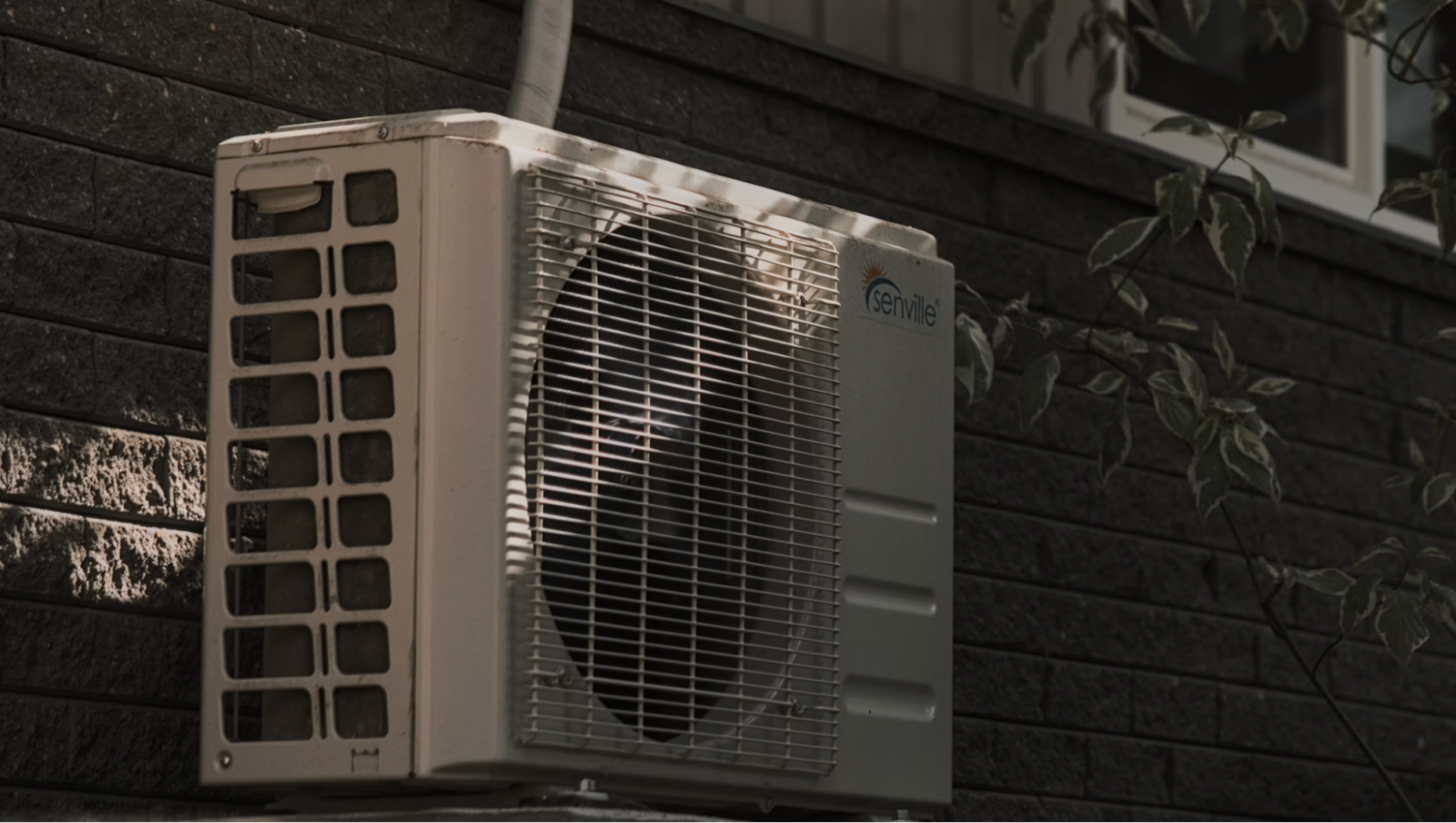
At Castle Rock’s elevation of 6,224 feet, air density is approximately 77 percent of sea-level density. The outdoor condenser coil rejects heat by moving ambient air across its surface. Less-dense air carries less thermal mass per cubic foot, meaning each volume of air moving across the coil removes less heat than the same volume at sea level.
The efficiency correction factor for air-cooled equipment at elevation is approximately 3 percent capacity reduction per 1,000 feet above sea level, per ASHRAE’s published altitude correction tables. At 6,224 feet, a system rated at 3 tons (36,000 BTU/hr) at sea level produces an effective capacity of approximately 2.5 tons (30,000 BTU/hr) under equivalent operating conditions.
This does not mean the system fails. It means a system that was sized at exact capacity for the house at sea-level assumptions is undersized for Castle Rock conditions. A Manual J heat gain calculation performed without altitude correction overestimates the system’s effective output and produces undersizing that appears as an inability to maintain setpoint on peak summer days.
Castle Rock’s design temperature for cooling load calculation (the outdoor temperature used to size the system for the hottest anticipated conditions) is 93°F at ACCA Manual J design conditions. Combined with the altitude capacity reduction, a Castle Rock system specification requires a larger nominal capacity than the same house in Denver to produce equivalent cooling performance.
What the Palmer Divide Wind Exposure Does to Outdoor Units
Castle Rock’s position on the Palmer Divide exposes it to wind from both the northwest (downslope flow from the Rockies) and the southeast (upslope flow from the plains). Castle Rock consistently records higher average wind speeds than communities in the Denver metro basin.
This wind exposure creates two specific effects on outdoor condenser units.
Cottonwood and airborne debris accumulation: The cottonwood trees along Castle Rock’s creek drainages and in residential plantings produce seed dispersal that deposits on condenser coil fins during late May and early June. Condenser fins that are partially blocked by compressed debris have reduced airflow across the coil surface. A system that was operating at rated airflow in April is operating at 70 to 80 percent of rated airflow by July if the coil has not been cleaned between seasons.
Reduced condenser airflow increases the condensing pressure inside the refrigerant circuit. Elevated condensing pressure reduces system capacity, increases compressor discharge temperature, and in sustained conditions causes the high-pressure limit switch to trip the system off. A Castle Rock homeowner who calls for AC service in July and is told their system “runs fine but trips off on hot days” is describing the symptoms of a dirty condenser coil combined with an already-reduced altitude capacity.
A condenser coil cleaning at the beginning of each cooling season takes 20 to 30 minutes with coil cleaning solution and a hose. It is the single highest-return maintenance action for Castle Rock outdoor units.
Thermal cycling acceleration at connection points: Castle Rock’s wind and temperature patterns produce rapid temperature changes at outdoor unit connection points. The refrigerant line set connections at the service valves and the electrical connections at the disconnect box experience accelerated fatigue from the differential expansion of dissimilar metals at these junctions.
What Castle Rock’s Afternoon Thunderstorm Pattern Does to Compressors
The Palmer Divide position that makes Castle Rock more wind-exposed also makes it more prone to afternoon convective thunderstorm activity during July and August. These storms produce power quality events, momentary voltage sags, brief outages, and voltage spikes at restoration, that are more frequent in Castle Rock’s grid position than in Denver’s urban grid.
An AC compressor starting under low-voltage conditions draws excessive current trying to develop the starting torque the motor needs. The motor capacitor assists this start. A capacitor that is degraded, rated at 45 microfarads but measuring 38 due to age and thermal stress, provides insufficient starting assistance, and the compressor labors at start, generating heat and stress at the motor windings.
A hard-start capacitor kit, which adds a start capacitor and potential relay in parallel with the existing run capacitor, provides additional starting torque assistance that makes compressor starts under adverse voltage conditions reliable rather than stressful. Cost installed: $60 to $150. This addition extends compressor service life in Castle Rock’s voltage-event environment.
The Colorado Public Utilities Commission requires Xcel Energy to maintain voltage within ANSI C84.1 standard tolerances, but Castle Rock’s position at the end of some distribution circuits produces momentary voltage events that are within code tolerances but at the lower edge of those tolerances more frequently than urban grid positions.
What Castle Rock’s Low Humidity Does to Condensate Management
Castle Rock’s relative humidity during summer afternoons typically runs 15 to 35 percent during non-storm hours, significantly lower than Denver’s metro humidity despite being at higher elevation. An AC system operating in low humidity produces less condensate than the same system in humid conditions.
Condensate drain lines that run intermittently, only on the occasional high-humidity afternoon, develop algae and mineral deposits at the p-trap and lower sections that do not flush out between drain events. When the system does produce significant condensate during a storm-pattern humidity event, the partially blocked drain cannot handle the flow. The condensate pan overflows.
In Castle Rock homes where the air handler is located in the attic, a common configuration in the suburban developments built throughout the 2000s, a condensate pan overflow is a ceiling damage event. The cost of a ceiling patch and paint after a condensate overflow runs $400 to $1,200. The cost of an annual condensate drain treatment with biological tabs (which prevent algae growth in the drain line) is $15 to $30.
Key Takeaways
- ASHRAE’s altitude correction tables document approximately 3 percent capacity reduction per 1,000 feet above sea level for air-cooled equipment
- At Castle Rock’s 6,224-foot elevation, a 3-ton system produces approximately 2.5 tons of effective cooling capacity, a 0.5-ton effective undersizing versus sea-level rating
- Cottonwood debris accumulation on condenser coils reduces airflow to 70 to 80 percent of rated capacity by July without seasonal cleaning, elevating condensing pressure and triggering high-pressure limit trips
- Hard-start capacitor kits at $60 to $150 installed reduce compressor starting stress during Castle Rock’s frequent voltage-event conditions from afternoon thunderstorm grid disturbances
- Annual condensate drain treatment prevents the algae accumulation that produces overflow events in Castle Rock’s low-humidity climate where drain lines run intermittently
Castle Rock is not a harder place to have air conditioning. It is a place where AC equipment installed and maintained to Castle Rock’s specific conditions performs reliably, and equipment installed and maintained to generic assumptions performs below expectation. The geography sets the parameters. The equipment specification and maintenance schedule either account for them or do not.