
Every organization sitting on a library of audio content — podcasts, earnings calls, webinars, internal briefings — faces the same strategic problem. Audio is rich in substance but poor in reach. It doesn’t perform on platforms built for visual engagement. It can’t be skimmed. It doesn’t generate thumbnails, stop a scroll, or communicate value in the two seconds a viewer decides whether to keep watching. And in a media environment where video accounts for over 80 percent of all consumer internet traffic, leaving audio content in audio-only format is leaving measurable engagement on the table.
The traditional solution has been manual: hand the recording to a video editor, wait days for a cut, review it, request changes, and eventually publish something that may or may not justify the production cost. For a single flagship piece, that workflow is manageable. For an organization producing hours of audio content every week, it doesn’t scale.
AI-powered audio-to-video conversion has matured into a practical answer to this problem. The technology takes an audio file — a podcast episode, a narration track, a recorded presentation — and generates a complete video with synchronized visuals, motion, and text, often in minutes rather than days. The question is no longer whether these tools work. It’s how to use them strategically and which platforms deliver results worth publishing.
Table of Contents
Turning Audio Assets Into Visual Content at Scale
The core value proposition of audio-to-video tools is straightforward: they unlock a content format that was previously trapped behind production bottlenecks. But the strategic implications go further than simple format conversion.
Consider a financial services firm that records a weekly market commentary podcast. The audio reaches its existing subscriber base, but that audience has a ceiling. Converting each episode into a video — with relevant charts, animated text highlights, and branded visual elements — opens distribution across LinkedIn, YouTube, and internal channels without requiring the analyst to sit in front of a camera or the marketing team to spend hours in an editing suite.
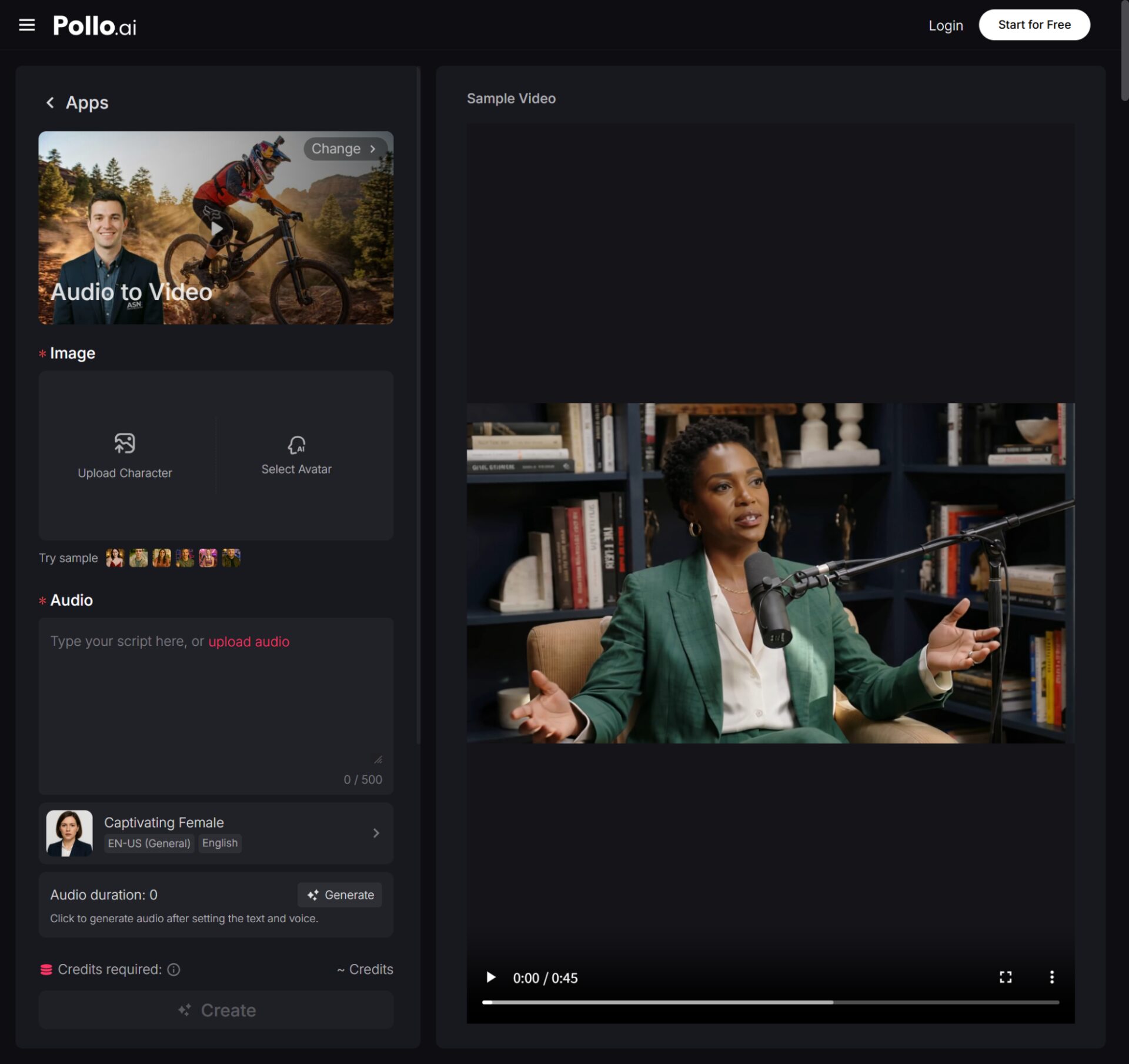
Pollo AI offers a dedicated audio to video pipeline built for exactly this kind of workflow. What makes the platform particularly relevant for business users is its ability to interpret the content of an audio track and generate contextually appropriate visuals rather than simply layering generic stock footage over a waveform. The output maintains a professional standard that reflects well on the brand publishing it, which matters significantly when the content is client-facing or represents executive thought leadership. Pollo AI handles the synchronization between audio pacing and visual transitions with enough precision that the result feels intentionally produced rather than algorithmically assembled.
This capability changes the economics of content repurposing. A single thirty-minute podcast episode can yield a full-length video for YouTube, three to five short-form clips for social distribution, and a set of captioned snippets for email campaigns — all generated from the same source audio without additional recording or manual editing.
Where Audio-to-Video Fits in a Modern Content Operation
Understanding where this technology sits in a broader content strategy helps organizations extract maximum value from it.
The most immediate application is podcast and webinar repurposing. Organizations that have invested in building an audio content library are sitting on months or years of material that can be systematically converted into video. The marginal cost of conversion is a fraction of the original production cost, and the incremental reach can be substantial. LinkedIn alone has seen video engagement rates climb consistently over the past two years, and audio-native content converted to video with captions performs particularly well on the platform because it delivers value with or without sound.
Internal communications represent another high-value use case that often gets overlooked. Large enterprises produce significant volumes of audio content for internal consumption — leadership updates, training modules, compliance briefings. Converting these into video with visual reinforcement of key points improves retention and engagement among employees who increasingly expect video-first communication.
Sales enablement is a third area where the technology delivers measurable returns. Product explainers, customer testimonials captured as audio recordings, and competitive positioning narratives can all be transformed into video assets that sales teams actually use in their outreach. The difference between sending a prospect a link to a podcast episode and sending a polished two-minute video summary of the relevant segment is often the difference between content that gets consumed and content that gets ignored.
Evaluating the Current Generation of Platforms
The audio-to-video market has matured enough that meaningful differences exist between platforms, and choosing the right one depends on your specific requirements.
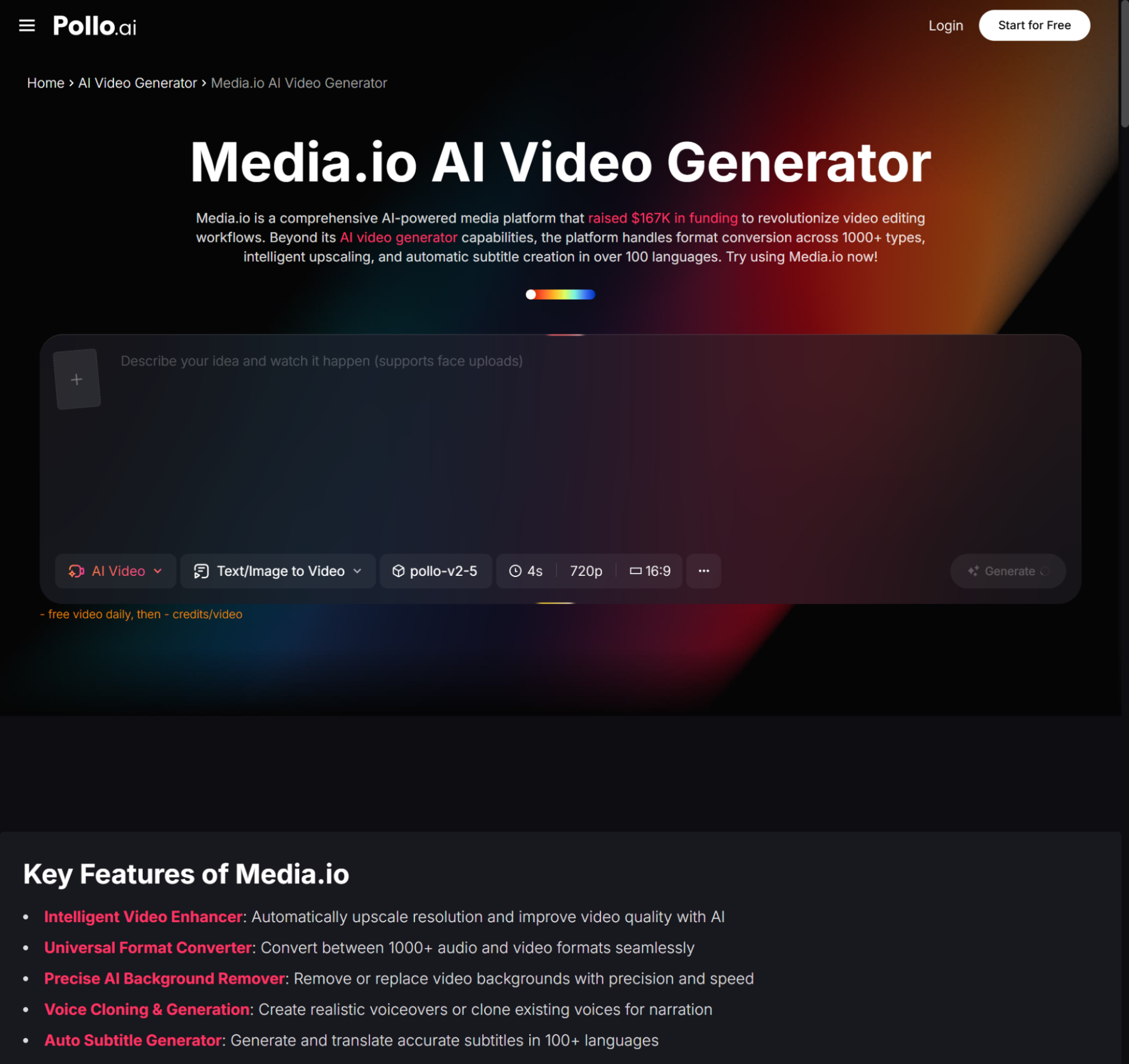
Mediaio AI takes a broad multimedia approach, offering audio-to-video conversion as part of a larger suite of media processing tools. Its strength lies in versatility — the platform handles format conversion, editing, and enhancement across audio, video, and image files, making it a practical choice for teams that need a general-purpose media toolkit rather than a specialized video generation platform. Pollo AI provides access to Mediaio AI’s capabilities, allowing users to evaluate its approach alongside other options within a single ecosystem.
Pictory has built its reputation around converting long-form content into short-form video, with a particular emphasis on text-based inputs. It works well for blog-to-video and script-to-video workflows, though its audio-to-video capabilities are more limited than platforms that treat audio as a primary input format.
Descript approaches the problem from an editing-first perspective, treating audio and video as interchangeable layers of the same project. Its transcript-based editing model is powerful for users who want granular control over the output, but the learning curve is steeper and the workflow is more hands-on than fully automated alternatives.
What distinguishes Pollo AI in this landscape is the balance between automation and output quality. The platform is designed to minimize the manual intervention required while maintaining a level of visual sophistication that meets professional publishing standards. For organizations that need to convert audio to video regularly and at volume, that combination of speed and quality determines whether the tool becomes a core part of the content workflow or an experiment that gets abandoned after the first month.
Practical Considerations for Implementation
Adopting audio-to-video tools effectively requires more than selecting a platform. Several operational factors determine whether the technology delivers on its promise.
Audio quality directly affects video output quality. Background noise, inconsistent volume levels, and poor microphone technique in the source recording create problems that no AI can fully compensate for. Organizations planning to use audio-to-video conversion systematically should invest in standardizing their audio recording setup, even if the standards are modest. A decent USB microphone and a quiet room make a larger difference to the final video quality than any post-processing parameter.
Brand consistency requires deliberate configuration. Most platforms allow you to set visual templates, color palettes, font choices, and logo placements that persist across multiple projects. Taking the time to configure these settings upfront ensures that every video produced aligns with existing brand guidelines, which is especially important for client-facing content and executive communications.
Distribution strategy should inform production choices. A video destined for LinkedIn has different optimal specifications than one intended for YouTube or an internal learning management system. Aspect ratio, duration, caption styling, and thumbnail selection all vary by platform, and the most efficient workflow accounts for these differences during generation rather than requiring manual reformatting afterward.
The Strategic Outlook
The convergence of audio and video content is accelerating, driven by platform algorithms that favor video, audience preferences that increasingly demand visual engagement, and AI tools that have eliminated the production bottleneck that previously kept these formats separate.
For organizations still treating audio and video as distinct content channels with separate production pipelines, the efficiency gap will widen. The teams that integrate audio-to-video conversion into their standard content operations will produce more, distribute more broadly, and extract significantly greater value from every hour of audio they record.
The technology is no longer the constraint. The remaining challenge is organizational — building the workflows, setting the quality standards, and aligning the content strategy to take full advantage of what these tools now make possible.