
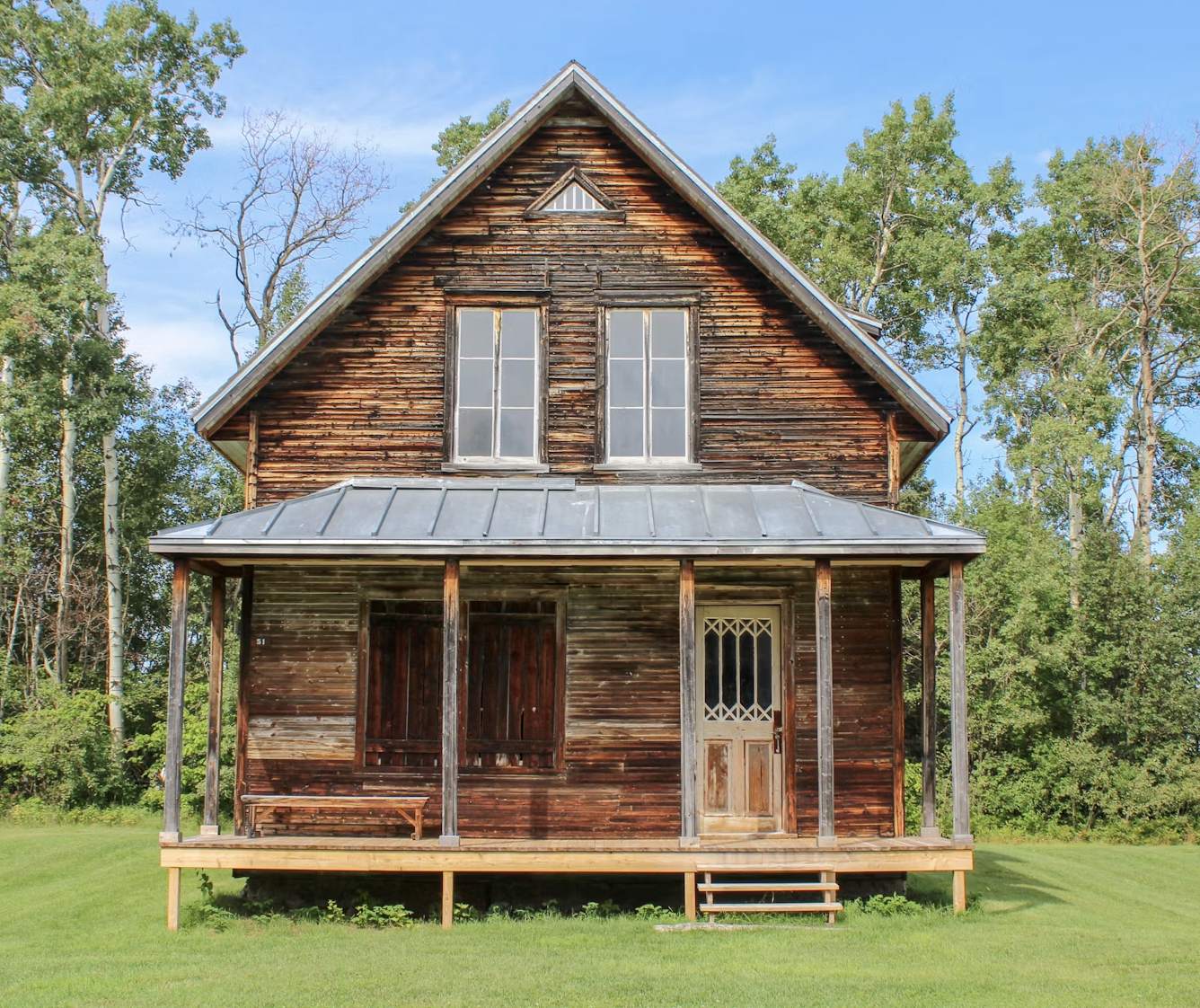
Golden, Colorado, was founded in 1859 as the territorial capital during the Colorado Gold Rush. A significant portion of its residential housing stock predates World War II. Some of it predates World War I. The electrical systems inside these homes are not historical curiosities. They are active infrastructure that homeowners live with, modify, and make decisions about without necessarily understanding what they are working with.
The age of these homes changes the conditions under which electrical work is performed. Wiring methods, panels, grounding systems, and electrical capacity may reflect the standards and household demands of the period when the home was built rather than those of a modern household. This makes the existing electrical system an important part of any repair, upgrade, or renovation in a historic Golden property.
In these situations, Local Electricians Golden CO can involve assessing the existing system before determining what work the property requires.
What Knob and Tube Wiring Is and What It Is Still Doing in Golden Homes
Knob and tube wiring (K&T) was the standard residential electrical installation method from approximately 1880 through the late 1930s. It runs individual conductors through ceramic knobs mounted on framing members and through ceramic tubes where wires penetrate framing. The system has no ground conductor. It has no protective sheathing. And it relies on open air circulation around the conductors for heat dissipation, which is a design principle that subsequent building practices have systematically undermined.
When insulation was added to older homes during the energy crises of the 1970s, blown and batt insulation covered K&T wiring in attic spaces. The National Electrical Code had required specific clearance around K&T conductors because their heat dissipation depended on that clearance. Insulation over K&T wiring eliminates the clearance and traps the heat that the open-air design was meant to release.
The NFPA reports that home fires involving K&T wiring are disproportionately represented in the data for the age of structure. Not because K&T wiring in original, unmodified condition is inherently dangerous, but because K&T wiring in its current condition, after nine decades of insulation addition, circuit loading beyond original design intent, amateur modifications, and degrading insulation from thermal cycling, is not the same system that was installed.
A licensed electrician assessing K&T wiring in a Golden historic home is not assessing the original installation. They are assessing the current state of a system that has experienced every renovation, tenant, and utility company intervention that the home has seen since installation.
What the Aluminum Wiring Period Created and Why It Persists
Between 1965 and 1973, aluminum was used for residential branch circuit wiring because copper prices spiked and aluminum offered equivalent conductivity at lower cost. Golden homes built during this window commonly carry aluminum branch circuit wiring in the walls.
The problem that emerged over the following decades was connection-specific. Aluminum expands and contracts at a different coefficient than the copper terminals on standard outlets, switches, and panels. Repeated thermal cycling from this differential expansion progressively loosens connections at every device terminal in the home.
A loose connection creates resistance at that contact point. Resistance converts electrical energy to heat. Heat at a connection point inside a wall cavity with wood framing around it is the precondition for arc-fault-initiated fires.
The Consumer Product Safety Commission's 1974 study on aluminum wiring, still referenced in current NEC commentary, estimated that homes with aluminum branch circuit wiring are 55 times more likely to have a connection reach fire-hazard temperature than homes with copper wiring.
The correct remediation is not rewiring the full home, which is expensive and disruptive. It is installing CO/ALR-rated devices (designed for aluminum wiring compatibility) and applying Noalox anti-oxidant compound at all connection points, which addresses the differential expansion problem at the device terminals where it manifests. This remediation is documented by the CPSC as a recognized safer alternative to full rewiring when properly executed.
What Federal Pacific Electric Stab-Lok Panels Mean for a Golden Home
Federal Pacific Electric (FPE) Stab-Lok panels were installed in millions of American homes between the 1950s and the mid-1980s. FPE products appeared in Colorado residential construction throughout this period, and Jefferson County's housing stock includes a significant number of homes with Stab-Lok panels still in active service.
The documented problem with Stab-Lok breakers is that they fail to trip under overcurrent conditions at rates that significantly exceed code-compliant equipment. Independent testing documented trip failure rates of 25 to 65 percent in various test series. A breaker that does not trip when a circuit exceeds its rated current is not providing the protection it appears to provide.
The identification is straightforward: the panel door will display "Stab-Lok" in orange lettering, and the breakers have a distinctive rectangular shape with a narrow slot. A Golden homeowner who sees this labeling and has not had the panel assessed by a licensed electrician is operating with protection infrastructure of uncertain reliability.
Panel replacement in Jefferson County at current pricing runs $2,000 to $4,500 installed, including the new panel, service entrance assessment, and any necessary wiring updates. This cost includes coordination with Xcel Energy for meter pull during the work.
What Golden's Altitude Does to Electrical Equipment That Most Homeowners Do Not Know
Electrical equipment ratings are established at sea level. At altitude, two physical changes affect performance.
First, air is less dense at elevation. Electrical equipment that dissipates heat through convection (moving heat from the component into surrounding air) does this less efficiently at altitude because less air mass is present to carry heat away. Equipment that runs comfortably cool at sea level runs warmer at 5,674 feet (Golden's elevation). Over years of operation, components running at higher temperatures age faster.
Second, electrical arc suppression is weaker at altitude. The ionization path through less-dense air is easier to establish and harder to interrupt. Circuit breakers rated for sea-level arc interruption capacity have slightly reduced effective interrupting capacity at Golden's elevation under certain high-fault-current conditions. This matters most in commercial-scale applications, but it is a relevant context for any high-current work in Golden's residential setting.
Key Takeaways
- NFPA data shows homes with K&T wiring in modified condition are disproportionately represented in residential electrical fire statistics for their age category
- The CPSC's 1974 study estimated homes with aluminum branch circuit wiring are 55 times more likely to have a connection reach fire-hazard temperature than copper-wired homes
- Federal Pacific Electric Stab-Lok breakers have documented trip failure rates of 25 to 65 percent in independent testing
- CO/ALR-rated device installation with Noalox compound at all connection points is a CPSC-recognized remediation for aluminum wiring that does not require full rewiring
- Golden's elevation of 5,674 feet produces warmer-running electrical equipment due to reduced air density for convection cooling, and reduced arc suppression capacity at high fault currents
The electrical system in a Golden historic home is not the electrical system that was installed. It is what that system has become after decades of modification, loading, insulation addition, and aging in a high-UV, high-altitude, freeze-thaw-cycle environment. That distinction is what determines what an electrician is actually assessing when they open the panel.