
Most conversations about AI infrastructure begin with electricity. That makes sense. Large data centers need grid capacity, substations, backup power, and enough supply to keep dense computing equipment running without interruption. Still, power is not the only pressure point.
Water is becoming harder to treat as a background utility. In some regions, cooling demand can place real strain on municipal systems, especially during drought, heat waves, or peak summer demand. A site may look ready because land, fiber, and electricity are available, while the water plan is still thin.
That is where on-site storage becomes part of the infrastructure discussion. Tarsco Bolted Tanks fits into that conversation because future AI growth will depend on practical water capacity close to the facility, not only on power and network access.
Table of Contents
Where Data Centers Actually Use Water
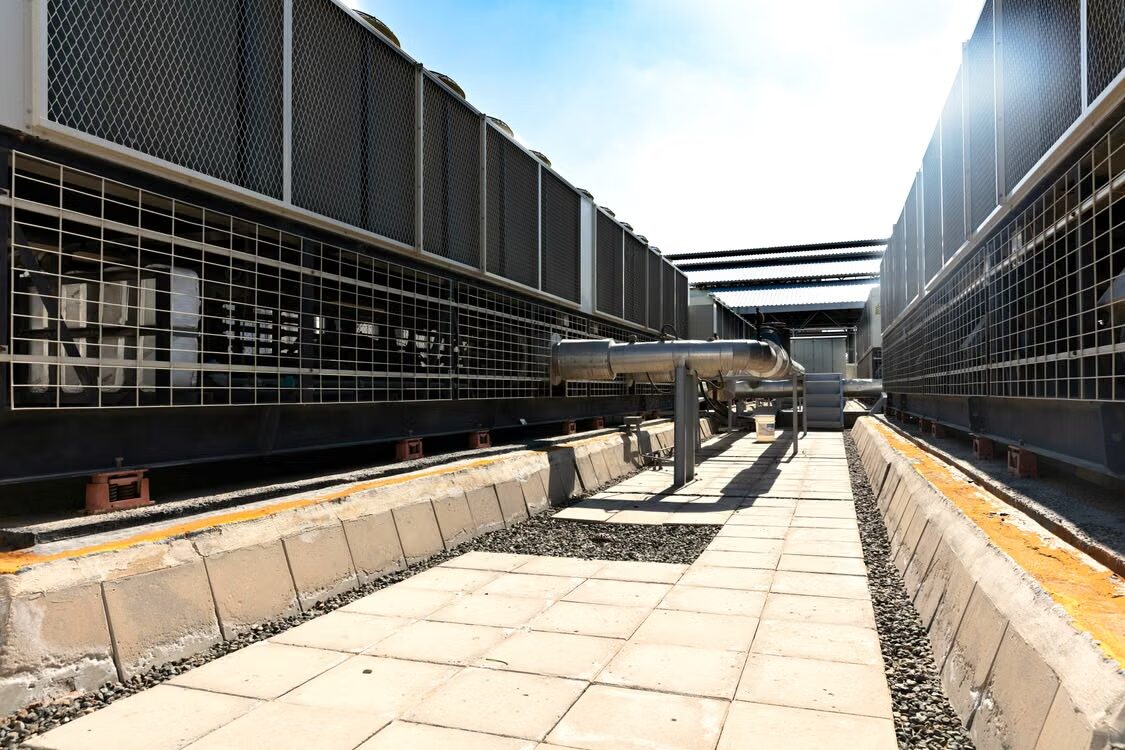
Data centers can use water in several places. Cooling towers are the most visible example. They help reject heat from the facility, often through evaporation, which can reduce electricity demand compared with some dry cooling designs. The trade-off is direct water use.
Water may also be needed for humidification, depending on building design, equipment needs, and local climate. There is also an indirect side. If the electricity serving the data center comes from water-dependent power generation, part of the water footprint sits outside the site itself.
Cooling choices are rarely simple. Air cooling can reduce direct water use, but may increase energy demand. Closed-loop systems can limit ongoing water loss, though they still need maintenance and heat rejection. Newer liquid-cooling technologies can move heat more efficiently from dense AI hardware, but they do not make site-level water planning disappear. They change the shape of the problem.
Reuse, Capture, and Storage Reduce Potable Demand
A serious water strategy should not assume that drinking-quality municipal water is the default supply for every use. In some locations, recycled wastewater can support cooling or process demand. In others, captured rainwater can supplement non-potable systems. Stored process water can also reduce pressure on local utilities during periods when heat and computing loads rise together.
Each option has limits. Recycled wastewater depends on treatment capacity and piping. Rainwater depends on climate, collection area, and storage volume. Process water storage needs the right controls, access for inspection, and materials that can handle the water quality involved.
For corrosion-resistant, large-capacity storage, stainless steel bolted tanks can be one practical option. The larger point is not that one tank material solves the water problem. It is that storage has to be planned as part of cooling, reuse, and emergency readiness, not added late because the utility starts asking difficult questions.
Why Communities Are Pushing Back
Community concern is not always about average annual water use. Residents often worry about dry years, pressure on local wells, peak summer demand, rate increases, and whether public infrastructure is being stretched for private growth. Those concerns become sharper when details are vague or when people hear about the water plan after major decisions already seem finished.
Transparency matters. A developer may describe the facility as efficient, but local officials and residents still need clearer answers. How much water is potable? How much can be reclaimed? What happens during drought restrictions? Will new pipes, treatment upgrades, or storage capacity be needed? Who pays for them?
Before construction begins, water planning should cover:
- local supply limits and drought history
- peak-day demand, not only yearly averages
- available reclaimed or non-potable sources
- municipal pipe, treatment, and storage capacity
- public reporting that local officials can explain clearly
Local infrastructure agreements can reduce conflict when they are handled early. If a project needs water-line upgrades, reuse connections, wastewater improvements, or additional storage capacity, those responsibilities should be clear before the site becomes a public argument.
Matching Cooling Systems to Local Conditions
There is no single cooling answer for every AI facility. A humid region with reclaimed-water access may support one approach. A dry inland site with limited municipal capacity may need a very different one. A power-constrained region may favor systems that reduce electricity demand, while a drought-prone community may push harder on water reduction.
Site selection has to reflect that reality. Land price, tax incentives, fiber access, and grid proximity matter, but they do not make a site ready on their own. A location that looks strong on power can still be weak on water. Another site may have better reuse options, more resilient wastewater infrastructure, or more realistic storage capacity.
The storage plan should follow the operating plan. Tanks may support reclaimed water, captured rainwater, process water, fire protection reserves, or make-up water for cooling systems. But the sizing needs to come from actual demand patterns, not a generic number copied from another facility.
Planning AI Growth Around Water
AI expansion is moving faster than many local systems were designed to handle. That does not mean every data center is a water problem. It does mean water has to be discussed earlier, with the same seriousness as power, land, and network access.
A practical roadmap should start before a site is treated as ready:
- Check water availability early: not only annual supply, but drought history, seasonal pressure, and competing local demand.
- Match cooling to the location: water-intensive cooling may fit one region and create conflict in another.
- Prioritize reuse where possible: reclaimed wastewater, captured rainwater, and stored process water can reduce dependence on potable supplies.
- Build storage into the plan: tanks should support the actual cooling, reuse, and emergency strategy, not just satisfy a late-stage requirement.
- Coordinate with local utilities: water lines, treatment capacity, public reporting, and cost responsibilities should be clear before construction begins.
The next AI bottleneck may still involve electricity. In some regions, though, water may become the harder question. Future data center growth will depend on coordinated planning across power, cooling, storage, and local water systems. Without that coordination, the issue will not be whether the servers can run. It will be whether the surrounding infrastructure can carry the load.