
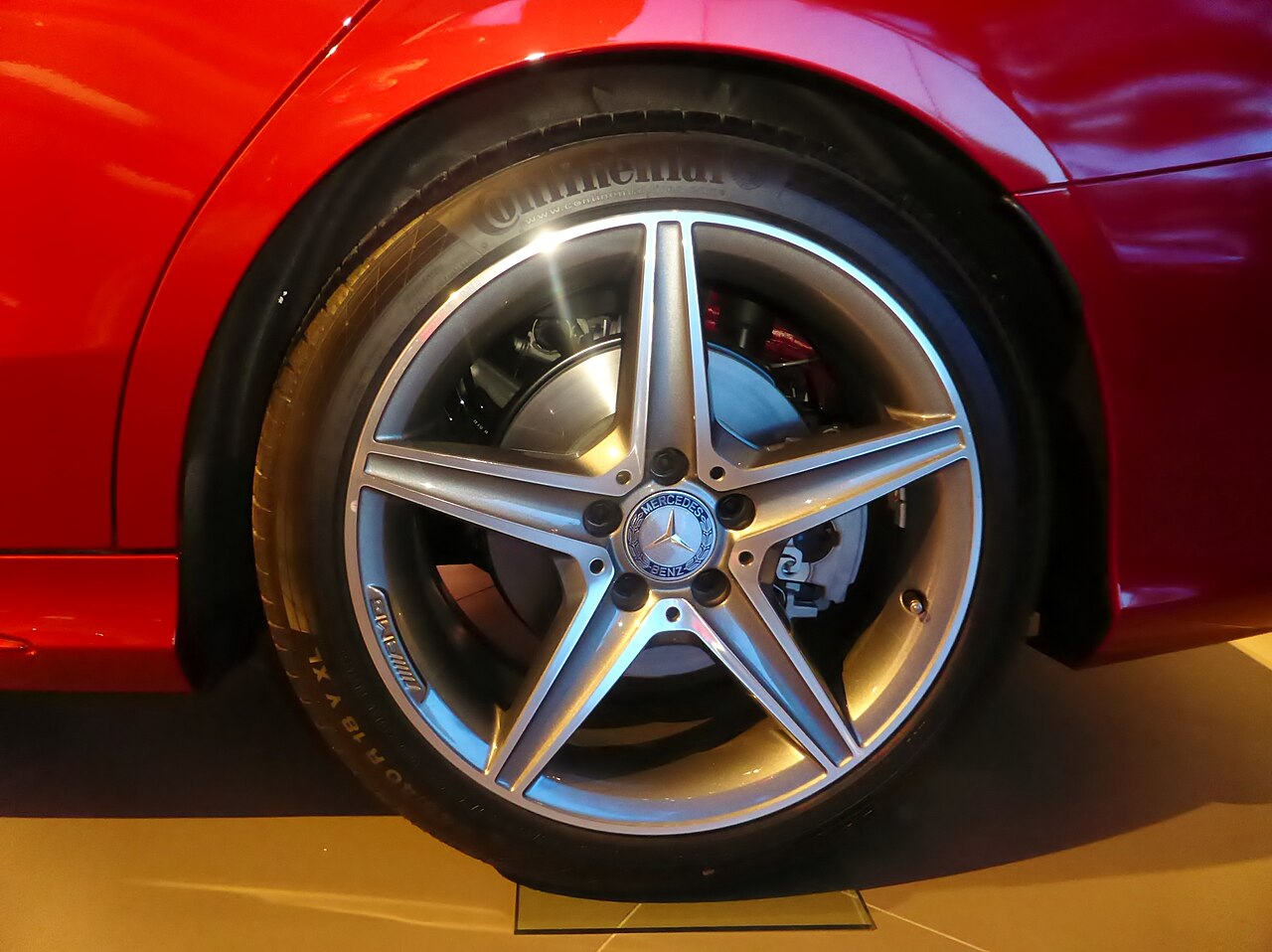
The alloy wheel repair specialists utilize a precise procedure involving the use of dial-indicator run-out mapping, heat-induced softening of the affected parts, and the application of pressure through the use of a hydraulic press instead of a simple knock.
This procedure ensures that there will be no vibrations at high speeds, that the wheel won’t cause uneven wear of the tires, and that it retains its concentricity without the need for expensive replacement with OEM wheels.
While online discussions regarding professional buckled wheel repair services claim that all bent alloy wheels crack, metallurgical evidence proves that isolated bends can be corrected without the danger of work hardening when the right temperature is used.
Table of Contents
How Do Technicians Measure Wheel Buckles?
Wheel deformation is measured using dial indicators in order to differentiate between radial runout (vertical flat spots) and lateral runout (horizontal wobble).
As indicated in Technical Service Bulletins released by the National Highway Traffic Safety Administration (NHTSA), unloaded wheel/ tyre assembly runout tolerance values stand at about 0.055 inches (1.40 mm), whereas aftermarket tolerance values for bare rims are stated to be as low as 0.030 inches (0.76 mm). The bare rim is mounted to a precision spindle in order to locate the apex of deformation before applying any force.
| Runout Type | Symptoms | Target Off-Car Tolerance | Main Measurement Instrument |
|---|---|---|---|
| Radial Runout | Suspension and vertical hopping | Under 0.76 mm (0.030 in) | Dial gauge with inner-barrel measurement |
| Lateral Runout | Highway-speed steering wheel shimmy | Under 0.76 mm (0.030 in) | Dial gauge with rim-flange measurement |
Practical Tip: Always ask for runout measurements in mm prior and after repair in order to prove your rim’s return to factory roundness.
What Is the Step-by-Step Repair Process?
Workshops that have been certified apply a standard five-step hydraulic straightening procedure in order to realign cast or forged aluminium without causing stress cracks.
- Tyre Dismounting and Inspection: Technicians dismount the tyre and examine the bead seat, spokes, and hub for hairline cracks or any previous welds using bright lighting.
- Dial-Gauge Runout Marking: The plain metal is mounted on a straightening jig, and dial gauges are used to record the precise location of the start, high point, and end of the bend.
- Temperature Control: Professionals heat up the bent barrel section to make the aluminium more ductile but do not change its temper.
- Hydraulic Pressing: Hydraulic cylinders with nylon or alloy contoured pads apply force to move the flat spot outward incrementally and measure the distance after every press.
- CNC Finishing and Road-Force Balancing: In case curb rash occurs together with the bend, a lathe is used to remove the outer face before the balanced tyre is re-mounted.
Important lesson: Select workshops that use hydraulic jigs with dial gauges instead of hammering services.
Which Buckled Wheels Are Safe to Straighten?
All bent rims aren’t suitable for restoration; qualified specialists will refuse to repair rims that show signs of fatigue to ensure your safety during road travel.
Industry standards on the safety of the structural load paths in the spoke area and centre bore, established by Wheel Restore and according to ISO 7141 in Standards Australia, stress that they have to stay unbroken.
- Suitable for repair: Limited flat spots on the inside barrel edge resulting from the hits into the potholes.
- Suitable for repair: Slight lateral bends without any paint blistering, metal folding, or bead seat damage.
- Should be replaced: Pronounced kinks, broken spokes, twisted hub areas, or heavy corrosion near the tyre bead location.
| Damage Location | Possibility to Repair | Average Time Required |
|---|---|---|
| Inner Barrel Flat Spot | Highly efficient repair through hydraulic pressing | 1 to 2 hours |
| Outer Lip Bends with Rash | Can be repaired through bending and CNC machining | 4 to 8 hours |
| Spoke Roots or Hub Bends | Not suitable for repair; the whole wheel has to be replaced | Same-day replacement |
Take-home message: When choosing between the two options, schedule a check-up with a reliable buckled wheel repair service.
Getting My Wheel Back To Factory Concentricity
The buckling of an alloy wheel doesn’t always mean its costly replacement, especially if the damage has occurred in the barrel only. Combining diagnostic equipment such as dial indicators, localized heat, and hydraulic pressure, skilled professional buckled wheel repair services can restore the bent alloy wheels to a safe condition.
Frequently Asked Questions
Is it possible to drive on a buckled alloy wheel?
No, as it will cause degradation of the tyre contact, accelerated wear of the suspension bushings, and potential loss of air through subsequent bumps.
Does heat affect the strength of an alloy wheel?
Controlled localized heating performed by professionals allows bending of the damaged area without causing cracks at temperatures between 300°C and 540°C, where the factory heat treatment is removed.
How much time does professional wheel straightening require?
The standard inner barrel straightening will take up to two hours, while the CNC face machining and clear coat curing will take one working day.
Will I have to do a wheel alignment?
Yes, because if the pothole strike has been strong enough to bend an alloy rim, it is likely to knock the toe and camber angles of the suspension out of specification.
