
Broadcast engineers face mounting pressure to deliver uninterrupted live feeds from unpredictable locations. Imagine a mobile production team preparing for a multi-camera live event where network failure is not an option. Traditional single-carrier hotspots often drop signal or throttle bandwidth, risking lost frames or total feed outages. The right cellular router can bridge this gap between reliability and mobility, and deploying the correct device transforms live production workflows. Selecting, configuring, and managing a robust mobile router answers the central challenge: keeping your video stream stable, even in high-congestion or remote environments.
Table of Contents
Peplink MAX BR1 Pro Hardware Architecture for Broadcast Reliability
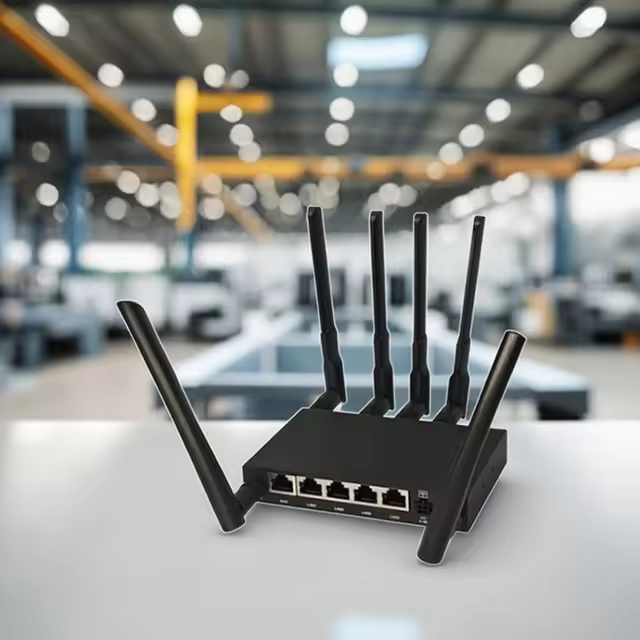
Broadcast engineers demand hardware that withstands the rigors of field deployment and guarantees consistent performance. The Peplink MAX BR1 Pro deployment guide highlights the device’s rugged housing, industrial-grade components, and broad operating temperature range—crucial for outdoor setups and OB vans. Its dual-SIM slots enable instant network failover, switching to a backup wireless carrier if the primary connection drops. This physical redundancy ensures a live camera feed continues streaming, preventing costly downtime and signal loss during mission-critical moments.
Another advantage is the device’s Wi-Fi 6 support, allowing multiple production laptops, encoders, and control surfaces to connect without the congestion or interference common with older Wi-Fi standards. For broadcast workflows requiring local network access, the integrated gigabit Ethernet ports create a wired backbone for low-latency connections. Reviewing cellular router hardware specifications helps teams select models that align with their specific environmental and bandwidth needs.
Configuring SpeedFusion and Cellular Bonding for Live Video Transmission
Stable live video requires more than just a fast connection; it depends on advanced network features that stabilize and optimize unpredictable cellular links. Using SpeedFusion, a proprietary bonding technology, the router aggregates multiple network paths—combining two SIM cards or a SIM and wired WAN—into a single, resilient data stream. This approach minimizes packet loss and jitter, which are the primary causes of stuttering or dropped video frames during live broadcasts.
For a typical Peplink MAX BR1 Pro deployment guide scenario, engineers configure SpeedFusion through an intuitive web interface, enabling bonding and failover without deep networking expertise. The system automatically distributes video packets across all available networks and re-assembles them at the central studio, so even if one link degrades, the stream remains intact. To maintain compliance, teams should reference broadcast network bonding regulations before deploying bonded cellular solutions in certain jurisdictions.
During a live sporting event in a rural area, for example, this technology allows a field unit to combine LTE and 5G connections, providing the stability and bandwidth needed for multi-bitrate streaming to remote production hubs.
Power Management and Mounting Strategies for Mobile Production Rigs
Reliable power and versatile mounting options are non-negotiable for field production. The device accepts both DC and AC power inputs, accommodating integration into OB vans, battery packs, or generator-powered setups. Engineers often wire the router directly to the vehicle’s electrical system using the terminal block, ensuring the unit powers up with the rig and operates through power fluctuations that could disrupt a less robust device.
This 5G-enabled router features a compact chassis with mounting brackets, allowing secure installation in rack drawers, wall panels, or behind monitors in mobile control rooms. In scenarios where vibration or shock is likely, such as off-road event coverage, using vibration-damping mounts protects internal components. The Peplink MAX BR1 Pro is designed for these demanding use cases, offering the flexibility to meet unique rig layouts and power sources.
When planning a production vehicle retrofit, assess available space, airflow, and cable routing before finalizing installation points. This careful preparation reduces the risk of accidental cable disconnections or overheating during extended shoots.
Remote Fleet Management and Network Monitoring via InControl2
Coordinating multiple broadcast vehicles or remote camera units requires a centralized platform for real-time oversight. InControl2, a cloud-based management portal, lets broadcast engineers monitor device health, bandwidth usage, and connection status from any location with internet access. This oversight allows quick diagnosis and remediation if a field router loses a carrier or experiences abnormal latency during a live event.
Through InControl2, network settings can be pushed to dozens of units simultaneously, standardizing configurations and firmware across a production fleet. The platform’s GPS tracking supports logistical planning by mapping device locations, which is vital for multi-venue or rolling coverage. Reviewing cloud-based network monitoring best practices ensures that broadcast teams leverage all available InControl2 features for proactive network management.
For a national news network with teams deployed in different cities, this remote visibility means technical staff can spot and address issues before they impact the live feed, dramatically reducing troubleshooting times and on-site interventions.
Conclusion
Engineers deploying mobile networks for live broadcast should start with a field test, validating SIM compatibility, power integration, and SpeedFusion performance before the first event. This hands-on approach exposes any coverage gaps or configuration issues, ensuring your next live production proceeds without unexpected network failures.