
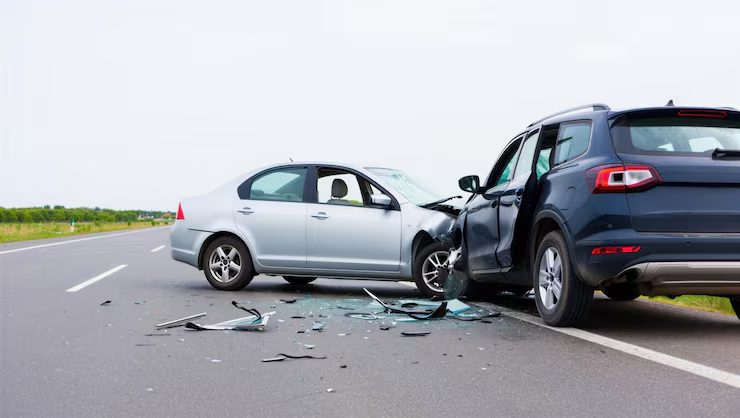
Partial fault can affect a Texas car accident claim by reducing the compensation an injured person receives. Under Texas's modified comparative negligence rule, an individual can recover damages if they are 50% or less responsible for the accident. However, if their share of fault reaches 51% or more, they cannot recover compensation from the other party.
Working with a personal injury law firm can help accident victims understand how fault is determined, what evidence supports their claim, and how shared responsibility may affect their compensation. Legal guidance can also help them respond to disputed fault assessments made by insurance companies.
Understanding Texas's comparative negligence rule is essential for knowing how partial fault affects compensation, insurance negotiations, and the ability to pursue a claim.
Table of Contents
How Texas Determines Fault in Car Accidents
Texas uses a legal principle known as proportionate responsibility to determine how much each party contributed to an accident. Investigators, insurance companies, and courts may consider driver behavior, traffic laws, road conditions, and available evidence when assigning fault.
For example, one driver may cause a collision by running a red light, while another driver may contribute by speeding. In such situations, both drivers may share responsibility for the accident.
How Partial Fault Reduces Compensation
When an accident victim is partly responsible, their compensation is reduced by their assigned percentage of fault. This rule applies to claims involving damages such as medical expenses, lost wages, and pain and suffering.
For example, suppose a driver suffers $50,000 in damages but is found 20% responsible for the accident. Their potential compensation would be reduced by $10,000, leaving $40,000.
However, if the driver is found 51% responsible, they generally cannot recover damages from the other party under Texas law. This makes the fault determination particularly important when pursuing a claim.
Evidence Needed to Establish Fault
Evidence can influence how responsibility is divided between drivers. Accident victims should preserve relevant information whenever possible, including:
- Police reports: These may document the accident scene, statements, and initial observations.
- Photographs and videos: Images of vehicle damage, road conditions, traffic signals, and injuries can help explain how the collision occurred.
- Witness statements: Independent witnesses may provide additional details about the drivers' actions.
- Medical records: These documents help establish the nature and extent of accident-related injuries.
- Vehicle or surveillance footage: Dashcam recordings and available security footage may clarify disputed events.
Organized evidence can help challenge an unfair fault assessment and support a more accurate evaluation of the claim.
How Insurance Companies Handle Shared Fault
Insurance companies review evidence to determine liability and calculate potential payouts. However, their fault assessments may be disputed, particularly when the available evidence is incomplete or conflicting.
An insurer might argue that an injured driver was speeding, distracted, or failed to take reasonable action to avoid the collision. Accident victims should review settlement offers carefully and avoid accepting a fault determination without understanding its basis.
What Should You Do If You Are Partly at Fault?
If you believe you contributed to a Texas car accident, document the incident, preserve relevant evidence, seek appropriate medical care, and be careful when providing statements to insurers. Avoid assuming that partial responsibility automatically prevents you from recovering compensation.
Understanding the applicable rules and obtaining appropriate legal guidance can help you evaluate your options and make informed decisions about your claim.
Key Takeaways
- Texas follows a modified comparative negligence rule.
- Accident victims can recover damages if they are 50% or less at fault.
- Compensation decreases according to the victim's percentage of responsibility.
- Evidence plays an important role in determining fault.
- Insurance companies may dispute fault percentages to reduce payouts.