
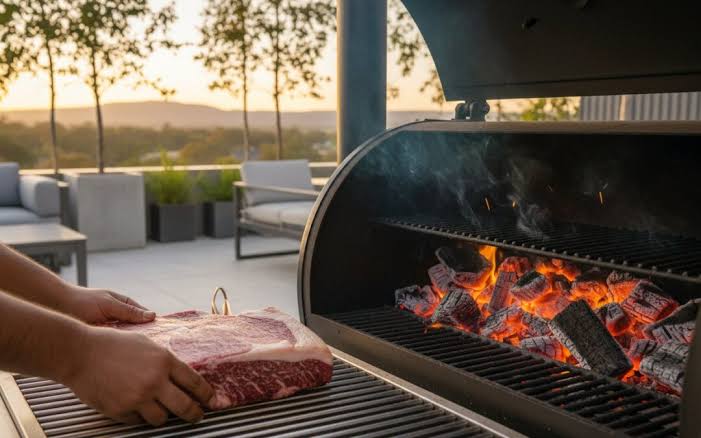
Most backyard cooks spend more time picking a rub than picking their wood, and then wonder why their brisket tastes like an ashtray. The fuel you burn is not a detail. It shapes the color of the smoke ring, the depth of the bark, and whether guests ask for seconds or politely reach for the potato salad. Get the wood right before you even light the fire.
Table of Contents
Why Wood Species Actually Matters
Every wood species burns with a different chemical fingerprint. Hardwoods contain varying ratios of lignin and cellulose, and those ratios determine how much guaiacol, syringol, and phenol end up on your meat. Those compounds are why hickory tastes different from cherry, even at the exact same pit temperature. It is chemistry, not magic.
Broadly, smoking woods fall along a flavor intensity scale from mild to assertive. Fruit woods like apple, cherry, and peach sit at the gentle end. They produce a thin, sweet smoke that complements poultry and pork ribs without overwhelming them. Mid-range woods like pecan and maple add body without aggression. Then you have the heavy hitters: hickory, oak, and mesquite. Hickory is the signature flavor of American barbecue, especially in the Carolinas and Tennessee. Mesquite burns the hottest and the fastest, which makes it ideal for quick cooks like steaks and fajitas but a liability on a six-hour pork shoulder.
Think of it this way: the wood you choose should complement the fat content and texture of the protein, not compete with it. A delicate salmon fillet does not need hickory. A fatty, collagen-dense beef short rib can absolutely take it.
The Smoke Profile Triangle: A Framework for Matching Wood to Meat
Here is a simple framework that professionals and serious home cooks use, even if they have never given it a name. Call it the Smoke Profile Triangle. Every pairing sits somewhere between three variables: intensity, moisture compatibility, and burn duration. Get all three working in the same direction and the cook almost runs itself.
- Intensity: Does the wood’s flavor assertiveness match the boldness of the cut? Bold smoke for bold proteins, gentle smoke for mild ones.
- Moisture compatibility: Wet cuts like whole birds benefit from fruit woods, which release more steam during combustion. Dry, high-fat cuts can handle denser smoke.
- Burn duration: Long cooks need wood that produces sustained, clean heat. Short, hot cooks can use faster-burning species like mesquite.
Run a specific cut through that triangle before you shop and you will stop buying wood out of habit and start buying it with purpose.
Wood Forms: Logs, Chunks, Chips, and Pellets
Species is only half the decision. The physical form of your fuel changes the entire cook.
| Form | Best Smoker Type | Burn Duration | Flavor Intensity |
| Full logs | Offset stick burners | Long | Highest |
| Chunks (fist-sized) | Charcoal grills, kamados | Medium-long | High |
| Chips | Gas grills, electric smokers | Short | Medium |
| Pellets | Pellet grills | Medium | Medium |
Chips get a lot of shelf space at big-box stores, but they are genuinely the weakest option for anything longer than a 30-minute cook. They combust too fast to build the sustained thin blue smoke that good barbecue requires. Chunks are the workhorse of backyard smoking. Two or three fist-sized oak chunks buried in a charcoal bed will carry a pork butt through hours of consistent smoke without you babysitting the firebox. If your setup runs on a pellet grill, the wood choice happens at the bag level, so pay close attention to species and blend labeling.
“The majority of grill owners use their grill or smoker year-round,” according to a Hearth, Patio and Barbecue Association survey cited by Forbes, which means wood fuel quality is a year-round decision, not just a summer one.
That reality matters when you are stocking your fuel supply. Different seasons call for different cooks. Winter is offset territory, long braises and whole shoulders. Summer opens up the full range. Your wood selection should rotate with the calendar.
Moisture Content: The Variable Nobody Talks About
Even after you pick the right species and form, moisture content can wreck everything. Green, freshly cut wood contains so much water that it smolders instead of burning clean. The result is acrid, heavy smoke loaded with creosote, the compound that gives improperly smoked meat a bitter, almost medicinal taste. Properly seasoned or kiln-dried wood, by contrast, ignites cleanly and produces the pale blue smoke that competition cooks chase.
Target a moisture content below 20% for optimal smoking. Most reputable premium wood fuel sold through specialty retailers is kiln-dried to this range, which is exactly why sourcing matters. Fuel picked up from a random pile by the side of the road is a gamble you will taste.
Wood’s role in American households runs deeper than backyard cooking. The U.S. Energy Information Administration reported in 2023 that the residential sector consumed 450 trillion BTUs of wood energy, accounting for 23% of total U.S. wood and wood waste energy use. Americans have a longstanding relationship with burning wood, and the backyard smoker is one of the most enjoyable expressions of it.
A Real Cook: Putting It All Together
Here is a concrete scenario. You are cooking a USDA Choice whole packer brisket, about 14 pounds untrimmed, on an offset stick burner. Target pit temp is 250 degrees Fahrenheit. You want a dark, lacquered bark and a deep smoke ring. The cook will run roughly 12 to 14 hours.
The right call: post oak as your primary fuel, split into 16-inch logs, with one or two pecan chunks added during the first three hours for subtle sweetness. Post oak burns long and clean, produces a medium-intensity smoke that penetrates deep without bitterness, and is the default fuel of Central Texas-style barbecue for a reason. Skip the mesquite entirely on a cook this long. You would end up with an overpowering, almost acrid exterior by hour four.
That kind of intentional fuel selection is what separates a memorable brisket from a forgettable one, and it costs no extra time. Just a few extra minutes of thought before you light the fire.
Where to Source Quality Wood Fuel
Big-box hardware stores carry chips and the occasional bag of chunks, but the quality and species accuracy are inconsistent. A dedicated outdoor cooking retailer carries properly labeled, kiln-dried hardwoods in species that actually matter for the cooks serious home pitmasters are running. The staff can also tell you what works for your specific smoker setup, which is worth something a shelf tag cannot give you.
If you are in the Denver metro area and want to handle the wood before you buy it, Holy Smokes BBQ in Centennial carries premium wood fuels alongside their full line of grills and smokers. Talking to someone who knows the inventory is the fastest way to narrow your selection without buying three bags you will never finish.
The Short Version
Match smoke intensity to protein boldness. Choose chunks over chips for anything longer than a quick sear. Always use properly dried wood. And treat the species selection as a deliberate flavor decision, not an afterthought. Get those four things right and your smoker will do the rest of the work for you. The real question is: which cut are you starting with?