
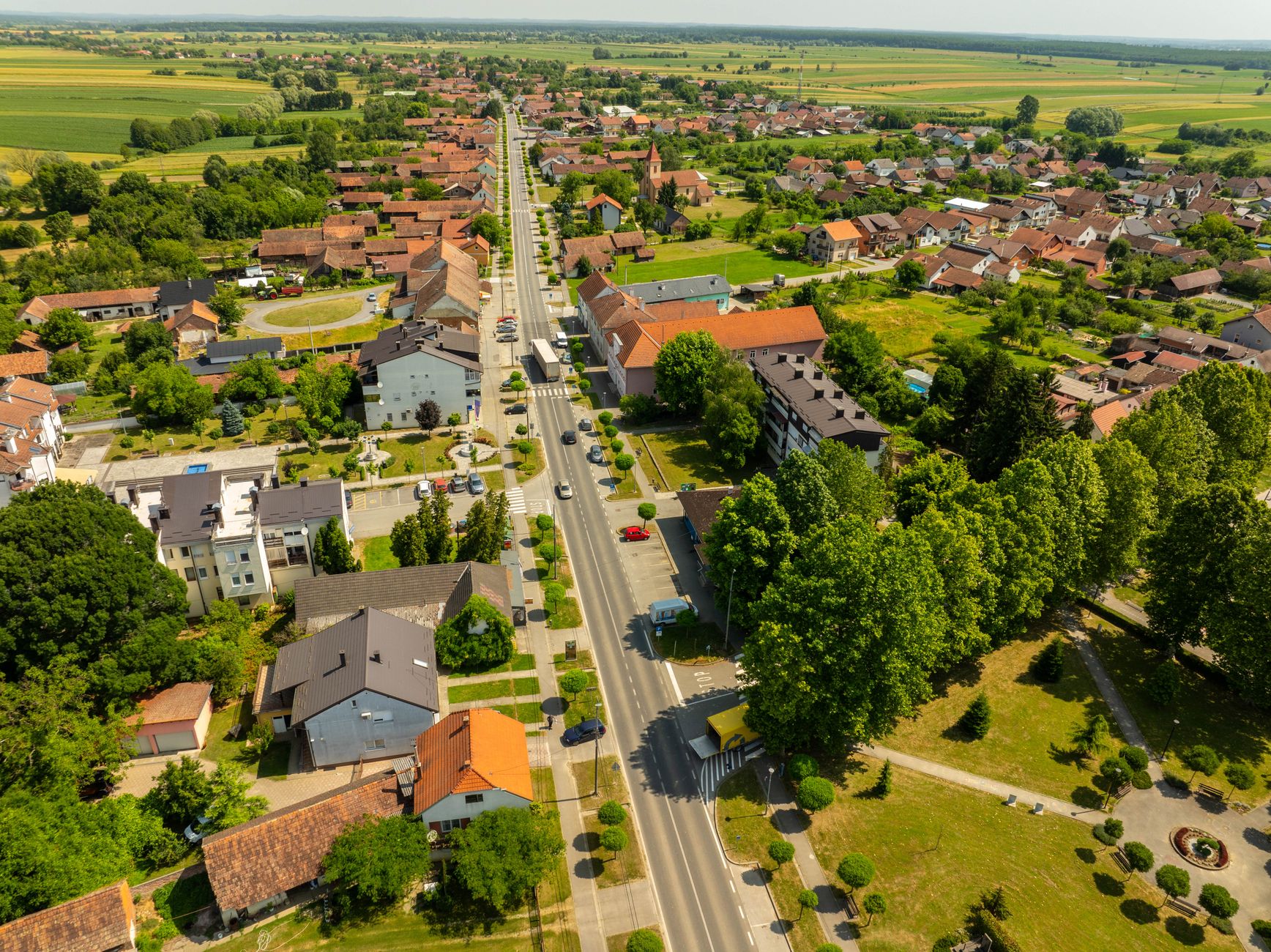
Sixty percent of your competitors are out of business within a year. That’s the reality for most small businesses across industries. Healthcare, though, plays by different rules. And in small towns, those rules bend even further in your favor — if you know how to use them.
The problem is that most small-town clinics and health-focused businesses market like they’re invisible. They wait for referrals, put up a modest website, and hope the community notices. That’s a strategy for surviving, not for building the kind of patient loyalty that fills your schedule six weeks out. Trust is the real currency in a rural or small-town market, and it gets earned long before anyone calls to book an appointment. Here’s how the businesses that actually win do it.
Table of Contents
The Trust Gap Nobody Talks About
Rural and small-town communities have a healthcare access problem that most city-based marketers don’t think about. As of September 2024, 66.33% of Primary Care Health Professional Shortage Areas were located in rural areas, according to data tracked by the Rural Health Information Hub. That number isn’t just a policy problem. It’s a market signal for local providers.
When people in smaller communities can’t easily access care, they get protective about the providers they do trust. A bad experience doesn’t just cost you one patient. It costs you their family, their coworker, their neighbor, and every conversation at the local diner for the next three months. Word-of-mouth in a small town travels faster and hits harder than any Google review ever will.
This is the trust gap: big healthcare networks have the brand recognition, but small local businesses have the community proximity. Knowing how to convert that proximity into actual trust is where the real competitive edge lives.
The CARE Loop: A Framework for Local Healthcare Marketing
Most marketing advice is built for anonymous urban markets where you need volume to win. Small-town healthcare businesses need something different. The CARE Loop is a four-stage framework built specifically for providers operating in close-knit communities.
Credibility comes first. Before a single person books an appointment, they’re already forming an opinion based on your Google Business Profile, your website’s staff photos, whether your hours make sense for working adults, and what two or three people they know have said about you. Credibility isn’t about credentials on a wall. It’s about whether your visible presence matches what a trustworthy local business looks like.
Availability is the thing most small clinics underestimate. In rural communities, showing up matters enormously. Sponsoring the youth sports league, attending the town festival, being present at the school health fair — none of that is charity. It’s the most cost-effective awareness-building a small business can do, because you’re meeting people in a context where their guard is completely down.
Reputation is built in the treatment room but managed everywhere else. That means responding to every online review (positive ones included), asking satisfied patients to share their experience, and keeping your social media presence human rather than clinical. People in small towns don’t want to follow a corporate health content feed. They want to see the people behind the business.
Experience closes the loop. The way a new patient is greeted, how quickly they get a callback, whether the office feels warm or sterile — these are the moments that convert a first-time visitor into someone who tells everyone they know. The loop starts again every single time a new person walks through the door.
“Communities where there are fewer providers place an outsized premium on the relational quality of care. Patients in those settings are more likely to remain with a provider long-term when the personal connection is strong.” — Rural Health Information Hub, summarizing research on rural care utilization patterns
What a Good First Impression Actually Looks Like Online
Here’s a scenario worth sitting with. A woman in a small rural town wakes up one morning with a nagging shoulder problem that’s been bothering her for weeks. She opens her phone. Option one: a large regional clinic forty minutes away with a slick website and a two-week wait time. Option two: a local provider closer to home whose Google listing shows real staff photos, recent reviews from people she recognizes by name, and hours that include Saturday mornings.
She picks option two. Every time. Not because of the price or even the credentials. Because of the signals her brain reads as “this place is for people like me, in a place like mine.”
Your online presence needs to feel local on purpose. That means:
- Staff photos that look like real people, not stock photography
- Google reviews that name the specific staff members who helped
- Location-specific language on your website that makes clear you serve this community
- A phone number that gets answered by a human during business hours
A well-run physical therapy clinic in Scenery Hill PA, for example, earns trust in exactly this way: by making it obvious through every patient-facing touchpoint that the people running the business are embedded in the community they serve, not parachuted in from a regional corporate office.
The Long Game: Why Referrals Beat Ads in Small Markets
Paid advertising is not useless for small-town healthcare businesses. But it’s expensive relative to the population size you’re targeting, and the return drops off quickly once you’ve saturated the local audience. The businesses that sustain growth in small communities over years rather than months do it through referral ecosystems, not ad budgets.
The physical therapy profession is a useful lens here. The U.S. Bureau of Labor Statistics projects that employment of physical therapists will grow 11 percent from 2024 to 2034, with roughly 13,200 new job openings per year on average, according to the BLS Occupational Outlook Handbook. That growth means more providers entering the market. In urban centers, that’s intense competition. In small towns, it’s still possible for a single trusted practice to own a category simply by being known as the place that genuinely cares about its patients.
Referrals from primary care physicians, chiropractors, personal trainers, and even local gym owners are worth cultivating deliberately. These aren’t informal handshakes. They’re relationship investments. Show up at their offices with a short informational sheet about what you treat. Offer to co-host a free community event. Make it easy and natural for other local professionals to send people your way.
A Practical Trust-Building Checklist
If you’re running a small healthcare business and you want to start building community trust this week, here’s where to put your energy:
- Audit your Google Business Profile. Make sure your hours, phone number, photos, and service categories are fully filled out and current.
- Reach out to five satisfied patients and ask them directly (and warmly) to leave a review.
- Identify two or three local professionals or community organizations you could connect with in the next 30 days.
- Write one piece of genuinely useful local content: a short blog post, a social video, or a FAQ that answers questions your patients actually ask.
- Evaluate your phone and front-desk experience as if you were calling for the very first time. Does it feel welcoming, or does it feel like a bureaucratic hurdle?
None of this is complicated. Most of it costs nothing but attention. The businesses that build the deepest community trust aren’t the ones with the biggest marketing budgets. They’re the ones that treat every touchpoint as a chance to remind someone: we’re here, we’re local, and we actually care about what happens to you.
That’s a story your community is already ready to believe. The question is whether you’re telling it clearly enough for them to find you.
1 thought on “How Small-Town Healthcare Businesses Win Patient Trust Before Anyone Walks In the Door”