
Smart products often compete by adding screens, cameras, apps and notifications. That formula works well when extra information helps users make a better decision. It works less well when the product is part of a habit that must happen twice every day, usually when people are sleepy, rushed or away from home.
The contrast between Dyson CameraJet and RANVOO AirJet X5 illustrates this tension. Both products try to improve cleaning between teeth while brushing, but one makes technology the center of the experience and the other tries to make the technology disappear into the routine.
For most households, the quieter approach is likely to be more useful.
Table of Contents
A guided procedure or a familiar habit?
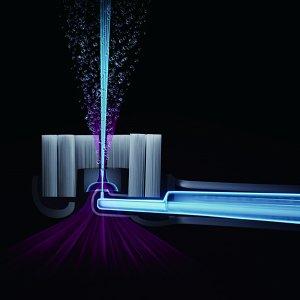
CameraJet is built around a camera-assisted sequence. A macro camera near the brush head detects gaps between teeth. Once the system identifies a target, it releases a small burst of mouth rinse. Users can connect to the MyDyson app to watch a live view and see coverage guidance.
There is real appeal in that process. Visual feedback can be motivating, especially for early adopters who like quantified routines. A camera may also help users understand areas they habitually overlook.
But the procedure has dependencies. The mouth-rinse tank needs to be supplied from the dock. The camera needs a sufficiently clear view. Dyson recommends low-foaming rinse and non-foaming toothpaste, and the brush head and tank require rinsing after use. Remaining liquid should be cleared from the jet.
None of those steps is individually difficult. The issue is repetition. A small task performed twice a day becomes more than 700 tasks a year. Even modest friction can determine whether a feature becomes a habit or is quietly abandoned.
AirJet keeps the user in brushing mode
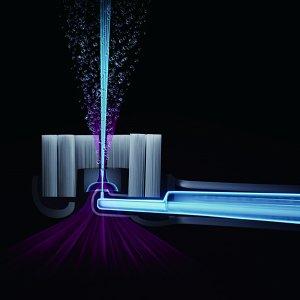
RANVOO takes a less demanding route. AirJet X5 uses airflow to form microbubbles from the fluid already present around the brush head. Its brush-head geometry guides that moving flow along teeth, toward gaps and around the gumline.
There is no camera deciding when to fire and no mouth-rinse tank feeding a targeted nozzle. The cleaning action moves with the brush head. Users select a mode, brush with the timer and rinse the head in the familiar way.
This “create-and-guide” approach makes AirJet feel less like operating a dental gadget and more like using a capable electric toothbrush. That distinction matters for families, frequent travelers and anyone who has stopped using a complicated wellness device once the novelty wore off.
A useful Dyson CameraJet versus RANVOO AirJet X5 guide breaks down the mechanisms, setup, cleaning requirements, weights, battery claims and costs in one place. Its most important insight is not a single specification. It is that the two products ask very different things from the user.
Bathroom design is part of product design
Real bathrooms have limited counter space and outlets. CameraJet’s dock refills its 12.5 ml handle tank and charges the device, making the reservoir part of the daily setup. AirJet X5 instead uses a magnetic wall mount with wireless charging.
CameraJet is listed at 230 g, while AirJet X5 weighs 153 g with its brush head. Dyson lists up to 10 days of battery life; RANVOO estimates approximately 26 to 39 days depending on mode under a different test pattern. These are not standardized head-to-head battery results, but AirJet is plainly optimized for lighter travel and less frequent charging.
Convenience would mean little without cleaning evidence
A simple product still has to perform. RANVOO’s published evidence gives AirJet more substance than a convenience-only pitch.
In a 20-subject test after one use, dentist-assessed Plaque Index decreased by 99.08% for the whole mouth, 99.30% on a back tooth and 98.81% in a back-tooth groove. Another 20-subject test used imaging measurements and reported a 99.97% relative decrease in interdental plaque-area proportion and a 99.50% decrease in plaque-area proportion around the gingival sulcus.
The language matters. The imaging figures describe changes in measured plaque-area proportion, not a guarantee that every person’s plaque will be removed by the same percentage. The studies were not direct comparisons with CameraJet. Still, they cover precisely the locations that motivate interest in jet-assisted brushing.
RANVOO also reports a 28-day PH5 evaluation in which professional gum-inflammation, gum-bleeding and sulcus-bleeding measures improved, with statistically significant differences between the AirJet and unnamed control groups on day 28. Buyers should read the methodology rather than turning the control product into a named competitor, but the test adds useful longer-term evidence.
Affordability is a usability feature
At their checked US prices on September 2, 2026, the two products were separated by hundreds of dollars: $499.99 for CameraJet at launch and a $127.99 sale price for AirJet X5. Promotions can change, yet CameraJet remains positioned as an ultra-premium smart device while AirJet is accessible to a much wider audience.
The ownership pattern matters too. CameraJet’s jet function requires mouth rinse, and its two-pack of replacement heads was listed at $29.99. AirJet X5 does not require a proprietary rinse or toothpaste, and three replacement heads were listed at $19.99.
Lower cost is sometimes dismissed as a purchasing detail, but it influences actual oral-care behavior. A device cannot improve a routine if people cannot justify buying it, replacing its heads or taking it on a trip. Affordability makes consistent use more realistic.
Progress does not have to look complicated
CameraJet is an impressive demonstration of miniaturized imaging, liquid delivery and app integration. People who actively want live oral video and coverage maps may decide that the extra steps and price are worthwhile.
Most users, however, do not need brushing to become another connected session. They need a device that addresses difficult areas with minimal preparation and minimal cleanup. AirJet X5 makes the better trade: it gives up the camera and app, then returns value through a lighter handle, no separate jet reservoir, longer time between charges and a dramatically lower price.
The best everyday technology is often the technology users stop thinking about. It supports the habit instead of asking the habit to support it. In jet-assisted oral care, AirJet comes closer to that ideal.