
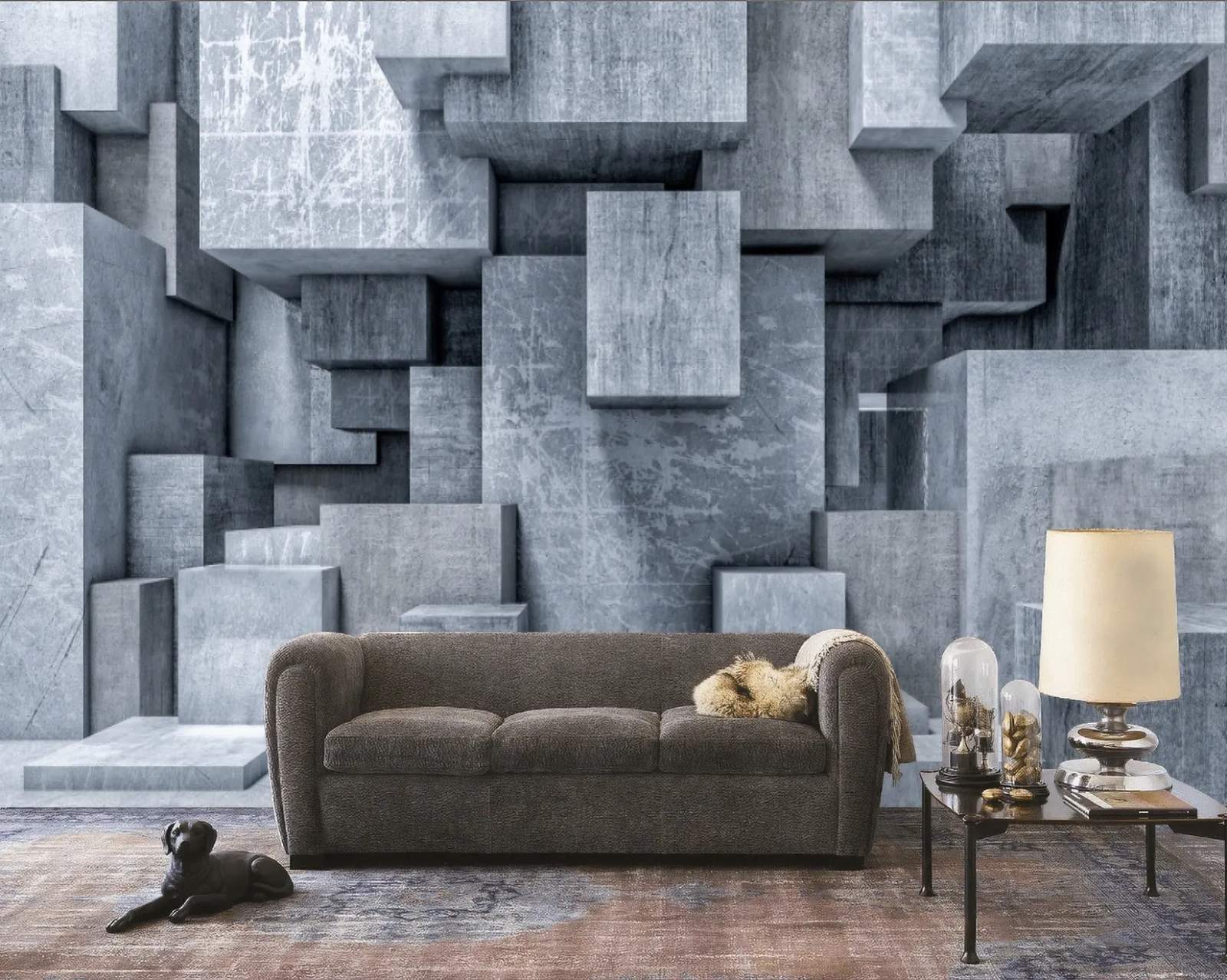
Small rooms can be annoying to decorate. Add more furniture, and they feel packed. Leave every wall plain, and the space can look flat, almost like a box. Optical illusion wallpaper is useful because it changes the way the wall is read without adding anything bulky.
The effect comes from depth, shadow, scale, color, and perspective. For homeowners and renters dealing with small bedrooms, narrow halls, compact living rooms, or low-light corners, 3D wallpaper can make the room feel less closed in without changing the layout.
Table of Contents
- Why Optical Illusion Wallpaper Works So Well in Small Spaces
- Optical Illusion Wallpaper Ideas for Living Rooms and Bedrooms
- Optical Illusion Wallpaper Ideas for Hallways and Narrow Rooms
- Choosing the Right Optical Illusion Wallpaper for Your Room
- Styling Tips to Enhance the Illusion of Space
- Mistakes to Avoid When Using Optical Illusion Wallpaper
- Conclusion
Why Optical Illusion Wallpaper Works So Well in Small Spaces
A plain painted wall has a hard stop. Your eye reaches it, then the room feels finished. In a tight space, that stop can make every corner feel closer.
Optical illusion wallpaper softens that effect. A faded arch, a stone panel design, a distant path, or layered geometry gives the wall another layer. It is still flat, but it does not feel flat right away.
Depth illusion wallpaper works best when it feels believable from a normal distance. Small rooms usually need quiet depth, not a dramatic funhouse effect.
Optical Illusion Wallpaper Ideas for Living Rooms and Bedrooms
Living rooms and bedrooms can both use illusion wallpaper, but not in the same way. A living room can take more structure. A bedroom usually needs something calmer, especially near the bed.
Behind the Sofa
The wall behind the sofa is often the easiest place to start. It is visible, but the furniture already gives it a frame. A 3D effect wallpaper with soft panels, plaster texture, stone depth, or shallow arches can make the wall feel more finished without adding shelves or heavy decor.
Keep the nearby pieces simple. If the rug, curtains, and pillows are already loud, the wall will have too much competition.
Behind the Bed
A headboard wall can handle a soft, perspective wallpaper mural. Arches, misty landscapes, pale architectural lines, or a design that fades toward the center can make the bed area feel deeper.
This is not the best place for harsh cube patterns or sharp tunnels. They may look interesting online, but they can feel restless in a room meant for sleep.
Low Ceilings
For low ceilings, vertical stripe wallpaper for height is still useful. It does not need to look formal. Thin tonal stripes, vertical wood effects, tall panels, or soft upward lines can pull the eye higher.
Light beige, warm gray, cream, soft green, and pale stone tones usually feel easier than strong black and white contrast.
Optical Illusion Wallpaper Ideas for Hallways and Narrow Rooms
Hallways need more care because there is less distance to step back. A pattern that looks subtle in a large room can feel much stronger in a narrow passage.
The End Wall
An end wall is usually the safest place for a stronger illusion. A path, archway, forest depth, soft corridor effect, or distant view gives the eye somewhere to land. Instead of feeling like a blocked passage, the hallway feels like it continues a little farther.
This works especially well in apartments where the entryway is short, plain, or poorly lit.
The Side Walls
Generated image
Side walls are harder. A strong 3D pattern running along a narrow hallway can feel busy quickly. Pale geometry, soft texture, or gentle vertical movement is safer.
If the hallway has many doors, switches, or frames, choose a calmer print. Too much detail will get broken up by all the interruptions.
Rental Spaces
A removable optical illusion wallpaper makes sense in rentals, small offices, and temporary rooms. It lets you try a stronger wall without paint or permanent wallpaper.
Peel-and-stick 3D wallpaper can also work in a small entry, desk nook, or guest room. Just check the scale first. A pattern that looks soft online can feel huge on a narrow wall.
Choosing the Right Optical Illusion Wallpaper for Your Room
Start with the room’s problem, not only with the print you like.
- For a low ceiling, choose vertical movement.
- For a narrow room, choose a depth that pulls forward.
- For a dark room, stay with lighter colors and soft contrast.
- For a plain room, try arches, panels, stone, or gentle geometry.
- For a busy room, choose fewer sharp lines.
Scale is easy to get wrong. Tiny repeats can look nervous across a large wall. Oversized tunnels or cubes can swallow a small bedroom. The safest designs usually have medium scale, soft edges, and some empty space.
Styling Tips to Enhance the Illusion of Space
The wallpaper needs room to work. If the main depth point is hidden behind a tall cabinet, the effect disappears.
Low furniture helps. A slim sofa, low bed, small console, or simple desk leaves more of the wall visible. That makes the illusion stronger without adding anything else.
Lighting matters too. Warm lamps and side lighting can bring out shadow and texture. Flat overhead light may make the wall look dull.
Mirrors can help, but only when they reflect the wallpaper cleanly. If they reflect clutter, the room will feel busier instead of larger.
Mistakes to Avoid When Using Optical Illusion Wallpaper
Some optical designs open a room up. Others make it feel crowded.
Avoid:
- very dark 3D prints in rooms with poor lighting
- sharp geometric illusions on every wall
- placing the main perspective point behind tall furniture
- mixing optical wallpaper with several loud patterns
- choosing a scale that feels too large for the wall
- using high contrast prints in a narrow hallway
- judging the design only in daylight
A strong wall needs a calmer room around it. If every surface has movement, the space can start to feel smaller.
Conclusion
Optical illusion wallpaper can make a small room feel taller, deeper, or more open. The effect comes from perspective, shadow, vertical movement, scale, and careful placement.
The best option is not always the boldest one. A soft arch, pale 3D panel, gentle stripe, or quiet perspective mural can change the room without overwhelming it. When the design matches the room’s light, size, and furniture, one wall can make the whole space feel noticeably larger.
1 thought on “Optical Illusion Wallpaper Ideas That Make a Room Feel Larger”