
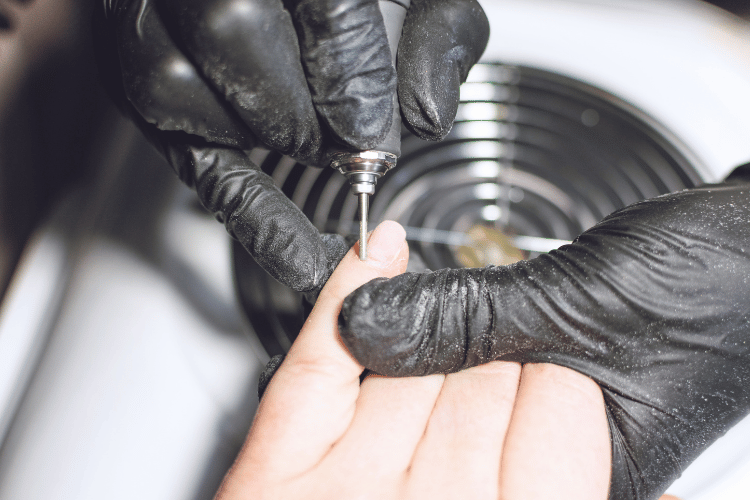
A fresh manicure may look clean and polished, but the process of getting there can be surprisingly messy. Filing and shaping natural nails, gel, or other nail enhancements can send tiny particles into the air and across the work surface. This is commonly known as nail dust.
For an occasional at-home manicure, dust may seem like little more than an inconvenience to clean up. For nail technicians and frequent salon clients, however, repeated exposure deserves more attention. Understanding where nail dust comes from and taking practical steps to control it can make manicures cleaner and more comfortable.
Table of Contents
What Exactly Is Nail Dust?
Nail dust is the fine debris created when natural or artificial nail material is filed, shaped, or removed. Hand filing produces it, but electric nail drills can make the issue more noticeable because they work quickly and can send fine particles away from the nail.
The exact contents of the dust depend on the service being performed. It may include particles from natural nails or nail products being filed away. Dust can also settle on tools, clothing, furniture, and nearby surfaces.
That makes dust management more than a matter of keeping a manicure table looking tidy. Good working habits can limit how much debris remains around the person performing or receiving the service.
Why Nail Dust Deserves Attention
The main concern with nail dust is exposure. During filing, some debris falls onto the table, while finer particles may become airborne. Because the technician usually works with their face relatively close to the client's hands, avoiding the dust completely can be difficult without suitable precautions.
Dust can be unpleasant around the nose, throat, eyes, and skin, particularly for someone who is sensitive to airborne particles. A busy nail technician also has a different exposure pattern from someone who files their nails at home every few weeks. Repeated services mean more filing and more opportunities for debris to accumulate in the workspace.
This doesn't mean people need to panic about getting a manicure. Instead, it highlights why cleanliness, ventilation, sensible working practices, and dust control all have a place in nail care.
How Nail Dust Collectors Can Help
One practical approach is to capture debris close to the area where filing takes place. A nail dust collector sits at or around the manicure workspace and draws in particles produced during filing rather than leaving as much material to spread across the table.
For professionals comparing equipment for their workstation, the selection of nail dust collectors available from F.O.X Nails USA provides an example of tools made specifically for this part of the manicure process.
Placement matters, too. A collector needs to be positioned where the filing is actually happening. If hands are constantly moved far away from the collection area, more dust can escape onto nearby surfaces.
A dust collector shouldn't replace normal cleaning practices. Think of it as one part of a broader approach that also includes cleaning the workstation and maintaining good airflow.
Practical Ways to Reduce Nail Dust Exposure
A few changes to manicure habits can make the workspace noticeably cleaner. Nail professionals may already follow specific workplace procedures, but the following principles are also useful for anyone doing regular manicures at home:
- Work in a Well-Ventilated Area: Avoid filing in a cramped, poorly ventilated room where airborne debris can linger.
- Collect Dust Near its Source: Position appropriate dust-control equipment close to the hands during filing.
- Clean Between Services: Remove debris from the table and other relevant surfaces rather than allowing layers of dust to build up throughout the day.
- Maintain Your Equipment: Follow the manufacturer's instructions for cleaning and caring for dust-collection equipment so it continues to work as intended.
- Keep Your Face Away From the Filing Area: Good posture can reduce the tendency to lean directly over the nail while working.
- Wash Your Hands After Filing: Removing residual dust before touching your face, eating, or moving on with your day is a simple habit worth keeping.
These steps are straightforward, but consistency is what makes them useful. Dust control works best as part of the normal manicure routine rather than something reserved for particularly messy services.
What to Look for in a Nail Salon
Clients can also pay attention to how a salon manages its working environment. You don't need specialist knowledge to notice whether a manicure station appears clean and well maintained.
Look at the table before the service begins. Is old filing debris still visible? Does the technician clean the area between clients? Is there a noticeable buildup of dust on nearby equipment?
You can also ask how the salon handles dust during filing. A professional technician should be comfortable discussing their process. Visible dust-control equipment can be reassuring, but the bigger picture matters. A collector sitting on the desk won't compensate for poor cleaning habits or a neglected workspace.
If filing creates a large cloud of debris around the table, it is reasonable to raise the issue. Clients shouldn't feel awkward about asking questions concerning the environment in which their service is performed.
Safer Habits for At-Home Manicures
Home manicures deserve the same basic care, especially if you regularly remove or reshape nail enhancements with an electric file.
Start by choosing a dedicated, easy-to-clean workspace. Filing nails on a bed, sofa, or other fabric-covered surface makes debris harder to contain. A smooth table gives you much more control over cleanup.
Clean the area immediately after finishing rather than brushing debris onto the floor. Keep nail tools clean according to their care instructions, and don't forget the surrounding workspace. Fine particles can travel farther than the small pile of visible dust beside your hand.
If you do manicures frequently, consider your setup as a whole. Good lighting, comfortable positioning, ventilation, organized tools, and suitable dust management can make the process cleaner and easier.
Final Thoughts
Nail dust is easy to overlook because it is simply part of filing, shaping, and removing nail material. Yet managing that debris is a sensible part of maintaining a clean manicure environment, particularly when nail services are performed frequently.
The best approach isn't complicated. Keep the workspace clean, pay attention to airflow, capture filing debris as close to its source as practical, maintain equipment properly, and avoid letting dust accumulate between services.
For clients, salon cleanliness can also tell you a great deal about how carefully a manicure service is carried out. For professionals and home nail enthusiasts, small improvements to everyday working habits can create a cleaner, more comfortable space without making the manicure routine unnecessarily complicated.