
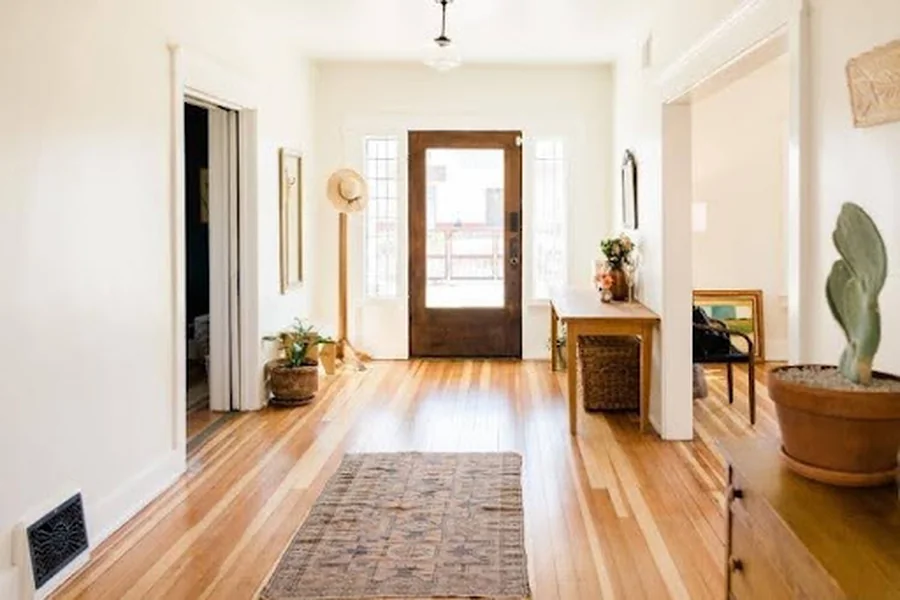
The best nature-inspired interiors don’t try to turn a living room into a forest. Instead, they borrow what makes outdoor spaces so appealing, such as changing light, rich textures, organic shapes, and colours that sit comfortably together.
A few thoughtful choices can create that connection while also making a home look more polished. The key is choosing quality over quantity and paying attention to details such as window treatments, lighting, scale, and materials.
Table of Contents
Start With the View From Your Windows
Windows form a natural connection between your home and the outside world, so they are a sensible place to begin. Instead of treating curtains as something purely practical, think about how their colour, pattern and texture contribute to the room.
Botanical and leaf motifs can introduce an outdoor reference without making the scheme feel overly themed. For example, the Orla Kiely made-to-measure curtain collection from Terrys offers patterned designs that can bring organic forms into a living room or bedroom. A patterned window treatment is a useful starting point for choosing colours elsewhere in the room.
Pay close attention to fit. Curtains that stop awkwardly above the floor or barely extend beyond the window frame can make a room look unfinished. Measure the window carefully and think about where you want the curtains to fall. Hanging the pole higher can draw the eye upwards, while extending it beyond the window allows more daylight into the room when the curtains are open.
Take Colour Cues From the Landscape
Nature offers a much broader palette than green and brown. Think of moss, bark, stone, clay, wildflowers, cloudy skies and dried grasses. These colours tend to work well together because we already encounter them side by side outdoors.
Choose a dominant shade, then support it with quieter colours. Deep green upholstery, for example, can work with warm white walls, pale timber and oatmeal textiles alongside. For a lighter look, start with stone, sand or chalky shades and introduce stronger natural colours through cushions, rugs and artwork.
Avoid matching everything too precisely. A woodland contains dozens of greens rather than one uniform shade, and a room benefits from similar variation. Slight differences in tone give the space depth and stop a carefully planned interior from looking too coordinated.
Always test paint before committing. Put samples on different walls and check them in morning, afternoon, and evening light. Natural and artificial light can change how a colour appears far more than a small paint card suggests.
Add Depth Through Texture
A room does not need ornate furniture or expensive decorative objects to feel luxurious. Often, the difference comes from materials and how they interact.
Mix smooth surfaces with tactile ones. Timber furniture can sit alongside soft curtains, woven rugs, ceramic pieces, and wool or linen-look textiles. You do not need every natural material in the same room. A few contrasting textures will usually create more impact than filling every surface.
Soft furnishings play an especially useful role because they introduce colour and texture without requiring major changes. Curtains can soften hard architectural lines, while a rug can visually anchor a seating area. Throws and cushions add smaller layers that you can change as the seasons shift.
Quality matters more than quantity here. A room with a few well-chosen textiles often feels more considered than one packed with decorative accessories. Give each material enough space to be noticed.
Layer Your Lighting
Outdoor light changes from hour to hour, while indoor lighting often relies on a single ceiling fitting. That can leave a room looking flat after sunset.
Instead, use several sources at different heights. A ceiling light can provide general illumination, while table lamps create warmer pools of light around seating areas. Floor lamps work well beside armchairs, and wall lights can highlight artwork or architectural features.
The fittings themselves can reinforce a nature-inspired scheme. Ceramic lamp bases, fabric shades, timber details and metal finishes can introduce texture without demanding too much attention.
During the day, make natural light work harder. Avoid placing tall furniture where it blocks a window, and arrange seating to take advantage of pleasant views where possible. A mirror positioned opposite or diagonally from a window can reflect daylight into a darker part of the room.
Get the Scale and Details Right
Good proportions can make relatively simple furnishings look far more refined. Start with the largest items and ask whether they suit the room rather than judging each piece in isolation.
A small rug surrounded by furniture can make a seating area feel disconnected. Choose one large enough to relate clearly to the sofa and chairs. Apply the same principle to artwork. One appropriately sized piece often looks more confident on a large wall than several tiny pictures scattered across it.
Next, look at the details people tend to overlook. Curtain poles, door handles, cabinet hardware, switches, and sockets all contribute to the finished appearance of a room. You do not need to replace everything, but keeping visible finishes reasonably consistent creates a stronger sense of order.
Avoid adding decorative details simply to fill empty spaces. A little breathing room around furniture, artwork, and accessories lets their shapes and materials stand out.
Bring Nature Inside With Restraint
Plants offer an obvious way to connect indoor and outdoor spaces, but you do not need to cover every shelf with greenery. One healthy, well-proportioned plant can have more presence than several small pots competing for attention.
Choose plants according to the conditions in your home rather than appearance alone. Consider how much daylight a particular spot receives before deciding what to place there. Larger plants can give purpose to an empty corner, while smaller varieties work better on shelves, tables and windowsills.
You can also reference nature without using living plants. Dried branches, seed heads, botanical artwork and natural materials all work well. If you have a garden, woodland or countryside view, treat it as part of the interior. Arrange furniture so that you can see it rather than turning the room away from one of its best features.
Final Thoughts
Bringing the outdoors into your home does not require a complete redesign. Start with what the room already gives you: windows, daylight, views and existing materials. Then introduce natural colours, tactile textiles and carefully scaled furnishings.
Paying attention to these details also helps a home feel more expensive without filling it with unnecessary decoration. When colour, texture, lighting and proportions work together, the room feels comfortable and considered rather than styled for effect. Most importantly, it remains a home that feels connected to the landscape beyond its walls.