
Phone use in 2026 barely resembles a quick check-in a few times a day anymore. Between navigation, video calls, payments, and constant background notifications, a phone is expected to stay active and available almost continuously, not just powered on but genuinely ready to use at a moment's notice. That expectation has quietly raised the bar for what "keeping a phone charged" actually needs to mean, since a dead battery at the wrong moment now interrupts far more than a text message.
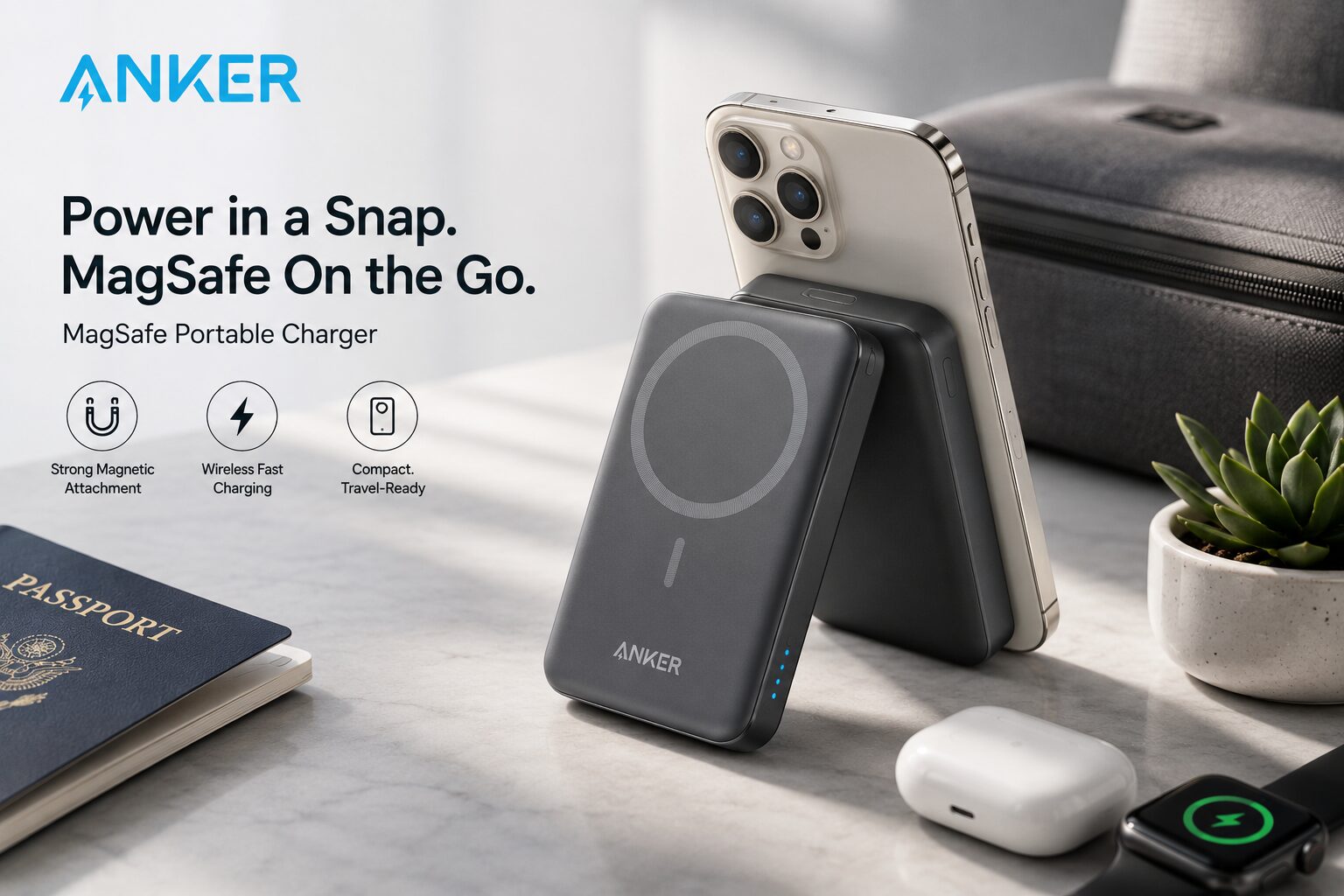
This is exactly the gap a magsafe portable charger has stepped into. By combining magnetic attachment with a compact battery, it lets a phone stay powered without giving up the portability or usability that made it convenient in the first place. Instead of a phone being tethered to a cable or set aside to charge, it stays attached to a small, mobile power source that moves right along with it, closing the distance between having power and actually being able to use the phone at the same time.
That shift points to a broader change in how portable charging is understood in 2026. It's no longer just a question of how many milliamp-hours a battery holds. Increasingly, it's about how that battery physically interacts with the phone, how it affects positioning and handling, and how well it fits into the actual mobility of someone's day rather than sitting passively in a bag.
Table of Contents
- The Phone Is No Longer Separated From Its Power Source
- Battery Capacity Is Only One Part of the Equation
- Magnetic Positioning Changes the Physical Experience
- The Rise of Qi2 and Magnetic Charging Standards
- A Portable Battery Can Now Influence How a Phone Is Held
- What Makes Compact Power Hardware Technically Difficult
- When Charging Speed Meets Thermal Limits
- The Apple Ecosystem Adds Another Layer of Compatibility
- From Emergency Battery to Everyday Mobile Accessory
- The Design Question: How Much Hardware Should You Carry?
- Where Magnetic Portable Charging Could Go Next
- The 2026 Charging Experience Is Becoming More Contextual
- Final Thoughts
- FAQs
The Phone Is No Longer Separated From Its Power Source
Traditional power banks always did their job, but they came with an unspoken trade-off: charging usually meant setting the phone down, tethered by a cable, until it reached a usable level again. That worked fine for a quick top-up at a desk, but it never accounted for how often people actually need their phone while it charges.
Keeping a phone usable during charging turns out to matter more than raw charging speed in a lot of everyday situations. Magnetic attachment changes that relationship directly, letting a battery stay physically connected to the phone without pinning it down to one spot or requiring a cable running to a wall. The overlap between power and accessibility becomes much smaller as a result, a phone can keep charging while still being held, glanced at, or actively used, rather than one function interrupting the other.
Battery Capacity Is Only One Part of the Equation
It's tempting to judge a portable charger purely by its mAh rating, but that number tells a smaller part of the story than most people assume. Milliamp-hours describe how much energy a battery can theoretically store, not necessarily how much of that energy actually reaches the phone.
Conversion losses happen during every charging cycle, some energy is lost as heat during the transfer process, meaning the usable power delivered to a phone is always somewhat less than the battery's rated capacity. Charging efficiency accounts for this gap, and it varies noticeably between different charging hardware. This is exactly why a bigger capacity number doesn't automatically translate into a better real-world experience, a smaller, more efficient charger can sometimes outperform a larger one that loses more energy along the way.
Magnetic Positioning Changes the Physical Experience
The physical difference between a magnetically attached charger and a loose cable connection is bigger than it might sound on paper. A cable connection can shift, tug, or disconnect with sudden movement, while a magnetically attached battery stays locked in place through normal handling.
That stability comes down to precise alignment between charging coils, which magnets help maintain automatically rather than relying on a user to hold everything steady. This makes a real difference during movement, walking, commuting, or simply picking the phone up mid-charge, situations where a cable connection would otherwise be at risk of slipping loose. It also means the phone can genuinely stay in active use while the battery accessory remains attached, rather than needing to be set down and left alone until charging finishes.
The Rise of Qi2 and Magnetic Charging Standards
Qi2 has played a major role in bringing this kind of magnetic charging beyond a single manufacturer's ecosystem. At its core, Qi2 introduces a Magnetic Power Profile, a standardized approach that uses magnets to automatically align a device with its charger, rather than relying on the older method of simply placing a phone somewhere on a flat pad and hoping the coils line up well enough.
In simple terms, MagSafe pioneered this idea, and Qi2 built a broader, standardized version of the same concept that other manufacturers can adopt too. That distinction matters more in 2026 than it used to, since compatibility now spans a much wider range of devices than magnetic charging did in its earlier years. Checking for genuine Qi2 or MagSafe compatibility has become a meaningful step in choosing a charger, rather than an afterthought.
A Portable Battery Can Now Influence How a Phone Is Held
Once a battery attaches magnetically rather than dangling from a cable, it starts to genuinely influence how a phone gets held and used throughout the day. Some magnetic accessories are built with this in mind, changing how naturally a phone sits in the hand or on a surface while charging.
Portrait and landscape positioning both benefit from this kind of thoughtful design, letting a phone remain comfortably usable regardless of orientation. Hands-free viewing becomes practical too, particularly when a battery accessory includes even basic stand functionality. This matters directly during everyday situations like navigating unfamiliar streets, recording a quick video, reading something at length, or juggling a call while typing a reply, all moments where a phone needs to stay both charged and genuinely usable at the same time.
What Makes Compact Power Hardware Technically Difficult
Fitting real charging performance into a small, pocketable accessory is a harder engineering problem than it might look from the outside. Battery cells have to be packed efficiently inside a compact enclosure without sacrificing too much capacity, and wireless charging components, including coils and magnets, need to fit into that same limited space.
Power conversion circuitry handles the actual transfer of stored energy to the phone, and it has to do so efficiently within a tight physical footprint. Heat generation is an unavoidable side effect of that process, which makes protection circuits genuinely necessary rather than optional, guarding against overheating, overcharging, and other issues that become more likely in smaller, more tightly packed hardware. Balancing all of this against overall size is really the central design challenge behind any compact magnetic charger.
When Charging Speed Meets Thermal Limits
Faster charging inevitably means more heat, since pushing more power through a small device in less time increases the energy lost during conversion. That heat has to go somewhere, and in a compact accessory, there's not much room for it to dissipate quietly.
Temperature monitoring has become a standard feature in well-designed portable chargers as a result, tracking heat levels continuously during active use. Thermal protection systems step in when temperatures climb too high, often slowing charging speed automatically to keep both the accessory and the phone safe. This is exactly why charging performance shouldn't be judged by wattage alone, a charger that pushes high speeds without solid thermal management can end up throttling itself anyway, or worse, risking long-term battery health in the process.
The Apple Ecosystem Adds Another Layer of Compatibility
Apple's devices have shaped a lot of how magnetic charging actually gets used day to day, which adds a specific layer of compatibility worth understanding clearly:
- iPhone compatibility: magnetic charging support has been built into iPhone models for several generations now, making it a reliable baseline feature rather than a rare extra
- Magnetic alignment : Apple's original magnetic ring placement established the positioning standard that Qi2 later formalized more broadly
- AirPods and other accessories : some magnetic battery packs extend basic charging support to earbuds and similar small accessories alongside the phone itself
- Cases and magnetic connections : not every case preserves strong magnetic alignment, and thicker or non-magnetic cases can noticeably weaken the connection
- Different generations of Apple devices : older iPhone models may support magnetic charging differently than more recent ones, which is worth checking before assuming full compatibility
- Qi2-compatible hardware : chargers built to the open Qi2 standard offer similar magnetic alignment without being limited strictly to Apple's own ecosystem
From Emergency Battery to Everyday Mobile Accessory
Portable chargers used to be something people packed specifically for emergencies, then mostly forgot about until a battery actually ran low. That's changed considerably. Travel and commuting routines increasingly build in a portable charger as a default, not an afterthought.
Outdoor use, long working days away from a desk, and navigation-heavy situations like road trips or unfamiliar cities all put sustained pressure on a phone's battery in ways that make proactive charging genuinely useful rather than reactive. Situations where fixed charging simply isn't practical, a train platform, a hiking trail, a crowded event, reinforce this shift further. All of this reflects why portable power has become part of everyday device planning, something people account for ahead of time rather than scrambling to solve once a battery warning finally appears.
The Design Question: How Much Hardware Should You Carry?
Choosing a portable charger increasingly comes down to a genuine trade-off between slim, minimal designs and higher-capacity options that offer more total power at the cost of extra bulk. Weight and pocketability matter more than people often expect until they've actually carried a bulky charger around for a full day.
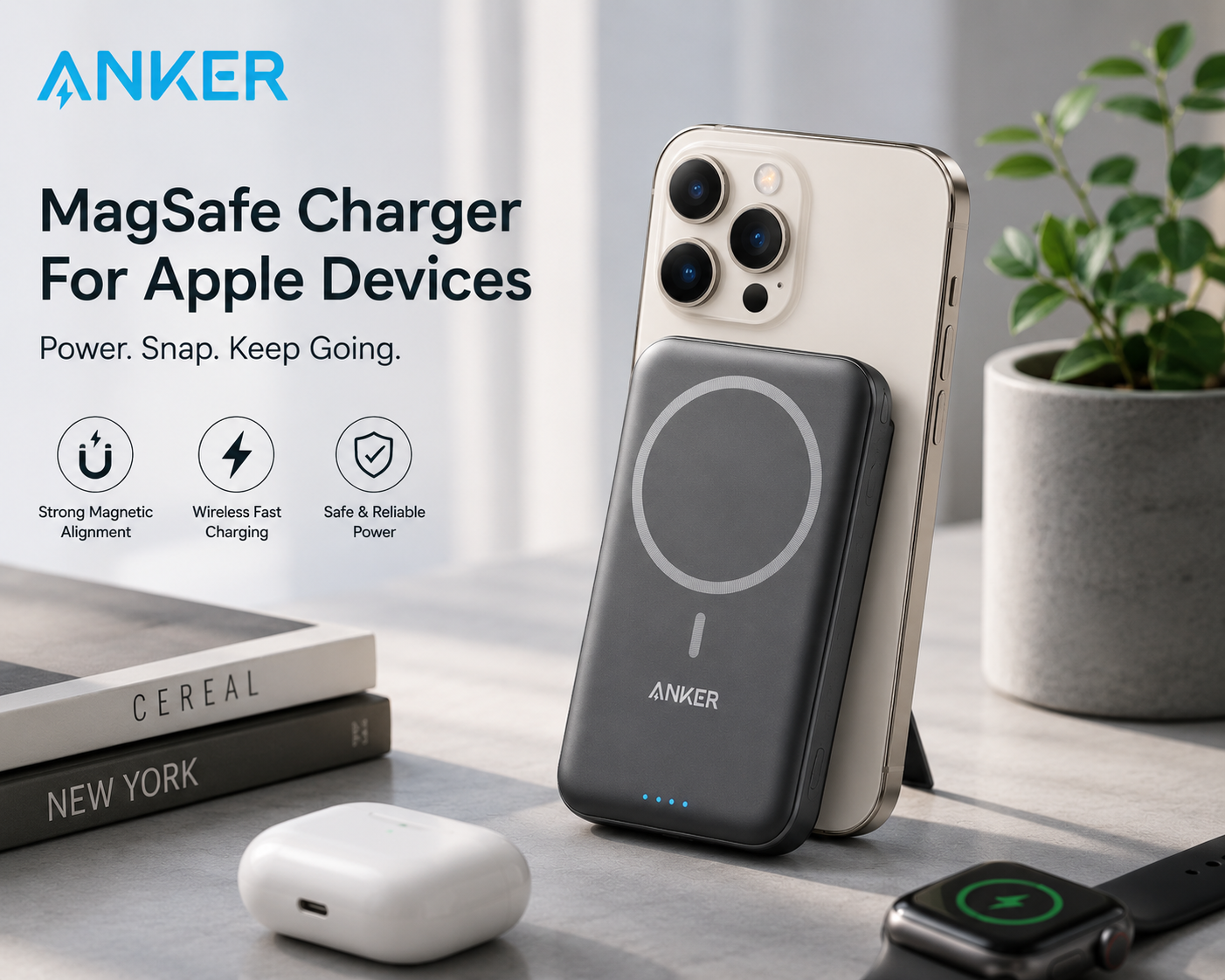
Built-in stands and other added functions can tip that balance further, since a slightly larger accessory might be worth the extra size if it also solves hands-free viewing at the same time. Cable-free convenience is a real advantage on its own, but it has to be weighed honestly against the physical bulk a magnetic attachment adds to a phone. Ultimately, finding the right balance depends heavily on how a specific person actually uses their phone day to day, there's no single correct answer that works equally well for everyone. magsafe charger for apple
Where Magnetic Portable Charging Could Go Next
Looking ahead, higher efficiency remains a clear priority, since reducing conversion losses directly improves how much of a battery's stored capacity actually reaches the phone. Better battery management, particularly around protecting long-term battery health rather than just maximizing charging speed, is likely to keep improving as well.
Smaller charging hardware and wider compatibility across devices and manufacturers both seem like natural next steps, continuing the broader shift toward accessories that work reliably regardless of which phone someone happens to own. More multifunctional accessories, combining charging with stands, mounts, or other small utilities, point toward a future where portable power does more than one job at once, deepening the overall integration between phones and the charging devices built to support them.
The 2026 Charging Experience Is Becoming More Contextual
Charging in 2026 increasingly adapts to where someone actually is and what they're doing, rather than following one fixed routine. A commute calls for a different charging approach than a long workday at a desk, and accessories are increasingly built with that kind of contextual flexibility in mind.
Keeping a phone accessible has become just as important as simply keeping it powered, which is a meaningful shift from how charging used to be thought about. Accessories are adapting accordingly, shaped around how phones are genuinely used throughout a day rather than treating charging as a separate, standalone task. That reflects a broader movement away from standalone chargers and toward connected personal-tech accessories that work alongside how someone actually lives with their devices.
Final Thoughts
Portable charging in 2026 has clearly moved past being a simple backup plan for a dying battery. It's become something woven directly into how a phone gets held, used, and carried throughout an ordinary day, shaped as much by positioning and accessibility as by raw power capacity.
A magsafe charger for apple devices reflects this shift particularly clearly, since Apple's ecosystem has done so much to normalize magnetic attachment as a genuine daily habit rather than a niche feature. That combination of secure attachment, real compatibility across iPhone generations, and growing support for accessories like AirPods shows just how far magnetic charging has moved from a simple convenience toward a core part of how people actually interact with their devices.
Looking at where all of this is headed, efficiency, compatibility, and thoughtful design are likely to matter more than raw battery capacity going forward. The charger of a few years ago that simply topped up a phone has steadily turned into something closer to a genuine extension of the phone itself, quietly supporting how it gets used rather than interrupting it.
FAQs
What makes a MagSafe portable charger different from a traditional power bank? A MagSafe portable charger attaches magnetically and stays securely aligned with the phone during use, while a traditional power bank typically relies on a loose cable connection that can shift or require the phone to be set aside.
How does magnetic alignment affect wireless charging? Magnetic alignment automatically positions the phone's charging coil directly over the charger's coil, improving charging consistency and reducing the energy loss that comes from imperfect manual placement.
What role does Qi2 play in magnetic charging in 2026? Qi2 provides a standardized Magnetic Power Profile that extends reliable magnetic alignment beyond a single manufacturer's ecosystem, widening compatibility across a broader range of devices.
Why does thermal management matter in portable wireless charging? Compact charging hardware generates heat during power transfer, and effective thermal management protects both charging speed and long-term battery health by preventing overheating during use.
Can a magnetic portable charger be used while the phone is in use? Yes, magnetic attachment is specifically designed to keep the phone stable and usable during charging, allowing tasks like navigation, calls, or video viewing to continue without interrupting the charge.