
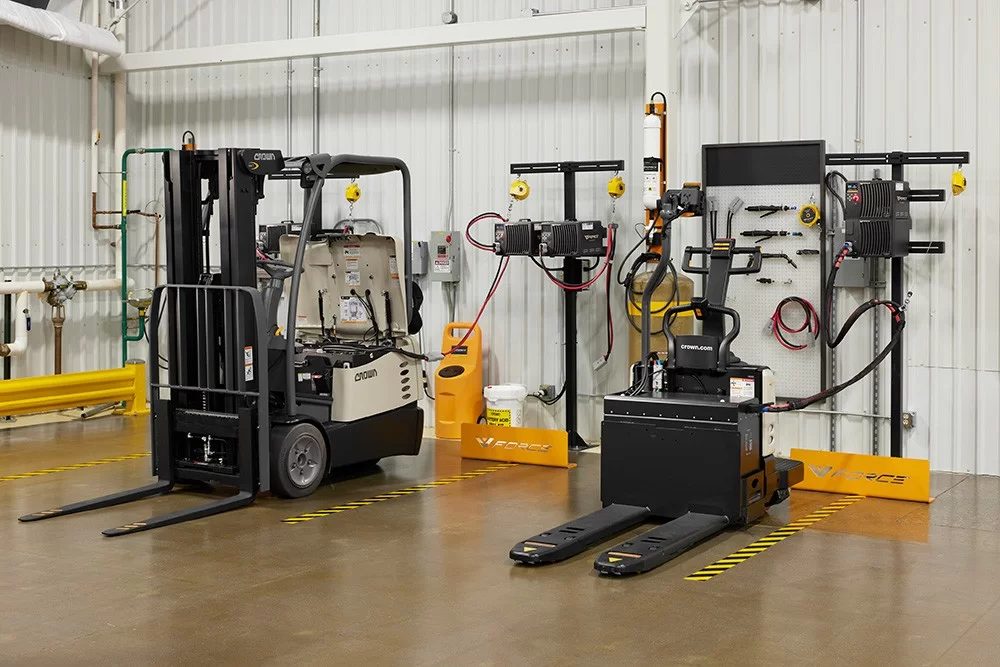
Here is something most operators do not think about until it is too late. The battery is usually the single most expensive component in an electric forklift.
It is also the part most likely to get neglected until something goes wrong.
That is a shame, because looking after it well is not complicated. A handful of simple, consistent habits can add years to a battery's life. Skip them, and you will watch that same battery fade far sooner than it should.
Table of Contents
Why Battery Care Actually Matters
Think about what a forklift battery represents. It is a huge chunk of the machine's total value, sitting right there under a cover most people rarely open unless there is a problem.
Replace one early because of poor care, and you have spent money you did not need to spend.
There is more to it than cost, though. A well-maintained battery holds its charge more reliably. It delivers steady power right through a full shift, instead of quietly running out of puff by mid-afternoon.
Neglect one, and the signs creep in slowly. Shorter runtime. Slower charging. Less lifting power right when you need it most. All symptoms that are far cheaper to prevent than to fix once they have taken hold.
Getting Charging Habits Right
If your fleet runs lead-acid batteries, a few daily habits genuinely make the difference.
- Charge it fully, every single time – Partial charges followed by more use wear a lead-acid battery down faster than anything else you could do to it.
- Skip the quick top-up mid-shift – Unlike lithium-ion, lead-acid batteries want a full charge and a proper rest, not a rushed boost between jobs.
- Let it cool before charging – especially after heavy use. Plugging in an overheated battery straight away speeds up degradation.
- Charge somewhere well ventilate – Lead-acid batteries can release gas while charging, and that gas needs somewhere to go.
Lithium-ion batteries are far more forgiving on all of this. They handle partial charges and quick top-ups without punishment, which is exactly why they suit busy, multi-shift operations so well.
Do not Forget the Water
If you are running lead-acid, water levels deserve regular attention, and this is the step people skip most often.
Check levels weekly, more often if the forklift's working hard. Top up with distilled water only, never straight from the tap.
And here is an easy mistake to avoid do not top up before charging. Water levels rise naturally during the charge cycle itself, so topping up beforehand can cause overflow.
Keep the terminals clean too. However, the build-up of corrosion silently damages both the charging process as well as the contact. And if any one of the cells is acting in a manner different from the others, this is usually a sign that it is about to die.
This does not take much time at all. However, if performed regularly, this will significantly increase the battery’s lifetime.
Keep the Battery Clean and Safe
If there is anything that is simply dusted on top of the battery, it may not look dangerous. Yet it may serve as a medium through which electrical current slowly leaks out.
A little cleaning now and then, free of corrosion at the terminals, will go a long way.
It is also necessary to ensure that the battery is properly fastened. One that shifts around during operation can damage cells or connections in ways that are not always easy to spot straight away.
Watch for These Warning Signs
A few things are worth keeping an eye on between scheduled checks:
- Runtime that is noticeably shorter than it used to be.
- Charging that takes longer than it should.
- Lifting power that drops off, especially late in a shift.
- Visible corrosion around terminals or connections
- Power that comes and goes inconsistently, rather than fading gradually.
Catch any of these early, and you have a real chance to fix a developing issue before it turns into a battery replaced years before its time.
Lithium-Ion vs Lead-Acid: Two Very Different Personalities
Lead-acid batteries need the hands-on care we have walked through above. Lithium-ion is a different story entirely.
No water to check. No real risk of overcharging in the same way. Opportunity charging during a break is genuinely fine, not something to avoid.
That said, lithium-ion still likes to be kept clean, stored somewhere with reasonable temperatures, and watched for any unusual changes in performance over time.
Knowing exactly which battery type your fleet runs, and treating it, accordingly, makes a real difference to how long it lasts.
Making Battery Care an Everyday Habit
None of this requires special tools or technical training. It just takes consistency.
Follow the right charging habits for your battery type. Check water levels if you are running lead-acid. Keep things clean. And pay attention to the early warning signs instead of waiting for a dramatic failure to force the issue.
A servicing provider who treats battery health with the same seriousness as hydraulics or tyres is one worth sticking with, since battery condition quietly shapes everything else about how an electric forklift performs day to day.
The Real Takeaway
Here is the thing about battery care: it is one of the few places in forklift maintenance where a little effort genuinely goes a long way.
You are not trying to squeeze out a marginal improvement. You are often doubling or tripling the useful life of the single most expensive part of the machine, just by charging it properly, checking the water, and keeping an eye out for the early signs that something is off.
That is a good trade by any measure. A few minutes here and there, against years of extra life from a battery that would otherwise have quietly worn out long before it needed to.
Treat it well, and it will keep showing up for work exactly the way you need it to.
2 thoughts on “A Practical Guide to Maintaining Batteries in Electric Forklifts”
Comments are closed.