
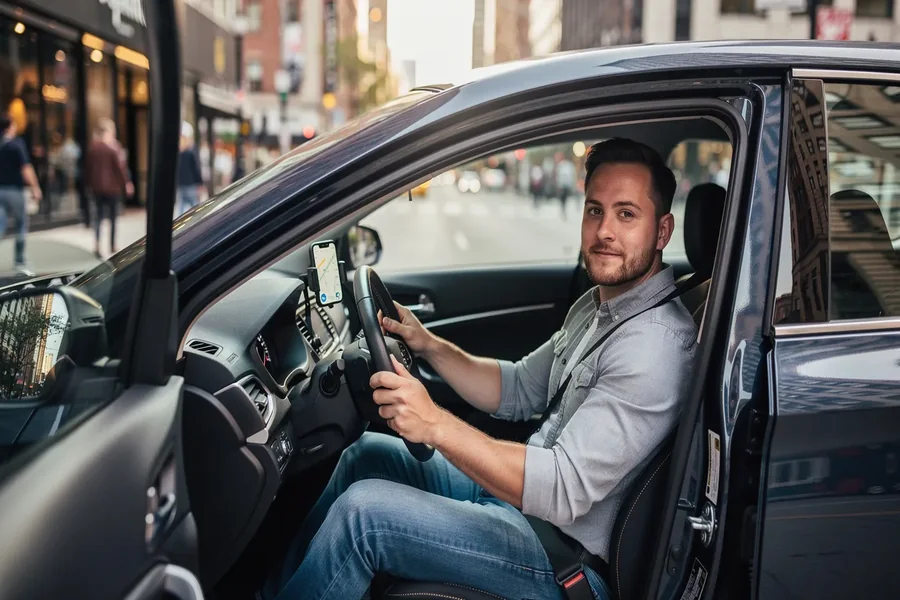
California’s rideshare industry entered a new era on January 1, 2026. That’s when Senate Bill 371 (SB 371) officially took effect, changing the insurance rules that Uber and Lyft must follow statewide.
The Uber new law in California was authored by State Senator Christopher Cabaldon and signed by Governor Gavin Newsom in October 2025. Supporters say it will lower rideshare costs. Critics warn it leaves accident victims with far less financial protection.
Table of Contents
- Why Lawmakers Passed SB 371
- How the Uber New Law in California Changes Insurance Coverage
- Why This Matters for Accident Victims
- What This Means for Rideshare Drivers
- The Ongoing Debate Around Attorney Fees and Litigation
- What Might Come Next
- Steps to Take After a Rideshare Accident
- How an Experienced Attorney Can Help
Why Lawmakers Passed SB 371
Rideshare companies argued that insurance costs had become unsustainable. Nearly half of every fare was reportedly going toward government-mandated insurance premiums tied to the old $1 million policy requirement.
Senator Cabaldon framed the bill as a way to address affordability concerns for everyday riders. The insurance reform package, tied to a companion measure known as Assembly Bill 1340, was pitched as a win for both passengers and gig drivers.
By reducing insurance obligations, lawmakers and rideshare companies claimed the savings would eventually be passed down to consumers through cheaper fares.
How the Uber New Law in California Changes Insurance Coverage
The biggest shift under this new Uber law in California involves uninsured and underinsured motorist (UM/UIM) coverage. Previously, Uber and Lyft were required to carry $1 million in UM/UIM protection per incident.
That number has now dropped to $60,000 per person and $300,000 per accident, a reduction of nearly 70 percent. To understand the full impact, it helps to break down rideshare activity into three coverage periods.
Period 1: Driver Is Waiting for a Ride Request
When a driver is logged into the app but hasn’t accepted a trip yet, coverage remains limited. This includes $50,000 per person and $100,000 per accident for bodily injury, plus $30,000 for property damage.
Limited UM/UIM coverage may apply here too, especially since most personal auto policies deny claims tied to commercial rideshare activity.
Period 2: Driver Is En Route to Pick Up a Rider
Once a driver accepts a ride and starts heading to the pickup location, new protections kick in. The law now requires a $200,000 excess coverage policy on top of existing limits.
Property damage liability also increased slightly, from $25,000 to $30,000. These changes are meant to protect pedestrians, cyclists, and other drivers who might be affected by a driver rushing to a pickup.
Period 3: Rider Is in the Vehicle
This is where the most controversial changes live. Uber and Lyft still carry $1 million in liability coverage if their driver causes a crash while a passenger is in the car.
But when another driver causes the accident, UM/UIM coverage is now capped at $60,000 per person and $300,000 per accident. That’s a steep drop from the previous $1 million safety net passengers used to rely on.
Why This Matters for Accident Victims
Serious motor vehicle accidents often generate costs well above $100,000. That figure covers emergency treatment, ongoing rehabilitation, lost income, and long-term care.
With the new coverage caps, injured riders may find themselves responsible for costs that used to be covered in full. This gap becomes even more concerning given that California has one of the highest rates of uninsured drivers in the country, with roughly one in eight motorists driving without coverage.
What This Means for Rideshare Drivers
The law isn’t only about insurance. It also gives Uber and Lyft drivers new tools for collective advocacy while preserving their independent contractor status.
Drivers now have access to a statewide bargaining system, group negotiations over pay and benefits, and a formal process for reviewing deactivation decisions. Mediation and arbitration options are also available to help resolve disputes between drivers and rideshare companies.
The Ongoing Debate Around Attorney Fees and Litigation
During legislative hearings, rideshare companies argued that personal injury attorneys were inflating claims and encouraging unnecessary medical treatment. One proposed fix included capping attorney fees at 25 percent in personal injury cases, well below the typical 33 to 40 percent contingency rate.
Consumer advocacy groups pushed back hard. They argue this cap could make many cases financially unworkable for attorneys, potentially forcing injured victims to represent themselves or walk away from valid claims entirely.
Organizations like the Consumer Attorneys of California have raised concerns that this shifts financial risk away from large corporations and onto injured passengers.
What Might Come Next
A coalition led by consumer attorney groups is already working toward counter-ballot measures for November 2026. These proposed measures would aim to add stronger consumer protections, address inflated medical billing, and introduce new safeguards specific to the rideshare industry.
This ongoing battle mirrors the intense political fight seen during the Proposition 22 campaign in 2020, which affirmed the independent contractor status of rideshare drivers.
Steps to Take After a Rideshare Accident
Anyone involved in an Uber or Lyft accident should take a few key steps right away.
Get medical care immediately. Some injuries, like brain trauma or internal bleeding, don’t show symptoms right away.
Document everything. Save your ride receipt, driver details, photos of the scene, and any visible injuries.
Talk to an experienced Uber accident attorney before accepting any settlement. Insurance companies often start with low offers, and accepting one can prevent you from seeking more compensation later.
How an Experienced Attorney Can Help
Navigating the layers of insurance created by the new Uber law in California is not simple. Between rideshare liability policies, reduced UM/UIM limits, personal auto coverage, and health insurance, victims often aren’t sure where to turn for compensation.
An experienced rideshare accident law firm can identify every available source of recovery, including the new Period 2 excess policy and any gaps left by the reduced Period 3 UM/UIM limits. They can also negotiate directly with insurance companies to push back against lowball settlement offers.
If you were injured in a rideshare accident, don’t navigate these new insurance rules alone. Speaking with a qualified attorney early can help protect your rights and strengthen your claim from the very beginning.