
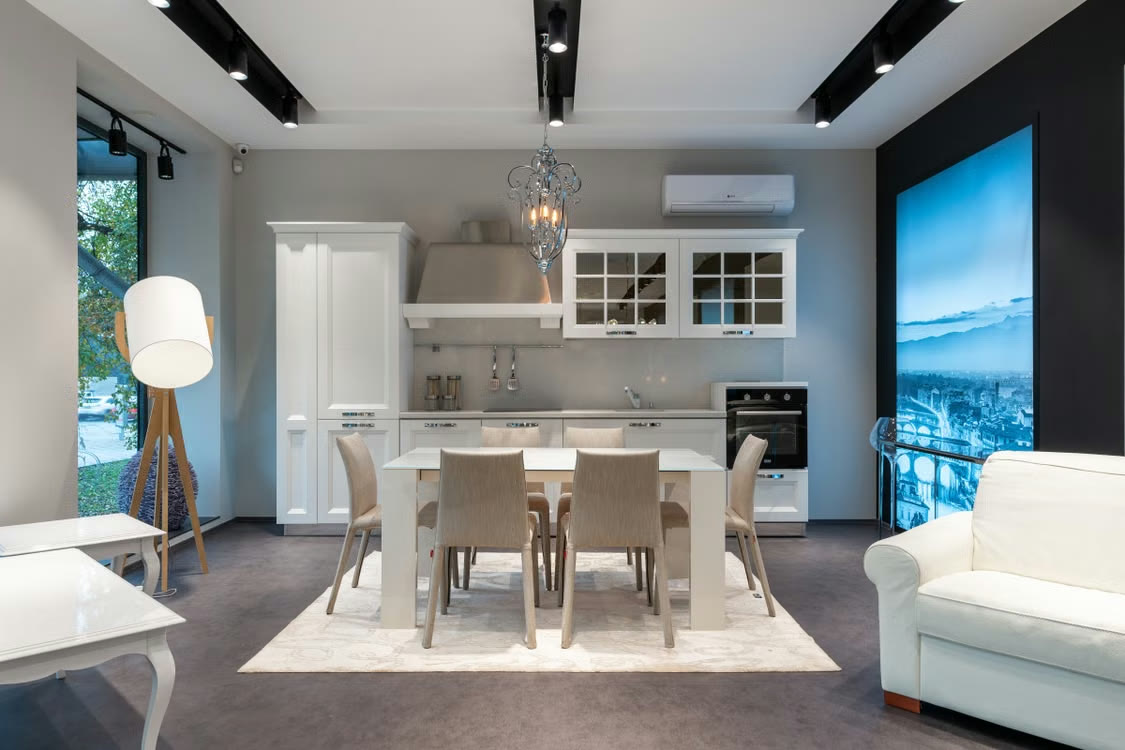
Opening a kitchen showroom can be a strategic opportunity for entrepreneurs who want to enter the growing home improvement and interior solutions market. A well-planned showroom gives customers a physical space to evaluate cabinetry, finishes, storage systems, countertops, and complete kitchen layouts before making a significant purchase.
However, success depends on more than attractive displays. Entrepreneurs must choose the right location, build a commercially relevant product portfolio, control startup costs, and establish reliable supplier relationships. This guide explains the essential steps for opening a kitchen showroom and outlines the business considerations overseas dealers should evaluate when working with an established cabinet manufacturer.
Table of Contents
- Why Open a Kitchen Showroom?
- Choose the Right Kitchen Showroom Location
- Plan Your Product Portfolio
- Estimate the Kitchen Showroom Budget
- Create a Practical Showroom Plan
- Develop Operations and Staffing
- Choose a Reliable Cabinet Supplier
- Market the New Showroom
- Track Performance and Improve
- Start with a Disciplined Investment Strategy
Why Open a Kitchen Showroom?
A kitchen showroom helps transform a complex purchase into an interactive buying experience. Customers can touch materials, compare door styles, review hardware, and understand how design choices affect price and functionality. This is especially important in the cabinet industry, where product quality and installation details are difficult to assess through online images alone.
For entrepreneurs, a showroom can support several revenue opportunities, including cabinet sales, design services, countertop coordination, installation referrals, remodeling packages, and related storage products. It can also strengthen local brand recognition and create a professional setting for builders, architects, designers, and homeowners.
The business model should be defined before signing a lease. Decide whether the showroom will sell directly to homeowners, serve trade professionals, operate as a dealer location, or combine all three approaches. Each model affects staffing, display design, pricing, marketing, and required inventory.
Choose the Right Kitchen Showroom Location
Location is one of the most important decisions in a showroom plan because it influences visibility, customer access, rent, and long-term sales potential. The ideal site is not always in the most expensive retail district. A specialist showroom may perform well in a design, construction, or home improvement area where customers already have a purchase objective.
Evaluate the Local Market
Research the target area before comparing properties. Study household income, housing construction, renovation activity, population growth, commercial development, and the presence of competing kitchen businesses. Consider whether local demand is primarily for affordable remodeling, premium custom kitchens, new-build projects, or rental property upgrades.
Competitor research should cover more than the number of businesses nearby. Visit competing locations and assess their product range, display quality, customer service, pricing position, lead times, and design capabilities. A clear market gap may be more valuable than a high-traffic address.
Assess the Property
A suitable kitchen showroom should offer convenient parking, clear signage, accessible entry, and enough space for full-size displays. Confirm local zoning requirements and verify whether the property permits retail sales, design consultations, construction-related activities, and product storage.
Ceiling height, electrical capacity, lighting, ventilation, loading access, and flooring condition also matter. Large cabinetry displays require careful delivery and installation. A property that appears inexpensive may require substantial renovation, so request contractor estimates before making a commitment.
Plan Your Product Portfolio
Product selection should reflect the needs of your target customers rather than simply filling the showroom with every available style. A focused collection is easier to explain, display, price, and replenish.
Your core portfolio may include framed and frameless cabinets, modern and traditional door profiles, multiple finishes, pantry systems, islands, bathroom vanities, hardware, and interior organizers. If you serve different market segments, create clear good-better-best options without making the customer experience confusing.
Build Practical Displays
A kitchen cabinet showroom should demonstrate both design appeal and everyday performance. Use displays to show common layouts, such as a one-wall kitchen, L-shaped kitchen, U-shaped kitchen, and island configuration. Include examples of tall storage, drawer organization, corner solutions, soft-close hardware, and integrated appliances where relevant.
Material samples are equally important. Customers should be able to compare cabinet colors, textures, edge treatments, handles, countertops, backsplashes, and flooring. A flexible sample wall or dedicated materials library can help designers create customized proposals without expanding the number of full displays.
Consider Customization Capability
A custom cabinet showroom must be able to manage more than aesthetic consultations. It should support accurate measurements, layout development, specification review, production coordination, and installation planning. Ask suppliers how they handle modifications, non-standard dimensions, replacement parts, quality inspections, packaging, and warranty claims.
Reliable product documentation is essential. Dealers should have access to specifications, price lists, finish samples, cabinet dimensions, installation instructions, and digital design resources. These tools reduce quoting errors and help staff provide consistent information.
Estimate the Kitchen Showroom Budget
Creating a realistic budget is critical because showroom businesses often require substantial upfront investment before the first completed project generates revenue. Separate one-time startup expenses from recurring operating costs and include a contingency reserve for unexpected delays or construction changes.
Typical Startup Cost Categories
- Lease and deposit: Initial rent, security deposit, legal fees, and possible common-area charges.
- Renovation: Flooring, walls, ceilings, electrical work, lighting, plumbing, signage, and accessibility improvements.
- Display products: Cabinet displays, hardware, countertops, sinks, appliances, sample doors, and accessories.
- Technology: Computers, design software, customer relationship management tools, point-of-sale systems, and networking.
- Professional services: Architectural planning, design support, accounting, legal advice, and business registration.
- Marketing: Website development, photography, local advertising, printed materials, launch events, and digital campaigns.
- Working capital: Payroll, rent, utilities, insurance, transportation, deposits, and operating expenses during the first several months.
Do not assume that displays alone define the investment. Cash flow is often the greater risk. Cabinet projects can involve long sales cycles, staged payments, shipping schedules, and installation delays. Prepare a monthly cash-flow forecast that models conservative sales assumptions and realistic supplier lead times.
Create a Practical Showroom Plan
A showroom plan should connect physical design with the customer journey. Visitors should be able to enter, understand the product categories, explore complete displays, compare samples, and move into a private consultation without feeling crowded.
Reserve space for both inspiration and technical decision-making. Full kitchen displays create emotional impact, while sample libraries, workstation areas, and consultation tables support detailed purchases. Keep high-traffic paths open and position related products together so customers can understand how cabinets, hardware, worktops, and lighting form one solution.
Plan display updates in advance. Seasonal design changes are not always necessary, but refreshes should occur when new finishes, storage systems, or market trends become commercially relevant. A modular display strategy allows you to replace doors, hardware, or accessories without rebuilding the entire showroom.
Develop Operations and Staffing
A successful showroom needs staff who can sell, design, and coordinate projects. Depending on the business model, the initial team may include a showroom manager, kitchen designer, sales consultant, and project coordinator. Smaller operations may combine these responsibilities, but every role must be clearly defined.
Staff training should cover product specifications, design software, measuring procedures, pricing, installation requirements, care instructions, and objection handling. Employees should understand the difference between promising a customer an estimated lead time and confirming a production or shipping schedule.
Establish a standard sales process: lead capture, discovery consultation, site measurement, concept design, quotation, revision, deposit, order confirmation, delivery, installation coordination, and after-sales service. Documenting each stage improves customer communication and reduces costly mistakes.
Choose a Reliable Cabinet Supplier
Supplier selection is a core investment decision for overseas dealers. Compare manufacturers based on construction quality, finish consistency, product range, customization options, packaging, lead times, quality control, communication, and after-sales support. The lowest unit price does not necessarily produce the strongest business outcome if products arrive late or require frequent replacements.
Request samples and, where possible, inspect completed projects. Clarify minimum order quantities, payment terms, shipping responsibilities, export documentation, warranty policies, replacement procedures, and dealer territory expectations. Confirm whether the supplier provides showroom display recommendations, 3D design resources, training, marketing materials, and technical assistance.
A supplier that supports dealers with dependable systems can help reduce operational risk and accelerate market entry. Before committing, conduct a financial comparison that includes product cost, freight, duties, local delivery, installation, display investment, and expected gross margin.
Market the New Showroom
Marketing should begin before the showroom opens. Build a professional website optimized for terms such as kitchen showroom, kitchen cabinet showroom, and custom cabinet showroom. Include project galleries, product information, service areas, consultation options, and clear contact forms.
Local search visibility is particularly valuable because customers often search for kitchen designers and cabinet dealers by location. Maintain accurate business listings, request reviews from satisfied clients, and publish useful content about cabinet materials, remodeling budgets, storage planning, and design trends.
Develop referral relationships with contractors, interior designers, architects, real estate professionals, and appliance dealers. A showroom can also generate leads through renovation events, educational workshops, social media demonstrations, and partnerships with residential developers.
Track Performance and Improve
Measure showroom performance using more than total sales. Monitor qualified leads, consultation-to-quote conversion, quote-to-order conversion, average project value, gross margin, order accuracy, delivery performance, installation issues, and repeat or referral business.
Review which displays attract attention and which products produce profitable orders. If customers repeatedly ask for a style or feature that is not represented, update the product and sample strategy. If a display receives interest but rarely converts, review pricing, design functionality, and sales follow-up.
Start with a Disciplined Investment Strategy
Opening a kitchen showroom requires careful planning, disciplined capital allocation, and a supplier relationship built around reliability. The strongest businesses combine an accessible location, relevant products, trained staff, realistic financial projections, and a consistent customer experience.
Exploring how to start a cabinet business? Discover OPPOLIA’s dealership opportunities and learn about investment requirements, available support, and the steps to getting started. With the right showroom plan and a clear understanding of your target market, your business can create a professional platform for selling quality kitchen solutions and developing long-term customer relationships.
