
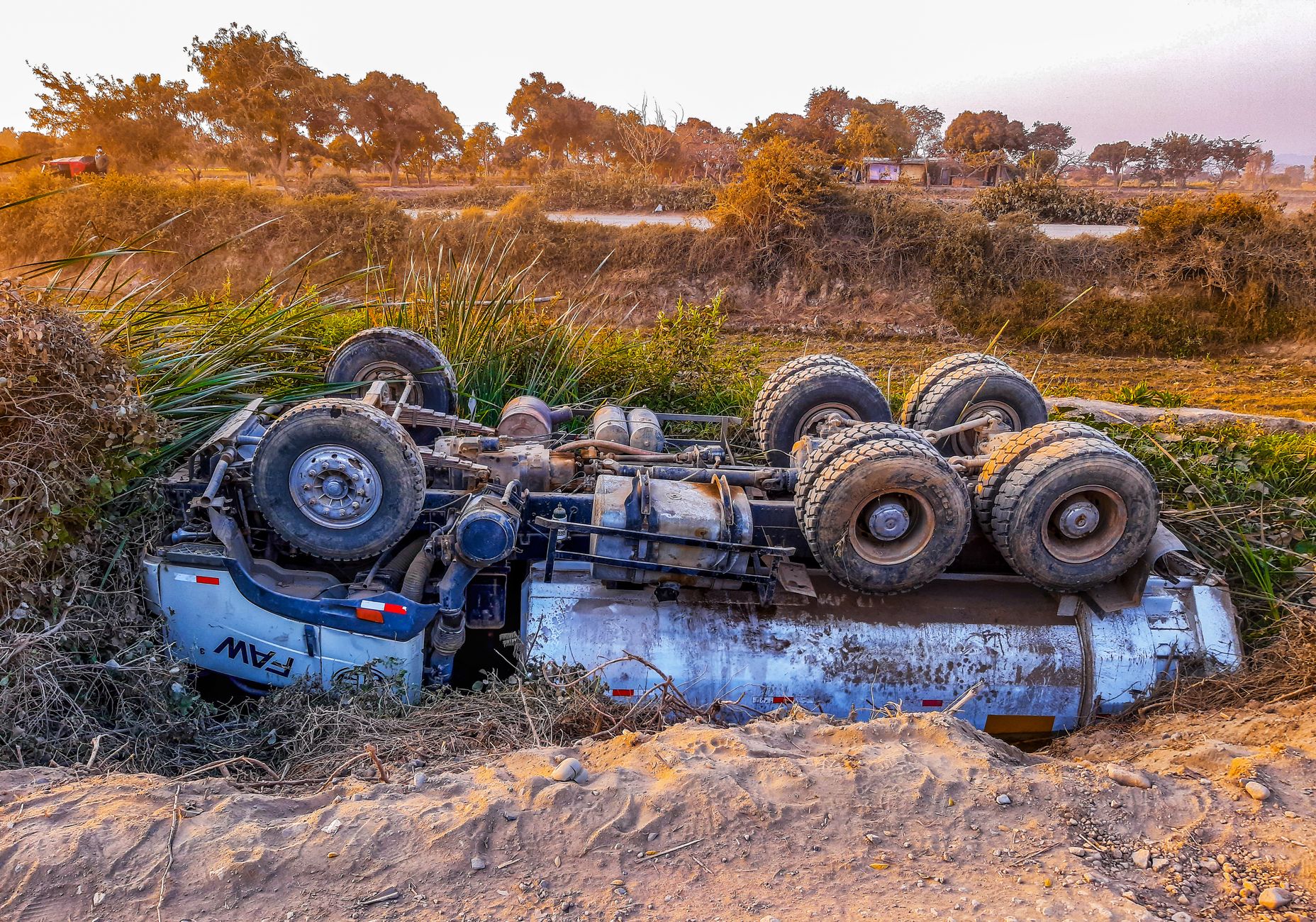
After a collision with a commercial truck, injured people and their families may face two unfamiliar processes at once: recovery and an insurance claim. Advice from friends, online discussions, and assumptions based on ordinary car accidents can make the insurance process harder to understand.
Some familiar claims contain a piece of truth. Medical bills matter, drivers can be responsible, and settlement negotiations may resolve a dispute. The mistake is treating any one of those points as the whole story.
These seven myths explain where that thinking falls short. The discussion offers general information about U.S. truck accident injury claims, not legal advice for a particular situation. State law, the type of trucking operation, and the facts of the collision all matter.
1. A truck accident claim is just a bigger car accident claim
Both types of claims involve questions about fault, injuries, and insurance. A commercial truck collision, however, can introduce additional records and business relationships that do not arise in a typical crash between private vehicles.
For many interstate trucking operations, federal safety rules govern matters such as driving time and rest periods. The Federal Motor Carrier Safety Administration's hours-of-service rules are one example. Whether a particular rule applies depends on the operation and any relevant exceptions. A suspected violation also needs to be connected to the circumstances of the crash; it cannot replace an investigation into what happened.
Truck-related records can help reconstruct a collision. Depending on the vehicle and operation, these might include electronic records of driving hours, vehicle performance data, or camera footage. Maintenance files and dispatch communications may help explain events leading up to the collision. Not every vehicle has the same technology, and no single record necessarily tells the complete story.
Commercial insurance can add another layer. There may be more than one policy or potentially responsible business, with different coverage terms. A claim is not automatically worth more because a truck was involved. Its assessment still depends on responsibility and documented harm, along with applicable law and available coverage.
2. Only the truck driver can be responsible
The person behind the wheel is an obvious focus, but the investigation may extend beyond that person. A driver's employer, a maintenance business, a cargo-loading company, or a product manufacturer could be relevant, depending on the evidence and the legal duties involved.
For example, a collision involving a mechanical failure might raise questions about inspection and repair work. A load that shifted could prompt a closer look at how cargo was secured. These possibilities give investigators something to examine; they do not automatically establish liability.
A business does not become legally responsible simply because its name appears on shipping paperwork. Its role, relationship to the driver or vehicle, conduct, and connection to the injury all need analysis. A trucking company's responsibility may involve its relationship with the driver, its own conduct, or both.
Fault can also be disputed among the people involved in the collision. State laws differ in how an injured person's share of responsibility affects recovery. The existence of several potentially responsible parties does not mean each will owe compensation.
This is why a statement at the scene rarely settles every issue. Witness accounts and physical evidence can support different parts of the explanation, as can business records. A sound assessment considers them together rather than assuming that the driver is the only person worth examining.
3. Every personal injury lawyer has the same truck accident experience
Personal injury lawyers share a broad practice area, but their experience within it can differ considerably. A lawyer who handles many premises liability matters may have a different background from one who regularly examines commercial vehicle records and trucking-related insurance disputes.
Relevant experience is more useful than a broad label. Families researching Truck Accident Lawyers can compare experience with similar cases, communication practices, and fee agreements rather than relying on a promise about the outcome. Past results do not determine what another claim will achieve.
A useful consultation might cover the kinds of records the lawyer would evaluate and how the firm approaches disputed liability, as well as who would handle day-to-day communication. Not every case requires the same experts or litigation strategy. A detailed explanation can help clarify the process, though it cannot guarantee success.
Fees also deserve careful explanation. Many personal injury lawyers use contingency agreements, in which the attorney's fee depends on a recovery. That does not necessarily mean every expense disappears if the case is unsuccessful. Court fees, expert expenses, and other case costs may be treated separately under the agreement.
The distinction between the attorney's fee and the costs of pursuing the claim matters. Understanding both helps families evaluate representation without assuming that all firms offer identical terms or handle expenses in the same way.
4. Medical bills represent the entire loss
Medical bills offer a visible starting point, but they may not capture every consequence of an injury. Someone might lose income during recovery or struggle to return to the same work, while also needing ongoing help with activities that were previously routine.
Economic losses generally involve financial consequences, such as medical expenses and lost earnings. Depending on the evidence and applicable law, future treatment needs or reduced earning ability may also be relevant. Those future losses require support; they cannot simply be added because recovery is uncertain.
Non-economic harm can include pain and limitations on daily life. The rules governing these damages differ by jurisdiction and claim type. There is no universal formula that turns a hospital bill into the correct settlement amount, and an online calculator cannot account for every legal and factual issue.
Documentation helps distinguish a demonstrated loss from an assumption. Medical opinions can explain how an injury relates to the collision and what its expected effects may be. Employment records may show missed work or changes in earnings. Other evidence may help describe how an injury affects ordinary activities.
A large bill alone does not settle questions about causation or responsibility. Likewise, a modest initial bill does not necessarily describe the full course of recovery. An assessment considers the evidence together, including any uncertainty about future needs.
5. The first settlement offer accounts for everything
An early offer can feel reassuring when bills are arriving and work has been interrupted. But receiving an offer does not establish that every disputed loss has been evaluated or that the medical picture is complete.
The insurer and the injured person may disagree about responsibility or causation, as well as the extent of the damages. An offer may reflect limited information, a coverage issue, or disagreement about the claim. Its timing alone does not prove that it is fair or unfair.
A settlement also involves more than the amount on the first page. Depending on its terms, a release may resolve claims covered by the agreement even if additional expenses arise later. What the release covers is a separate question from how the proposed payment compares with current bills.
There can also be claims against settlement proceeds, such as certain medical liens or reimbursement rights. Their existence and effect depend on the circumstances. The amount offered is therefore not always the amount an injured person ultimately receives after applicable fees, costs, and other obligations.
These issues explain why settlement evaluation is more involved than adding up receipts. No offer guarantees a good outcome, and rejecting an offer does not guarantee a larger one. The relevant questions concern the evidence and the agreement's scope, along with unresolved risks and the likely financial consequences.
6. Filing a lawsuit guarantees a trial
A lawsuit begins a court process; it does not automatically end in a courtroom verdict. Personal injury disputes often resolve through negotiation, and settlement discussions can continue after a lawsuit is filed. Mediation may also provide an opportunity to explore an agreement.
Litigation can allow the parties to obtain information through formal procedures. Depending on the court and case, these may include document requests, written questions, and depositions. Evidence gathered during that process can clarify an issue or reveal a disagreement that requires further work.
None of those steps guarantees settlement. A case may still proceed to trial if the parties cannot resolve it, and court schedules can affect how long the process takes. Litigation also involves costs and uncertainty that deserve realistic discussion.
The opposite assumption is misleading too: willingness to settle does not mean a claim lacks merit. Parties may weigh the expense of further litigation, along with its delays and uncertainty, against the evidence. A negotiated agreement reflects those considerations, not necessarily agreement about every event that caused the crash.
Understanding the difference between filing and trial helps make the process less mysterious. The decision to litigate is case-specific. Neither an immediate promise of a courtroom victory nor an assurance that trial is impossible gives a reliable picture of what lies ahead.
7. Nothing is lost by waiting until recovery is complete
The medical picture may take time to develop, but legal and evidentiary issues do not necessarily wait for it. Questions about preserving records and meeting deadlines can arise while treatment is still ongoing and the extent of the injury remains unclear.
Potential evidence has different lifespans. Camera recordings may be overwritten, and vehicles may be repaired; witnesses may also become harder to locate. The availability and retention of electronic records vary. A preservation request can be part of addressing those concerns, but it does not guarantee that every useful record exists or will remain available.
Filing deadlines also depend on the jurisdiction and circumstances. Some claims involve additional notice requirements or exceptions. There is no single deadline that readers can safely apply to every truck collision, and ongoing medical treatment does not by itself establish that a deadline has stopped running.
Learning about the legal process is separate from agreeing to a settlement. An initial discussion can address timing and evidence even when the long-term effects of an injury remain unclear. It does not require a final estimate of every loss.
A truck accident claim rarely turns on one document, one conversation, or one assumption. Responsibility, evidence, damages, insurance, and procedure each play a part. Understanding those separate questions provides a more realistic starting point than expecting an automatic payment or assuming there are no options.