
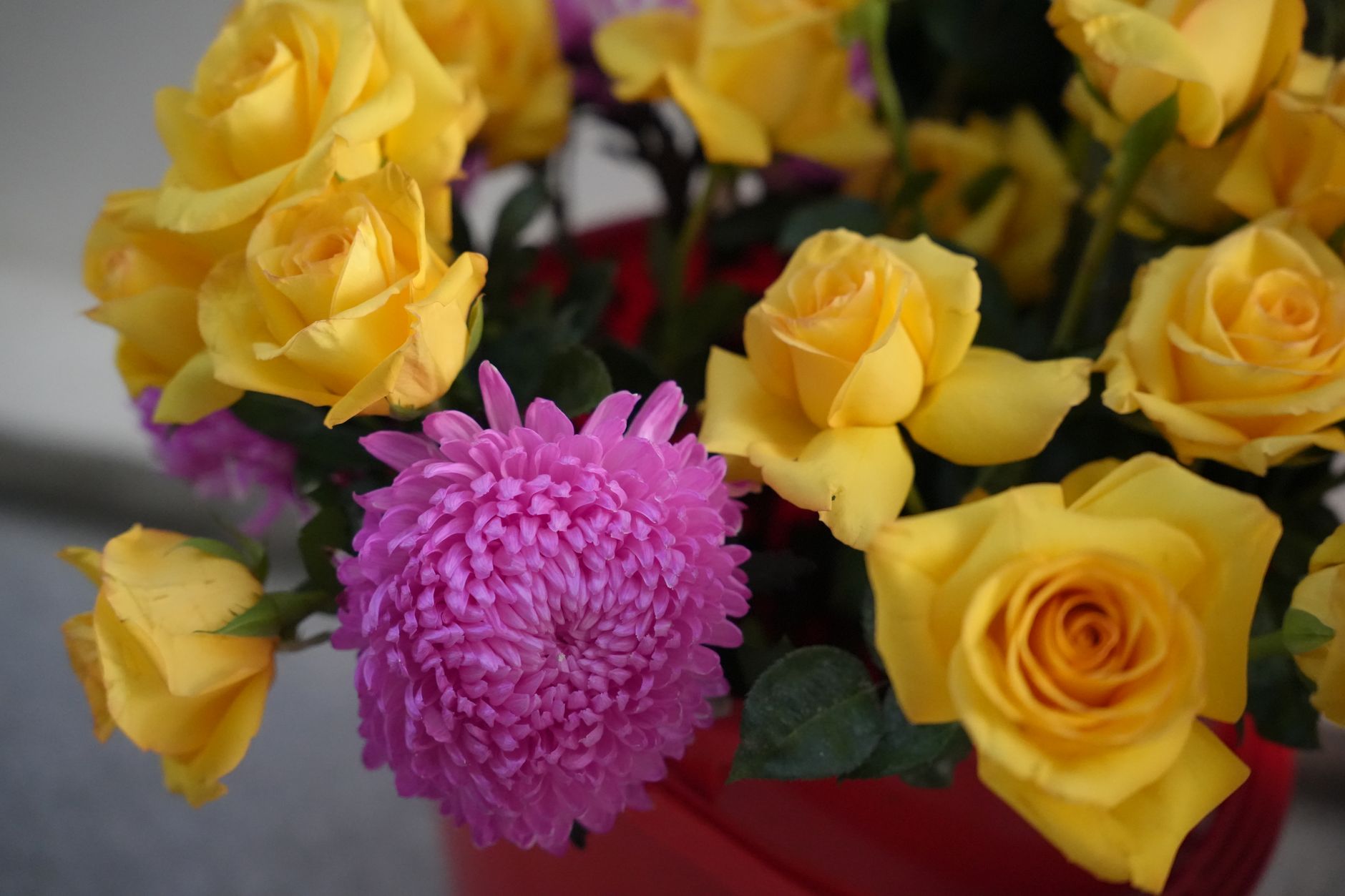
Most welcome bouquets fail for one boring reason: the giver buys what impresses them, not what the recipient has room for. A new neighbor is standing in a half-empty house surrounded by moving boxes, and you hand them three feet of lilies that need water, trimming, and a vase they haven't located yet. Nice thought, awkward delivery.
The fix is a simple framework I call the Porch Test. Before you buy anything, picture the flowers sitting on that porch for four hours on a hot afternoon because your neighbor is at work. If the arrangement still looks fine and needs zero care, buy it. If it needs a rescue mission, pick something else.
You don't have to grow anything or spend much. Some people grow a few stems themselves, and if you've ever wondered where to buy flowers that arrive looking like a real arrangement instead of a shipping mistake, checking a florist with actual same-day delivery beats guessing. Here is how to make the whole thing land well.
Table of Contents
What Should You Actually Pick for a Stranger?
Low-fuss and unromantic. That's the honest answer, and it's the one most people get wrong.
A new neighbor is a stranger you'll wave at for years. Roses read as romantic, lilies can be loaded with pollen, and anything in a heavy glass vase becomes a thing they have to store, return, or feel guilty about. I'd skip all of it. Go with a compact bunch of sturdy blooms: sunflowers, mums, tulips, maybe mixed greenery. They hold up without fuss and don't carry a message the neighbor has to decode.
Skip the perfume, too. Heavy fragrance in a small, still house with the windows closed is a lot. A light, clean bunch gives you the same gesture with none of the side effects.
Colors matter less than you'd think, but a mixed palette is the safe pick. All white reads formal, all red reads romantic, and yellow is the cheerful neutral that suits a friendly hello. If you don't know the neighbor at all, mixed is your default.
A Short Checklist Before You Order
Run through these five points and you'll almost never get it wrong.
- Container: a simple jar or wrap, something they can toss without guilt.
- Trimming: if the stems need snipping to fit, add a small sharp pair of scissors to the delivery.
- Materials: paper or kraft wrap over plastic and ribbon. Easier to recycle, less to throw away.
- Care instructions: one short card. New neighbors don't know your local water quirks or how often to change it.
- Your name and number: the most useful part of the whole gift. It gives them a way to say thanks without knocking.
That last one earns its keep. Fresh flowers are a perishable product, and according to the U.S. Department of Agriculture, cut stems are handled and cooled under tight timelines before they ever reach a buyer. Whoever delivers yours was working against a clock. So the flowers will fade in a week or so, but the phone number on that card lasts years.
One more tip from experience: hand the flowers over in person if you can manage it, and keep the drop-off under two minutes. Long first meetings in a doorway are uncomfortable for everyone. Quick handoff, friendly line, out the door.
How to Time the Delivery
Non-negotiable: nobody wants an eight a.m. doorbell on their first Saturday after moving. Wait for a quiet mid-afternoon window, ideally when the moving truck is gone and cars have settled into the driveway.
If the neighbor is clearly home all day, knocking is fine. If the house looks empty, leave the flowers somewhere shaded with a note. Porch heat, direct sun, and a plastic-wrapped bouquet are a bad trio, and you can spare yourself the follow-up. Shade, a card, done.
Here's where I'd commit to a stance. If you're ordering online, use same-day delivery and write the card message as if it's being read by someone exhausted. Short, warm, no pressure to reciprocate. Something like "Welcome to the street, no need to knock, we're glad you're here." That's it. The gesture should cost your neighbor nothing, including energy.
And if you show up with a bouquet on a day when they're mid-unpack, don't linger. Drop, smile, go.
The Welcome Note That Does Half the Work
The flowers are the prop. The note is the thing people remember.
Include three useful facts and nothing else: trash day, the name of the neighborhood group chat if there is one, and your address with a first name. Maybe a fourth, if you're feeling generous: which local pizza place actually delivers late. That's the kind of detail a new arrival will use within a week. I've never met anyone who was sorry they got the trash schedule, and I've met plenty who were annoyed by long letters introducing fifteen neighbors.
Quiet gestures tend to land better than big ones. When people relocate, the adjustment is mostly practical. Baseline data from the Bureau of Labor Statistics shows that job-related moves and general relocation keep the household moving market steady year over year. People do this a lot, and most of them arrive somewhere with no idea how the local recycling works. Your little card answers a real question.
When Flowers Are the Wrong Gift
Sometimes they are. And the polite move is to notice.
If your neighbor mentions allergies in the first conversation, skip cut flowers and bring a plant in a pot, or a wrapped loaf from a local bakery. If they seem private or rushed, a card in the mailbox is enough. Nobody owes you a friendly doorstep chat, and a gesture that forces one isn't a gift, it's a task.
I'd also draw a line at food. Flowers carry zero dietary questions, while a plate of homemade cookies carries several. If you don't know the household, keep the welcome gift in the plant category and you sidestep every awkward conversation.
One other thing worth knowing: many people moving for work come home tired, and if the person you're welcoming is a veteran or a military family on relocation, the welcome goes further when it's low pressure. The U.S. Department of Veterans Affairs tracks transitions for service members and families, and relocation fatigue is a real, familiar theme for them. Simple, calm, and easy to accept beats elaborate every time.
Frequently Bought, Rarely Returned
If you're choosing between a big arrangement and a small one, small wins. If you're choosing between fancy and sturdy, sturdy wins. If you're choosing between dropping by and leaving a card, the card wins when you're unsure, and the drop-by wins when you've already said hello once. That reversal isn't a contradiction, it's a rule about familiarity. Strangers get space; neighbors you've met get warmth.
Pick the pot, write the card with three useful facts and your name, and time it for a shaded mid-afternoon. Your new neighbor will remember the thought, not the blooms. Which street in your area could use a welcome bouquet this week, and who would you bring it to?