
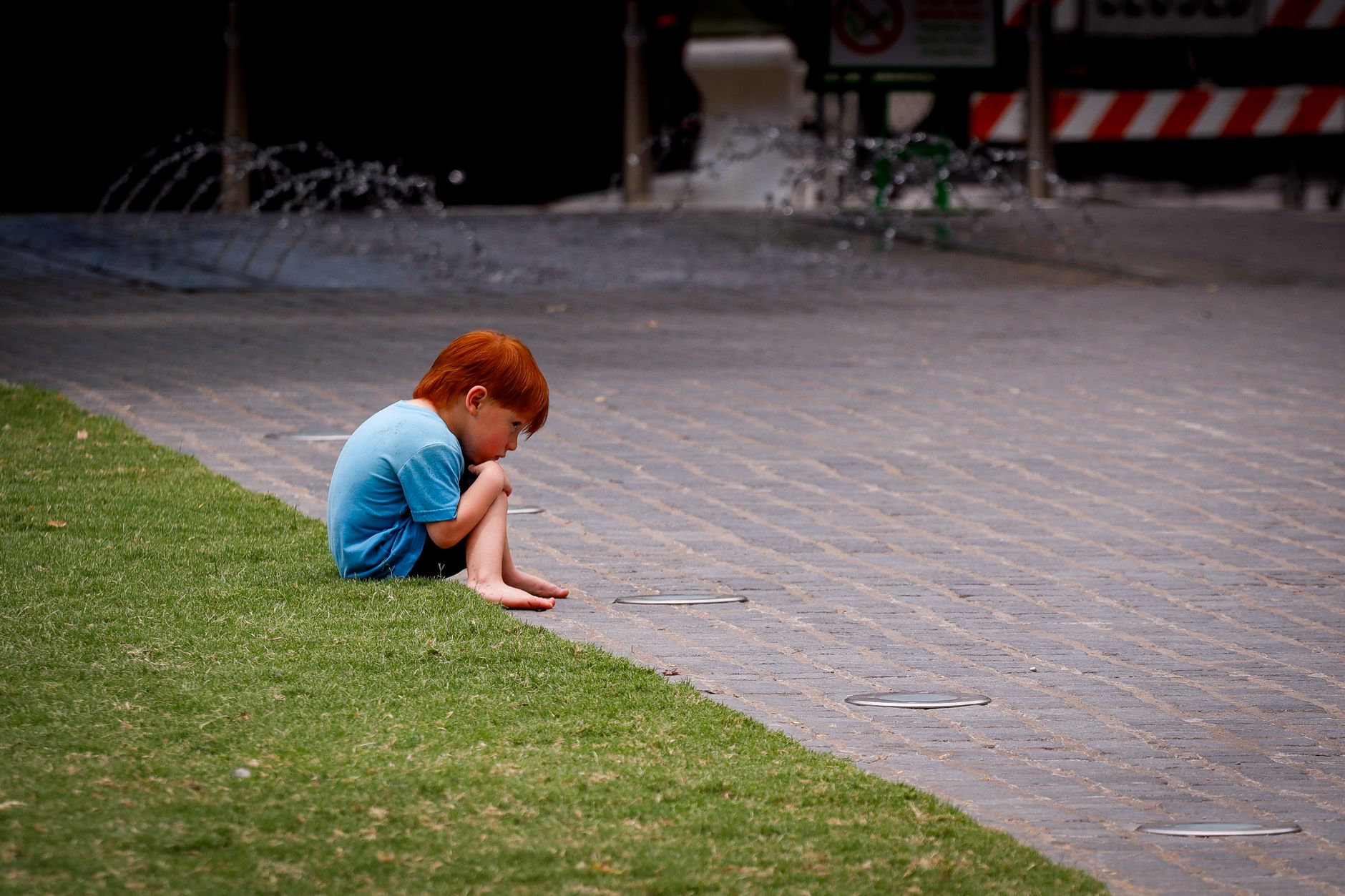
Your eight year old just hurt the family dog and then asked what's for dinner. No flinch, no apology, nothing. You spent the rest of the night replaying every interaction you've had with this kid for a decade, hunting for the moment you broke something.
I want to start here because that specific fear, the one that hits at 11pm, is usually louder than the actual situation. Most kids who seem cold at eight or nine are not on a straight path toward a personality disorder. Some are. And the difference matters, because the actions you take early look almost identical in both cases. If you have already gone searching for information about sociopathy in children, you're not overreacting. You're paying attention. What you do with that instinct is where things get useful.
What follows is what I'd want a friend to tell me: how to sort ordinary developmental gaps from patterns worth a professional evaluation, what the labels actually mean, and the practical steps that help regardless of the answer you eventually get.
Table of Contents
The Word You're Using Is Not a Childhood Diagnosis
Here's the part that calms a lot of parents down. Sociopathy, and the broader category it belongs to, antisocial personality disorder, cannot be diagnosed in a child. Not at seven, not at twelve, not at seventeen. Full stop. The diagnostic criteria require a person to be an adult.
What clinicians look at in kids is something different: a pattern called conduct disorder, or in younger children, a set of behaviors grouped under what's often called callous and unemotional traits. That's the technical language for what you're observing at home. It describes a real pattern, and it's the pattern that predicts something, which is exactly why it deserves attention rather than a shrug.
So when you read about childhood sociopathy, you're reading about warning patterns and traits, not a verdict on your kid's future. That distinction is not me being delicate. It changes what the next step should be.
What Actually Counts as a Warning Pattern
One incident tells you almost nothing. Kids lie, kids swipe things, kids hurt feelings without noticing. The signal is in repetition, and in how your child responds when they're caught and the consequences land.
Watch for a cluster, not a single item:
- Hurting people or animals and showing no distress afterward
- Lying that continues even when the truth would cost them less
- Blame that lands on everyone but them, every single time
- Charm that flips off the second they don't need something from you
- Rules treated as obstacles to route around, not boundaries to respect
- Anger that arrives way out of proportion to the trigger
Roughly one in five kids will show some version of these behaviors at some point, and most of them grow out of it. The reasons vary widely, and childhood trauma is one honest explanation among several, along with differences in how a child's brain processes reward and consequence. The National Institute of Mental Health lays out how these behavioral patterns get evaluated, and it's worth reading before you let a search engine's scariest result make your decisions for you.
Here's my honest read: parents tend to underreact to repetition and overreact to a single bad week. Flip that. One terrible afternoon is noise. Six months of the same pattern is data.
Sorting This From Ordinary Phases
Every kid has a stretch where empathy looks broken. Toddlers bite. Middle schoolers are famously awful to each other. Teenagers go flat and private for a season. So how do you tell a phase from a pattern?
The Six Month Test, and How I'd Use It
I break this into three questions I'd ask myself on paper, not in my head, because memory lies. First: has this repeated across at least six months and two different settings, like home and school? Second: does genuine distress show up anywhere, ever, even briefly, when someone else is hurt? Third: when my child gets caught, do they adapt, or do they simply get better at hiding? I wrote these down because I kept convincing myself that last week's incident was a one-off. Two, saying yes means I call a professional, not because something is certain but because waiting costs me more than a phone call does.
That last question is the one most parents skip. A kid who feels bad and hides it is on a different road than a kid who feels nothing and learns to perform feeling bad. Both look similar from the outside. Only one of them is a reason to slow down and get eyes on the situation.
When Empathy Shows Up Only on Command
Pay attention to the difference between remorse and damage control. If your child apologizes, watch what happens next. Does the behavior shift, or does the apology seem shaped for the audience, calibrated to whoever is standing closest?
Something like this shows up in real homes. A teenager gets caught taking money from a sibling's room and delivers a tearful apology to mom, then repeats it the following month and denies it flatly when confronted. The apology was real at that moment. It just wasn't connected to anything. That gap, between expressed remorse and changed behavior, is worth noting in a journal with dates.
And it's worth knowing that behavioral patterns like this don't live in isolation. According to the Centers for Disease Control and Prevention, a meaningful share of children and adolescents experience a mental, emotional, or behavioral condition at some point, and many of those children go without care for far longer than they should. Getting an evaluation early is not labeling your kid. It's giving yourself information.
A Practical Starting Point
You don't need a diagnosis to take action. Start here, in this order.
- Write it down. Dates, incidents, what your child did, and what they did afterward. Three months of notes will tell you more than a year of arguments with your own memory.
- Loop in the school. Ask the counselor directly whether teachers have flagged the same behaviors. Kids behave differently across settings, and this comparison is diagnostic gold.
- Get an evaluation when the pattern clears six months. Look for a child psychologist or psychiatrist who works with kids on behavioral concerns. This is a standard appointment, not an emergency.
- Rule out what else it could be. Sleep problems, learning differences, ADHD, anxiety and stress can all wear the mask of coldness. So can a child who is being hurt somewhere you don't know about.
- Protect the sibling or pet situation now. Whatever the eventual answer, no one in the house should be the target of repetitive harm while you're sorting it out.
That last instruction is the one I'd hold firmest. I've watched families stall for a year because they were afraid of a label. Movement is not the same as a verdict.
On treatment: the honest answer is that early behavioral support, family-based therapy, and parenting approaches built around clear consequences and consistent follow-through help more than anything that waits until adulthood. The earlier the pattern gets addressed, the more room there is to work with it.
Where This Leaves You Tonight
You're not looking for a diagnosis in your living room. You're looking for a pattern, written down, over time, verified by someone outside your household. If it's there, you call a professional who works with adolescents. If it isn't, you've still built better communication with your kid, which was never wasted effort.
One last thing, and this one matters. Take care of yourself through this. Parenting a child who doesn't seem to register your feelings is exhausting in a way most people don't understand, and you're allowed to need support too. The American Academy of Child and Adolescent Psychiatry is a solid, calm place to start learning about evaluation options if your gut is still telling you something is off.
What made you start reading tonight? If you can point to a specific moment that stuck with you, that's usually the right place to begin.