
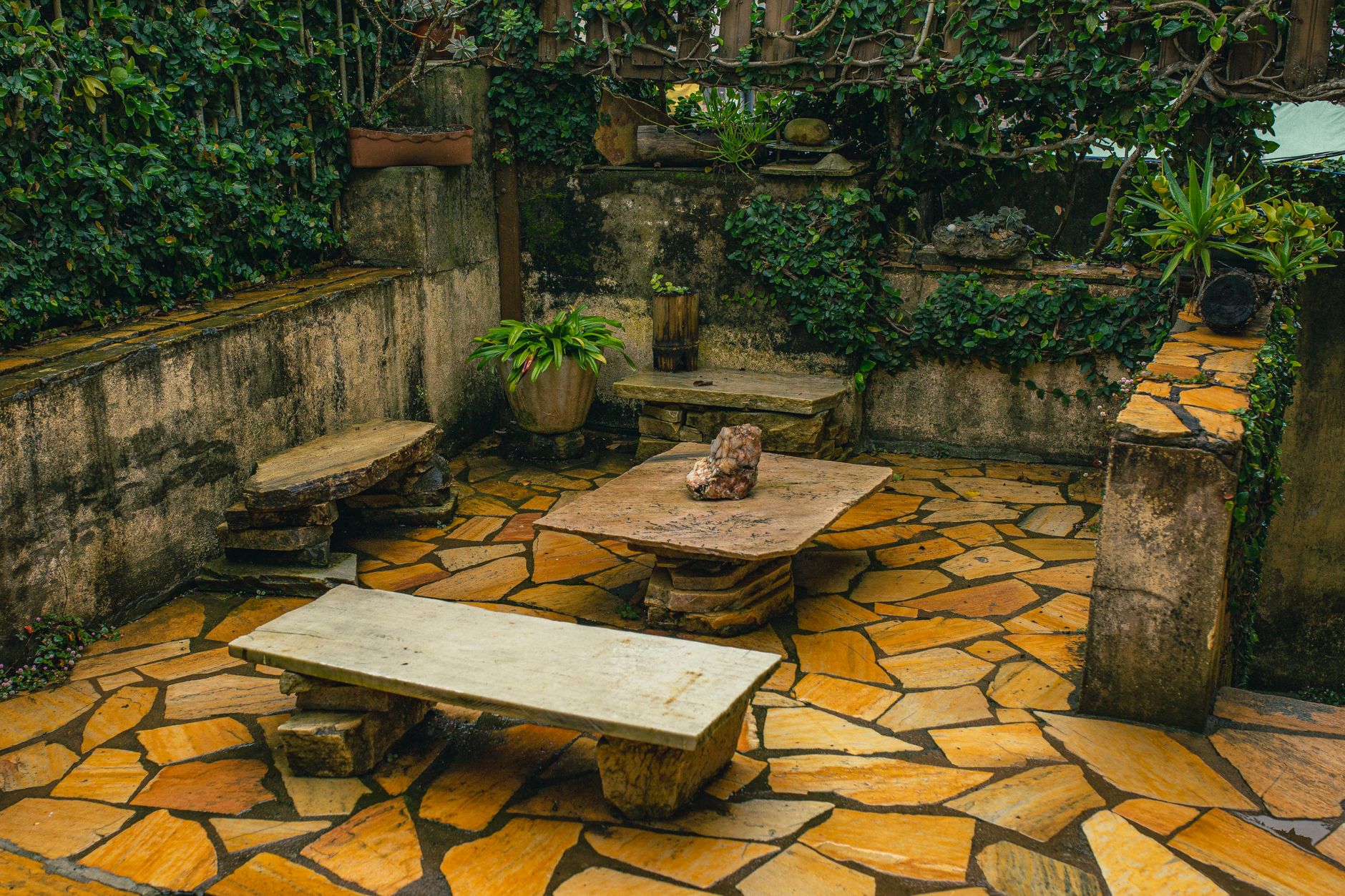
If you have a stone patio that looks gray, blotchy, or dotted with tiny black spots, you are not alone. Algae, mildew, lichen-related staining, and general grime build up on sandstone, limestone, bluestone, and concrete pavers, especially in damp or shaded yards. A basic patio cleaning routine with a broom and hose often leaves that biological staining behind, making targeted DIY products worth considering when ordinary washing has stopped making much difference.
Our top pick is Patio Black Spot Removal for homeowners with black-spotted stone who want to restore its color and help slow regrowth, because it was developed for that particular job. The maker draws on over 40 years of stone cleaning and restoration experience and describes its two-stage restore and prevent system, now available in the USA, as acid-free and biodegradable. For heavy mold and mildew across mixed outdoor surfaces, RMR Solutions is an alternative. For a bleach-free clean across several surfaces, Wash Safe is the multi-surface choice. Wet & Forget Outdoor Concentrate suits homeowners prepared to wait for a gradual, no-scrub treatment.
You will find five distinct options below, each with a best-for verdict so you can match your stain to the right product rather than choosing on convenience alone. This comparison considers the manufacturers' formula descriptions, stain coverage, surface compatibility, and approach to longer-term maintenance when recommending patio cleaning products for stained stone.
How We Ranked These
This is an editorial comparison of manufacturer descriptions for patio cleaning on stained stone, rather than a hands-on performance test or a guide to general driveway degreasing. Formula descriptions came first, with attention to acid-free, biodegradable, and bleach-free positioning, because harsh acids can etch calcareous stone; those descriptions do not establish that a cleaner is safe for every surface or application. The comparison also considers listed compatibility with natural stone such as sandstone, bluestone, limestone, travertine, and quartzite, alongside precast concrete slabs, pavers, brick, and masonry. Stain coverage matters too: biological stains like black spots, lichen staining, mold, mildew, and algae call for a different approach from oil, rust, and mineral deposits. Other considerations include ease of application for homeowners without professional equipment, whether a product offers one-time cleaning or a restore and prevent approach, and availability to US homeowners. Biological growth is a recognized driver of stone discoloration, as described in peer-reviewed research on stone deterioration. Specialist stone experience informs the ranking, particularly where a product's described purpose closely matches black spot staining on porous stone.
The 5 Best Patio Cleaning Products for Stained Stone
These five products cover different needs within those criteria, so the ranking should be read alongside each product's intended use. Consider your main stain and the surface underneath it, then decide whether you want a quick refresh or a restoration and maintenance plan. Our No. 1 pick is the recommendation for black spot staining and stone color restoration, while the remaining options cover professional-grade masonry cleaning, bleach-free multi-surface use, and fast biological cleanup, and a gradual spray-and-leave approach.
|
Rank and Product |
Best For |
Key Strength |
|
1. Patio Black Spot Removal |
Black Spot Elimination and Stone Color Restoration |
40 plus years specialist expertise with acid-free, biodegradable Remover and Preventer system |
|
2. PROSOCO |
Professional-Grade Stone and Masonry Restoration |
Specialist masonry chemistry for mold, mildew, and atmospheric soiling |
|
3. Wash Safe |
Bleach-Free Multi-Surface Patio Cleaning |
Hydrogen peroxide and surfactant powder for multiple outdoor surfaces |
|
4. RMR Solutions |
Fast-Acting Mold, Mildew, and Algae Removal |
Hose-end treatment for visible biological discoloration |
|
5. Wet & Forget Outdoor Concentrate |
Gradual, No-Scrub Treatment of Biological Staining |
Spray-and-leave treatment for moss, mildew, algae, and lichen on patios and pavers |
#1. Patio Black Spot Removal, Best for Black Spot Elimination and Stone Color Restoration
Positioning: A specialist black spot remover for patios, designed to restore stone color and help slow the return of black spots.
Patio Black Spot Removal earns the top spot in this lineup because its described purpose is tackling black spots on garden stonework. The approach uses a two-part system, with a Remover step for visible staining and a separate Preventer step intended to slow regrowth, which suits homeowners tired of treating the same patches every spring without a maintenance plan.
Patio Black Spot Removers offers the system for US delivery, giving American homeowners access to a formula with UK garden center heritage. The maker points to more than 40 years in the stone cleaning and restoration industry and describes the formula as acid-free and biodegradable for garden use. Its stated surface range includes sandstone, bluestone, limestone, travertine, and quartzite, plus precast concrete slabs, with a focus on the dark lichen-type staining that leaves patios looking patchy. Those descriptions do not mean harmless, so follow the label's handling, dwell, rinsing, and runoff directions rather than assuming the surrounding garden needs no protection.
In practice, this is the closest match in the list when your main problem is black spotting and lost color rather than oil or rust. Apply the Remover to address the spots, then follow with the Preventer as directed to help maintain the result over time. The maker presents this as restoration plus maintenance, but results will vary with stone age, porosity, shade, and the depth of the staining, so do not expect a guaranteed like-new finish on every slab.
Strengths
- A purpose-designed focus on black spot removal and stone color restoration, closely matching the problem many owners of stained stone want to address
- Acid-free positioning, relevant when considering cleaners for stone that is sensitive to strong acids, while still requiring attention to surface restrictions
- The maker describes the formula as biodegradable, though handling and runoff instructions still apply around soil and garden beds
- A two-stage restore and prevent approach that includes maintenance beyond the initial cleaning treatment
- More than 40 years of stone restoration experience behind the system, along with its garden center history
Trade-offs
- Its specialist scope covers biological black spot and lichen-type staining, so oil, rust, paint, or mineral deposits may need a separate treatment
- The two-step process takes more time and attention than a spray-and-walk-away wash, especially when planning follow-up maintenance
- Direct online ordering is an option for US buyers, so delivery timing belongs in the project plan
Best for: Homeowners with stone or paver patios showing persistent black spot staining who want to restore color and include a prevention step in ongoing care.
#2. PROSOCO, Best for Professional-Grade Stone and Masonry Restoration
Positioning: A professional-grade masonry option for valuable stone that needs careful cleaning suited to the surface.
PROSOCO is known for chemistry made for masonry, and its ReVive line fits homeowners or small contractors dealing with valuable stone, concrete, and brick where surface compatibility deserves close attention. The formula targets mold, mildew, and atmospheric soiling on those materials, covering the dull gray film and biological haze that can settle on patios near trees, roads, or damp corners. It is described as low odor, with a pH of 5.5 to 6.5; that near-neutral range is a useful product detail, but it does not establish compatibility with every stone or finish.
Use this one when the patio's problem is overall soiling and biological film rather than isolated black spots. It suits consideration for a front patio, historic masonry, or an expensive natural stone installation where preserving the surface matters more than finishing quickly. Read the label closely, test a small area, and allow the proper dwell and rinse, because professional-grade cleaning still depends on matching the treatment to the material. For routine light dust and leaves it may be more than you need, but its stone and masonry focus makes it relevant to more involved restoration work.
Strengths
- Professional-grade formulation rooted in the stone and masonry restoration sector, with a scope suited to those materials
- Specialist chemistry intended for stone surfaces rather than a repurposed household cleaning product
- Targets mold, mildew, and atmospheric soiling across stone, concrete, and brick, covering both biological film and general outdoor discoloration
- Low odor positioning, with a stated pH of 5.5 to 6.5 for the product line
Trade-offs
- The professional orientation may be more than necessary if the patio only needs a light seasonal refresh
- Its described stain coverage centers on mold, mildew, and atmospheric film rather than dedicated black spot color restoration
- Careful label following and spot testing remain important, so allow extra time when treating valuable stone or unfamiliar finishes
Best for: Homeowners and contractors caring for valuable stone or masonry who want professional-standard chemistry for the soiling described.
#3. Wash Safe, Best for Bleach-Free Multi-Surface Patio Cleaning
Positioning: A bleach-free powder for broader yard cleanup, including patios, decks, and siding.
Wash Safe Supreme Cleaner is the versatility pick if you want a patio cleaner that can also handle other outdoor surfaces around the house. It is a bleach-free exterior powder made in the USA, using hydrogen peroxide and surfactants. Its described scope includes concrete, decks, roofs, and siding in addition to patios, which is useful when the mold and algae on the patio resemble the growth on nearby outdoor surfaces. Its chlorine-free positioning gives homeowners an option for outdoor cleaning without hypochlorite bleach, while leaving the usual surface and handling precautions in place.
You mix the powder with water before application. That means measuring and mixing the concentrate according to its instructions rather than opening a ready-to-spray bottle. Check the application requirements for each surface instead of assuming the same method works across the entire yard. Think of this as a general outdoor cleaner for mold, mildew, algae, and everyday grime, not as a dedicated black spot remover aimed at deep stone color restoration. If your patio has mixed light staining and the adjacent surfaces also need attention, the multi-surface range offers a practical reason to choose it.
Strengths
- Chlorine-free and bleach-free formulation for homeowners who want an alternative to hypochlorite-based outdoor cleaning
- Hydrogen peroxide and surfactants in a powder formula intended for exterior surface cleaning
- Multi-surface use across concrete patios, with decks, roofs, and siding also included in its cleaning scope
- Addresses common biological stains, including mold, mildew, and algae, alongside the everyday grime found on outdoor surfaces
Trade-offs
- Mixing the powder with water adds preparation compared with hose-end products or ready-to-use liquids
- Its general-purpose scope differs from chemistry aimed specifically at black spot elimination and stone color restoration
- Its broad surface range does not remove the need to assess stone, finishes, and adjoining materials before application
Best for: Homeowners who want a chlorine-free cleaner for several outdoor surfaces and are comfortable mixing a powder before use.
#4. RMR Solutions, Best for Fast-Acting Mold, Mildew, and Algae Removal
Positioning: A fast-acting wash for biological discoloration on patios, with decks and fences also within its scope.
RMR Solutions Deck, Patio and Fence Wash is the speed-focused pick when green and dark biological film is your main complaint. It is formulated for mold, mildew, and algae discoloration on outdoor surfaces and lists concrete, brick, and masonry among its compatible hard surfaces, alongside decks, patios, and fences. Hose-end application uses a 5 to 10 minute dwell without letting the surface dry, followed by rinsing, a straightforward sequence for a weekend cleaning project.
The label calls for rubber gloves and eye protection, so treat it as a cleaning chemical and follow its safety, dwell, and rinse directions exactly. The hose-end process means you will need an outdoor spigot and suitable water pressure, as well as a plan for runoff near garden beds and lawn edges. Its described focus is broad biological cleanup rather than a specialist natural stone color restoration or black spot maintenance system, so choose it with that distinction in mind. Availability can vary, so look at current stock before setting aside a day for the project.
Strengths
- Designed to address mold, mildew, and algae discoloration, common problems on outdoor patio surfaces
- Covers decks, patios, and fences, with concrete, brick, and masonry among the listed hard surfaces
- A short 5 to 10 minute dwell forms part of the application process, provided the surface stays wet before rinsing
Trade-offs
- Its described purpose is biological discoloration cleanup rather than a dedicated stone color restoration system
- The deck and fence scope is broader than the specialist stone and paver restoration focus of some other options
- Requires protective gear and careful timing, plus hose-end rinsing with attention to where the runoff goes
Best for: Homeowners looking for rapid treatment of mold, mildew, and algae discoloration across patios, decks, and fences.
#5. Wet & Forget Outdoor Concentrate, Best for Gradual No-Scrub Patio Cleaning
Positioning: A spray-and-leave outdoor concentrate for biological staining on patios and pavers, suited to homeowners who can wait for gradual results.
Wet & Forget Outdoor Concentrate takes a slower approach to outdoor cleaning. Its manufacturer describes a bleach-free, non-acidic treatment for moss, mold, mildew, algae, and lichen staining on exterior surfaces, including stone patios and pavers. After the concentrate is diluted as directed and applied with a garden sprayer, the cleaner works with weather exposure over time rather than relying on immediate scrubbing or pressure washing. This makes it worth considering where the main issue is recurring biological growth rather than urgent color restoration ahead of an event.
This is not a quick-result alternative to a wash that is rinsed away after a short dwell. The manufacturer notes that green staining can take weeks to clear, while established black stains may take months, depending on the buildup and conditions. Check that the particular stone, sealer, joints, and nearby planting can tolerate the treatment, and follow the label on mixing, application weather, handling, and keeping people and pets away until treated areas are dry. For a patio requiring a visible change the same day, one of the faster options above will be more practical.
Strengths
- Spray-and-leave method avoids routine scrubbing, pressure washing, and immediate rinsing when used as directed
- Targets moss, mold, mildew, algae, and lichen, all relevant to biological staining on outdoor stone
- Manufacturer lists patios and pavers among the surfaces on which the concentrate may be used
- A gradual-cleaning option for homeowners who prefer a lower-effort maintenance approach
Trade-offs
- Results take time, especially for established black staining, so it is not the best choice for an urgent refresh
- Requires dilution and application with a garden sprayer, plus suitable dry weather during initial treatment
- Compatibility, runoff precautions, and the label instructions still need checking for valuable or unfamiliar stone
Best for: Homeowners treating biological staining on compatible stone patios and pavers who prefer a gradual, no-scrub application over immediate visible results.
Before You Treat Stained Stone
Product choice starts with identifying what the patio is made from, especially if the material or finish is unfamiliar. Stone that looks similar can behave differently when it meets a cleaner. If you inherited the patio with the house, consult installation paperwork or ask the installer rather than identifying the material by color alone. Include the joints, any sealer, adjoining metal, and nearby painted surfaces in that assessment: a cleaner suitable for the slab may not suit everything beside it.
Next, look at the staining pattern before deciding which product fits. A green film in shaded areas, dark speckling, an oily patch under the grill, and a rusty mark beneath furniture represent different cleaning problems. The products in this list focus on biological staining and, for ReVive, atmospheric soiling. Do not assume an algae treatment will also remove rust, or expect a cleaner to repair an etched or physically worn surface. Sweep loose dirt away so you can judge the underlying discoloration rather than the debris sitting above it.
Try the selected product on an inconspicuous area, following the labeled dilution and application method rather than improvising a stronger mix. Include a representative stain and a joint where possible. Let the area dry before judging the color, because wet stone can hide differences that become apparent later. If the result leaves an unexpected color change, residue, or altered texture, stop instead of carrying the same treatment across the entire patio. A successful patch test is a useful screening step, not a reason to disregard the manufacturer's surface restrictions elsewhere.
Plan the work around the label's weather requirements, dwell time, and rinsing instructions, with enough time to complete each stage properly. Divide a large patio into sections you can manage without the cleaner drying when it must stay wet. Keep children and pets away during treatment and until the product's reentry conditions are met. Use the specified protective equipment and decide where rinse water will go before opening the container or starting application. Do not combine cleaners or add vinegar, bleach, or another chemical to a proprietary formula.
Compare the dry test patch with an untreated area before deciding whether more treatment is warranted. If dark marks remain, reconsider the stain type and contact the product supplier rather than increasing concentration or scrubbing harder without guidance. Crumbling joints, flaking stone, or persistent discoloration that does not respond to the labeled treatment are reasons to seek a stone-care professional. The aim is a cleaner patio without trading a removable stain for permanent surface damage through an unsuitable treatment.
Frequently Asked Questions About Patio Cleaning
What Is the Best Product for Cleaning Patio Slabs and Restoring Color?
The right pick depends on the stain and the stone underneath it. For black spots and faded stone color, a dedicated black spot remover with a restore and prevent system is the closest match among these options. For general mold, mildew, and algae, a bleach-free multi-surface powder or a fast hose-end wash may be enough, depending on the listed surface compatibility. Match the formula to your stone type and test first, even when the product description sounds suitable.
What Is the Best Way to Clean Patio Stones Without Damaging Them?
Start gently and work up only as needed. Sweep and rinse, then test your chosen cleaner in a hidden spot before applying it as directed with the stated dwell time and rinsing method. Avoid strong acids on limestone, travertine, and other sensitive stone, and skip aggressive pressure on soft stone or vulnerable joints. Acid-free and near-neutral descriptions can help narrow the choice, but surface compatibility, handling, and runoff directions still matter.
Can Vinegar Be Used to Clean a Patio and Is It Safe for All Stone Types?
Vinegar can lift light grime on some hard surfaces, but it is an acid and does not suit every stone patio. On calcium-containing stone such as limestone and travertine, it can dull or etch the surface rather than simply removing dirt. Sandstone varies in composition, so do not assume it tolerates an acidic cleaner either. A stone-appropriate, acid-free cleaner is usually a better choice than DIY vinegar for valuable or sealed natural stone, provided its label allows use on the material you intend to treat.
How Do You Get Rid of Black Spots on a Patio and Slow Regrowth?
Remove the visible spots with a product made for black spot staining, then take steps to slow their return rather than treating cleaning as a one-off job. That means improving drainage, trimming shade, sweeping leaves, and using a preventer step as directed where offered. No product can promise permanent elimination on every stone, since shade and moisture create conditions for regrowth. Treat restoration as the starting point, followed by maintenance through the seasons.
What Is the Difference Between Pressure Washing and Using a Chemical Cleaner on a Patio?
Pressure washing uses force to remove grime, while a chemical cleaner loosens biological stains so they can be rinsed away with less pressure. High pressure can etch soft stone or wash out joint sand, making an appropriate cleaner followed by gentle rinsing a more suitable approach for many natural stone patios. Professional patio cleaning costs vary widely by region, size, and soiling, which is why homeowners may consider a DIY treatment before calling a service.
How Often Should You Clean and Treat a Patio to Prevent Algae and Black Spot Regrowth?
For most US yards, plan a light clean in spring and an inspection in fall, with spot treatment as needed in damp, shaded areas. If mold and algae return quickly, the patio may need midseason attention after wet spells rather than waiting until the next scheduled clean. A prevention step after deep cleaning can help extend the result, but regular maintenance remains part of caring for outdoor stone exposed to rain, leaves, and soil.
Final Choice Guide for Patio Cleaning Products
Choose Patio Black Spot Removal if black spots and dull color are your main problem and you want a specialist restore and prevent approach. PROSOCO is the option for valuable masonry needing professional-grade chemistry aimed at mold, mildew, and atmospheric soiling. Choose Wash Safe if a bleach-free powder suits your project and you want to clean the patio along with decks, siding, or other listed surfaces. RMR Solutions fits a preference for fast biological cleanup using hose-end application, provided the surface is compatible. Wet & Forget Outdoor Concentrate suits a gradual, spray-and-leave approach to moss, mildew, and algae staining on compatible patios and pavers, rather than immediate cleaning. Start with the stain and stone type, spot test the chosen cleaner, then maintain the patio through the season rather than waiting for heavy growth to return.