
It's not the British weather that destroys your camping trip, it's bad preparation. Rain is almost a certainty and all successful comfortable wet-weather camps have a few common factors, decided before you even think about putting up the tent: the forecast you have faith in, the site you select, the pegs you drive, and the drill you go through every occasion it rains.
If those are correct, 'four seasons in one day' is easily put to the back of your mind and will not define your break.
Start With The Right Forecast, Not The Nearest App
Most people look at a general weather app the day they leave and think, that's my trip planned. It's enough for a picnic. Not for a night out on the hill, where the weather beefing up 600 metres above the car park might as well be in a different postcode to the view in the valley.
The Met Office's forecast is still the one to go to first, and its local, hour-by-hour detail is pretty accurate for roughly the first two days of any excursion. But if you're going anywhere hilly, there's an additional source you need: the Mountain Weather Information Service. Its forecasts are formulated for upland landscapes, and it separates out conditions at summit height – wind speed, visibility – from what's going on down at the village. A "possibility of showers" over a wide area may well be a faceful of sleet and 50mph across exposed ridges come 14.00. Look at both, 48 hours before and then again the day you go, because upland Wales can turn pretty fast, every three to six hours.
There are places where this matters more than others. The UK as a whole gets about 1,100mm of rain in the year. The mountain fortress of Snowdonia gets more than 3,000 (Met Office). That's not a rounding discrepancy – it's a different weather system for what are basically two different countries sitting in the same space. A forecast written for "Wales" tells you nothing about what the two rivers on either side of the hill are going to do to each other on Tuesday tea time.
Choose Gear Rated For The Weather You'll Actually Get, Not The Weather You Hope For
Once you've got your expectations straight, the kit chat becomes easy. Forget brands, forget colours, there are two numbers that count when it comes to tents: hydrostatic head, and R-value.
Hydrostatic head measures the amount of water pressure your fabric can take before it starts to leak; it's measured in millimetres. If you're somewhere expecting rain and your tent's flysheet is rated below 1,500mm, you're going to have a bad time. For actual British conditions, particularly hill and moor conditions where the rain might be coming at you sideways, go for a tent that has a flysheet with a rating of at least 3,000mm. And while you're at it, check what the groundsheet's rated at too – that's the bit that's going to be holding the water back when water pools underneath you.
But more important even than the fabric spec is the shape of the tent. A vestibule or porch is not a nice extra to be enjoyed if you're lucky, it is a necessary part of what makes a tent a tent. It's where your wet boots live, and your muddy rucksack, and your dripping dog. If your wet gear isn't outside the inner sleeping compartment, then the inner sleeping compartment's soaking wet. A tent in which your wet gear is your bedfellow is an unpleasant tent. Period.
Clothing works much the same way: kit for the conditions, not the weatherman's promise to do better tomorrow. A full three-layer system – your wicking base layer, your synthetic-insulation mid layer, your waterproof-breathable shell – ought to be on your back every day of a British camping trip, sunny start or not. Gore-Tex, eVent, Pertex Shield: these fabrics mean your sweat can escape while the rain, in a perfect world, cannot get in. One thing you should never wear on a camping trip: jeans. A pair of 501s can suck up nearly a litre of water, and they will not dry in this lifetime.
Where You Pitch Matters More Than What You Pitched
This is the part most people skip past, and it's the single highest-leverage decision on the whole trip. A brilliant tent on a bad pitch will still leave you cold, wet, and short on sleep.
Look for a slight rise rather than a hollow. Water finds the low ground, and a flat-looking dip that seems sheltered at 6pm can be running with water by 2am. Orient the tent so its smallest face points into the prevailing wind rather than presenting a broad side panel for gusts to catch. And never pitch directly under trees, even in a downpour – they might feel like shelter, but they keep shedding heavy drips for hours after the rain itself has stopped, which is a slow, cold way to get soaked overnight.
Site choice goes beyond the patch of ground your pegs go into, though. Where you're touring matters just as much as how you pitch once you get there. A well-drained, sheltered site with proper amenities – toilets, hot showers, a covered washing-up area, ideally a drying room – turns a wet weekend from an endurance exercise into something you'd actually choose to repeat. This is where facilities beat gear every time: no jacket fixes a night with nowhere dry to hang wet kit. Camping in Snowdonia works well precisely because good sites in that kind of terrain are built around the reality of the local climate rather than pretending it away, with drainage and shelter designed in rather than left to chance.
The stakes included with tents are typically thin steel or plastic pins meant for solid, dry earth. Rain-soaked Welsh turf is not that. Before you leave, switch them out for 9-inch V-section or rock pegs, and fasten every last guy line while you're at it – not just the easy ones you can drive home in 30 seconds at pitch-up time. The wind can get up in an open valley with no more warning than a ripped-off vestibule, which is a one or two-peg event. Five minutes of daylit, slack-wind pegging buys you 12 hours of peace.
Build A Wet-Dry Routine Into Every Day
The gear and the pitch get you through the setup. The routine gets you through the days that follow. This is where a lot of otherwise well-equipped campers still end up miserable, because they treat rain as an interruption instead of a scheduled event.
Pack a dedicated drybag or a couple of bin bags purely for wet gear, kept separate from everything dry from the first evening. Muddy boots, a soaked jacket, and a dripping tent flysheet should never share space with your sleeping bag or spare clothes. British weather tends to move in bands rather than sitting still for a whole day, so build a drying routine around the gaps: when a rain-break window opens, even for twenty minutes, get damp sleeping bag seams, socks, and boot liners out into the air. Do this every time a window appears rather than waiting for a fully dry afternoon that might not come.
Cooking needs the same forward planning. Set up with a windshield around your stove, since even a good gas canister stove will sputter and lose pressure in cold, damp air and a stiff breeze. If you're camping somewhere genuinely exposed, a Trangia-style meths stove is worth carrying as a backup – it's slower, but it's close to stormproof and doesn't care about canister pressure dropping in the cold.
Sleep Is Where Bad Planning Shows Up First
While a jacket issue is frustrating, a sleep system problem can really spoil your entire journey. If you have a cold, damp night, the following day is ruined before it even began.
Here, two numbers also play an important role. Firstly, the EN/ISO standard for sleeping bags indicates the temperature at which an average person still feels comfortable – it's not the minimum temperature the bag can withstand as this is a completely different and lower value. Secondly, this bag rating is not the number you should rely on when planning your trip. Instead, you should add at least 5°C to the minimum temperature you're expecting during the night.
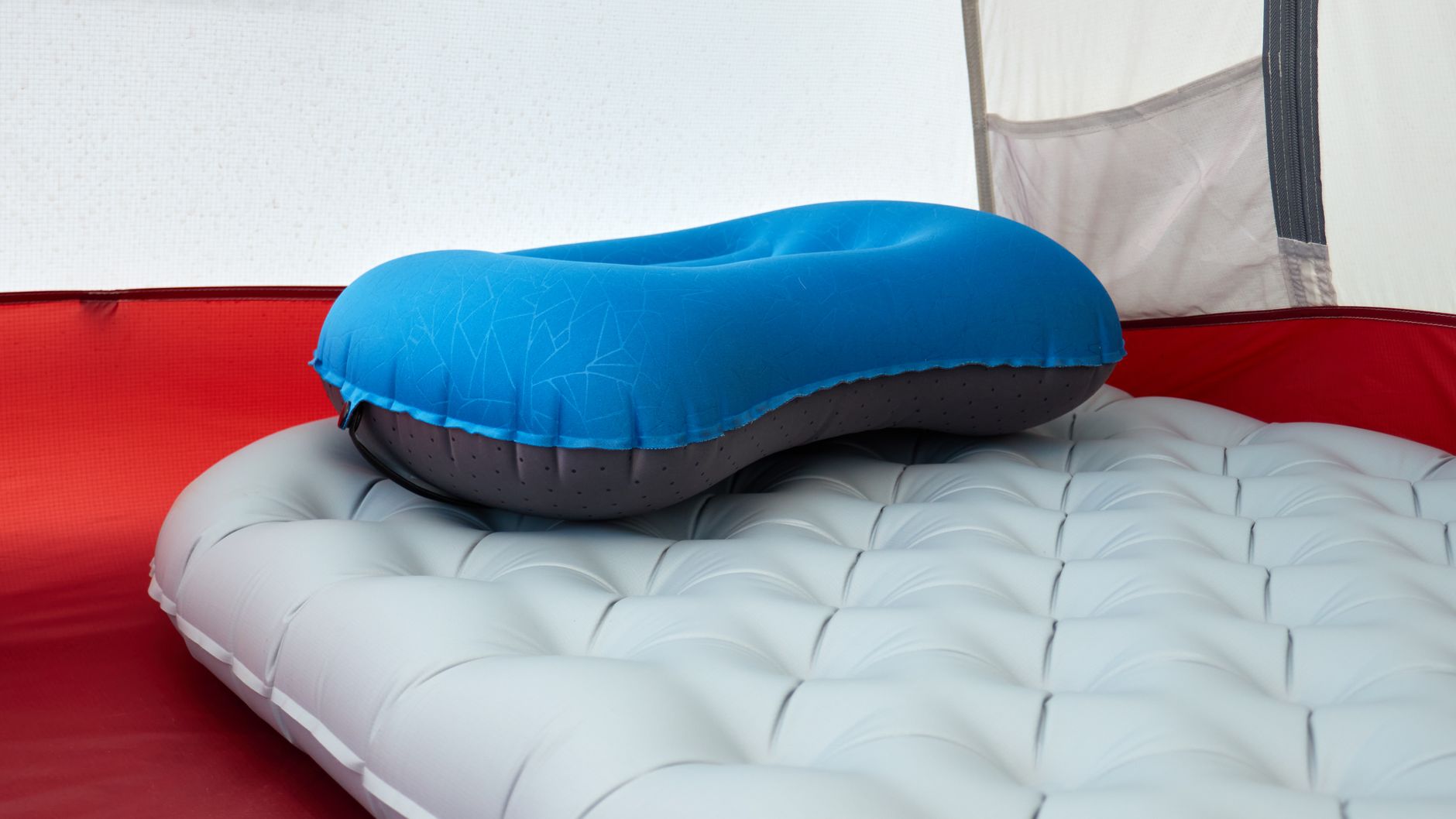
Not only are most of the weather forecasts too optimistic, but also the valley you're camping in will be colder than the town where the thermometer is standing. What's more, none of it will matter if you didn't upgrade your sleeping pad to an R-value over 5.0 as the cold, damp ground will draw your heat down.
Stop Blaming The Tent For Condensation
Every camper's been there: you unzip in the morning, run a hand along the tent wall, and it's soaked. First thought? "This thing's leaking." Except nine times out of ten, it isn't rain at all – it's condensation.
Here's what's actually happening. All night you're breathing, sweating, just existing in a small, enclosed space, and that warm, damp air hits the cold inside of the flysheet and turns to water. It's basic physics – the same reason your bathroom mirror fogs up in the shower. No amount of hydrostatic head rating or perfectly taped seams changes that, because it's not water getting in from outside. It's already inside, with you.
The fix isn't a fancier tent. It's airflow. Crack a vent before you go to sleep, even if it's cold out and every instinct tells you to seal up tight – trapping the moisture in is worse than losing a bit of heat. Same logic applies to your groundsheet: a fully waterproof one might sound ideal, but it just traps moisture underneath you with nowhere to go. A breathable footprint lets it escape instead.
So a bit of damp on the inside walls on a cold morning? That's just a tent doing what tents do. What you actually want to watch for is water coming through the stitching itself, or pooling in the corners – that's a real leak. And honestly, if your tent's rated 3,000mm or above, that's a pretty rare problem to have.
Plan The Trip Around Two Activities, Not One
Campers returning from a wet British trip grinning and utterly relaxed are the ones who gave up on the optimism that the weather might clear up. You plan your itinerary to use both the dry and wet windows as best you can from the start. That means thinking of it as two plans that slide together: active, hiking, or exploring time during the dry gap(s) the forecast gives you, and relaxed, vege-out-around-the-campsite time during the rain. Which might mean cooking a bigger meal, reading in the porch, or using the campsite's covered washing-up facilities, rather than feeling you need to stay outside on principle.
This doesn't require any extreme-weather setup or specialist mountaineering kit. You just need a decent forecast that's not actively lying to sell papers; a tent and clothing system that is rated for the actual conditions you expect; a decent pitch that's well-drained and hopefully sheltered from the worst of the wind; and then a daily routine that treats rain as perfectly normal weather for the area and time of year.