
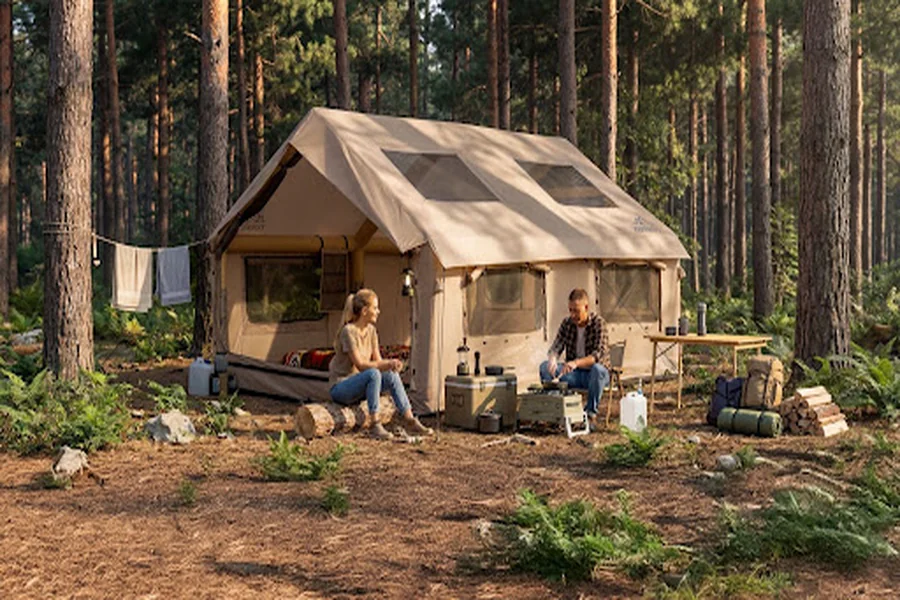
Mountain weekend camping is not the same as a casual night at a park campground. The day might involve mountain biking, hiking, fishing, shooting route footage, or driving deeper into a valley, lakeside area, or forest campsite. At the end of the day, the real test of a tent is not how good it looks in a photo. It is whether it helps you change out of dirty clothes, put wet layers somewhere useful, sort your helmet and pack, and shift from activity mode into recovery mode.
When the vehicle can stay close to camp, the trunk can hold spare layers, water, tools, and food, while the tent becomes the recovery and gear-reset space after the day’s activity. If the tent only has enough room to sleep, camp can quickly fill up with shoes, bags, wet clothing, hydration bladders, protective gear, and small pieces of equipment.
Table of Contents
- Gear Gets Messier Than Expected After a Mountain Day
- Setup Is Only the Start. How the Tent Works Matters More
- Dirty Gear and Clean Rest Areas Need Separation
- Ventilation and Anchoring Affect Comfort in Mountain Camp
- The Value of a Basecamp Shows Up the Next Morning
- Think About Use Before Choosing a Tent
Gear Gets Messier Than Expected After a Mountain Day
After a ride, shoes may come back muddy, gloves and outer layers may be sweaty, and the pack may still hold a hydration bladder, energy bar wrappers, camera batteries, and spare layers. After a hike or fishing session, wet socks, hats, sunscreen, shells, headlamps, and small tools all need somewhere to go.
If everything ends up piled at the tent entrance, finding gear at night becomes frustrating. Worse, the clean sleeping area can pick up dirt, moisture, and odor. Mountain camping does not always need more accessories. It needs a space that lets gear fall into a natural order.
When choosing an inflatable camping tent, the question is not only how many people it can sleep. It also needs to allow standing, changing, packing, and keeping the entrance area clear. For car-camping users, the more a tent can support organization, the less likely the whole campsite is to get out of control.
Setup Is Only the Start. How the Tent Works Matters More
Mountain weekends often do not start slowly. Some people leave after work, while others finish a ride or hike first and then head to camp. Arrival may happen close to dusk, when temperatures are dropping and wind is picking up. Getting the tent pitched is only the first step. What matters next is whether campers can quickly settle into recovery mode.
A good basecamp should help campers establish a basic system fast. The sleeping area needs to stay clear. Jackets, lights, water, and next-day gear should have fixed places. That way, when people return to camp, they are not digging through a pile of bags or forcing everything into the tent entrance.
For vehicle-supported mountain bike, hiking, or forest weekends, inflatable tents for camping like the ZONKOO Vega can make more sense when camp needs to support recovery and gear sorting. Its 7-foot-1-inch interior height helps campers change out of riding clothes or wet layers without staying hunched over, while 129 square feet of interior space makes it easier to keep sleeping gear, packs, protective gear, and next-day equipment from piling up near the door.
After the day’s activity, the tent is not just a place to sleep. It becomes a basecamp where people can change, organize, recover, and prepare for the next route.
Dirty Gear and Clean Rest Areas Need Separation
One detail that is easy to overlook in mountain camping is the boundary between dirty gear and the clean rest area. Riding shoes, hiking boots, wet towels, shells, and tool kits should not go straight into the sleeping space. Otherwise, the next morning may start with dirt inside the tent, bags beside the sleeping bag, and a blocked entrance.
A more practical approach is to treat the entrance as a transition zone. Shoes and outer layers stay near the front. Clean clothing and sleeping gear sit farther inside. Headlamps, camera batteries, GPS devices, and phone-charging gear stay in one fixed corner. This simple habit makes nighttime movement much easier.
After a ride or a long hike, it helps to return helmets, hydration bladders, and repair tools to the same place first. Then damp outer layers can be opened up for airflow, and water, energy food, and spare layers for the next day can be checked. Ten minutes of organization at night can save a lot of digging around the next morning.
Ventilation and Anchoring Affect Comfort in Mountain Camp
Wind direction can change quickly around mountain, lakeside, and open campsites. Once the tent is set up, it is not enough to check whether the body is standing. Stakes and guy lines should also be secured properly, especially when evening wind arrives and temperatures begin to drop.
When using inflatable tents, ventilation also matters. Riding clothes, wet socks, shells, and body heat can all make the inside feel stale. If the tent can keep airflow moving, moisture and odors are less likely to stay in the sleeping area.
For mountain car camping, comfort does not come from adding decorative camp items. It comes from having a shelter that gives you a stable, clean, breathable place to recover after the day’s activity.
The Value of a Basecamp Shows Up the Next Morning
A good camp makes the next morning easier. The headlamp is not missing. The jacket did not disappear into the sleeping bag. The hydration bladder and breakfast items are not buried at the bottom of a pack. You can put on the clothes you already set aside, grab the day’s gear, and head out again.
If everything was thrown into the tent the night before, the morning becomes another round of repacking, sorting, and searching. Mountain weekends already have limited time, and those repeated tasks take energy away from the activity itself.
The more a tent works like a clear basecamp, the easier it is for campers to focus on the route, the weather, and their own condition. It does not need to replace specialized gear or turn camp into a luxury setup. It simply needs to give sleeping, changing, gear organization, and short rest each a clear place.
Think About Use Before Choosing a Tent
When choosing a tent for mountain weekend camping, do not only ask whether it has enough sleeping capacity. Better questions are: Can the campsite get organized quickly? Is there space to stand and change after activity? Can wet outer layers stay away from clean sleeping gear? Can the next morning start without digging through every bag?
When those answers are clear, the tent becomes more than a place to lie down at night. It becomes part of the weekend rhythm. It helps people move from activity to recovery, then from recovery back to the next route. For anyone who regularly builds weekends around riding, hiking, fishing, or shooting outdoor routes, that stability matters more than packing a few extra loose items.
What mountain camping often needs is not a longer gear list, but a better camp system. Let the tent take on the role of a basecamp, with separate places for dirty gear, clean rest, and next-day equipment. The whole weekend becomes smoother, and the outdoor routine becomes easier to repeat.