
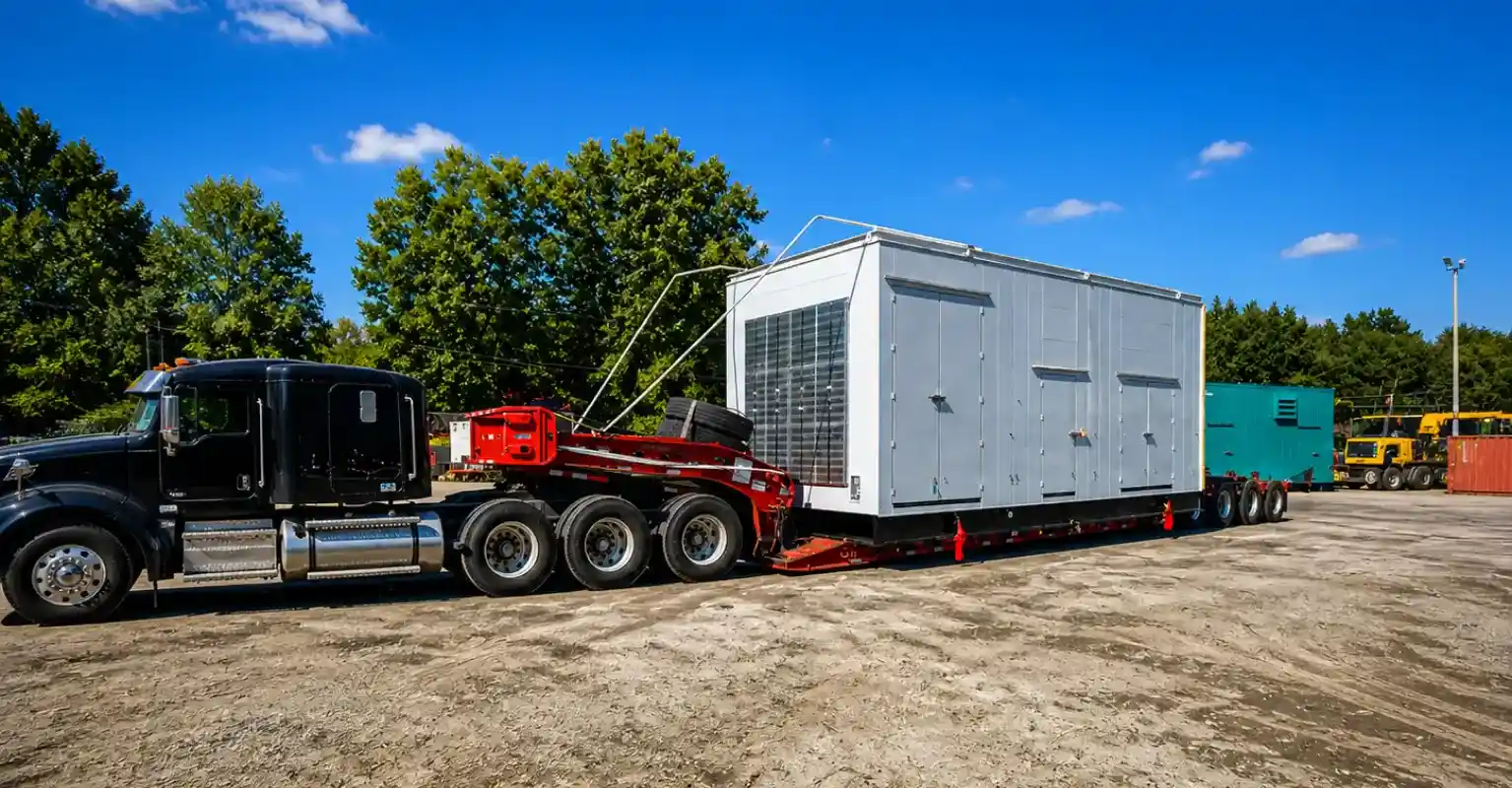
Ask five carriers what an oversize permit costs and you’ll likely get five different numbers, and none of them will be wrong. Permit pricing swings widely depending on the state, the load’s exact dimensions, the route chosen, and a handful of other variables that aren’t always obvious until the invoice arrives. Understanding what actually drives the cost makes it possible to budget accurately instead of getting surprised at the last minute.
Table of Contents
State-Specific Fee Structures Set the Baseline
The single biggest driver of cost is simply which state issues the permit, since every Department of Transportation sets its own fee schedule with no federal standardization to keep numbers consistent across borders. A single-trip permit in one state might run a flat fee regardless of load size, while a neighboring state charges based on a sliding scale tied to weight and dimensions, meaning the exact same truck and cargo combination can cost noticeably more or less depending purely on which side of a state line it’s traveling through. Carriers running regular multi-state routes often keep a running reference of each state’s fee structure just to avoid guessing on every new job, since oversize truck permits rarely follow a pattern that carries over cleanly from one jurisdiction to the next.
Load Dimensions Push Costs Up Incrementally
Most states scale permit fees according to how far a load exceeds standard legal limits, so a load that’s only slightly over width might cost close to the baseline fee, while something classified as a superload can run into hundreds or even thousands of dollars once engineering review and special handling get factored in. Weight matters just as much as physical size here, since axle loading and gross weight often trigger their own separate fee tiers layered on top of whatever the width or height calculation produces, and a load that’s oversize in multiple dimensions at once frequently ends up paying for each dimension separately rather than one combined rate.
Escort Vehicle Requirements Add Substantial Cost
Once a load crosses into escort territory, the permit fee itself becomes only part of the total expense, since pilot cars, height pole vehicles, and law enforcement escorts in some states all carry their own hourly or per-mile rates that stack on top of whatever the state charges for the permit. A load requiring escorts in multiple states along its route multiplies this cost accordingly, and the exact requirements — front only, rear only, or both simultaneously — vary enough between states that the same load can need one escort crossing into a neighboring state and two crossing back, with the price difference showing up directly on the final bill.
Route Length and Complexity Affect the Total Bill
Longer routes naturally involve more states, and each additional state means another permit fee stacked onto the total, but complexity matters just as much as distance since a route crossing through several counties with restricted bridges or requiring detours around low-clearance structures can add both processing time and cost that a straightforward interstate route wouldn’t incur. Multi-state routes sometimes qualify for streamlined regional permitting agreements that reduce the total cost compared to applying separately in every state, though these arrangements aren’t universal and only cover certain combinations of neighboring states.
Permit Type and Urgency Change the Price Tag
Annual permits typically cost more upfront than a single-trip permit but work out cheaper per haul for carriers running the same route regularly, while expedited processing for a tight deadline often carries its own rush fee on top of the standard cost since agencies have to prioritize the application ahead of the normal queue. Superload permits cost significantly more than standard oversize permits across almost every state due to the mandatory engineering review, and carriers who assume a load qualifies as standard oversize when it actually crosses into superload territory often end up paying twice — once for the rejected application and again for the correct permit type once the mistake gets caught.
Working with a service like Omnistar that tracks fee structures across all fifty states tends to save carriers from the guesswork that drives most cost surprises, since knowing the actual variables in advance beats discovering them one invoice at a time.